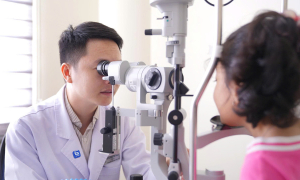
My 7-year-old child frequently uses electronic devices for learning and entertainment. Can blue light blocking glasses prevent myopia, and how should they be used correctly? (Ngoc Anh, 35, Hanoi)
German brand Carl Zeiss organizes a series of workshops to update the latest advancements in ophthalmology, aiming to find effective solutions for controlling myopia progression.
At 26 years old with nearly 4 diopters of myopia in both eyes, Ngoc Anh from Can Tho seeks ways to achieve clear vision without daily glasses or surgery.
Mr. Nhat, 36, who has had myopia in both eyes since age seven, now has a prescription of 10-12 diopters. Doctors diagnosed him with severe multiple refractive errors and recommended surgery.
A 32-year-old individual, who previously had good vision and never wore glasses, recently had an eye exam revealing a 1,5 diopter prescription for the right eye and 2 diopters for the left. Why does myopia appear in adulthood? (Thanh, Tay Ninh)
My 14-year-old child has 5 diopters in the right eye and 6 diopters in the left eye, and wants myopia correction. However, the doctor said my child is not old enough. Why is 18 the minimum age for surgery? (Truc An, Khanh Hoa)
An, a three-year-old boy, has experienced rapidly worsening vision since he was one, with his prescription quickly increasing to 14 diopters, prompting doctors to diagnose congenital lens dislocation.