Nasopharyngeal cancer is one of the prevalent head and neck cancers in Southeast Asia, with men accounting for approximately 71% of cases, 2,3 times higher than women. Doctor of Medicine, Second-Degree Specialist Lam Duc Hoang, Head of the Head and Neck Radiation Oncology Department at Ho Chi Minh City Oncology Hospital, highlighted this significant disparity, citing statistics from over 68,000 nasopharyngeal cancer cases across the region.
The expert attributes this difference to a combination of factors, primarily lifestyle habits, biological elements, and environmental influences. Men exhibit higher rates of smoking and alcohol consumption compared to women. Tobacco smoke and alcohol readily damage the nasopharyngeal lining, creating conditions for malignant cells to develop. When alcohol and tobacco are combined, the risk of cancer increases significantly.
Biological factors also contribute to the heightened risk in men. The Epstein Barr virus (EBV), closely linked to nasopharyngeal cancer, tends to persist longer or trigger less effective immune responses in men, thereby increasing their susceptibility. Additionally, hormonal differences play a role. Estrogen in women is believed to protect upper respiratory tract mucosal cells, a protective advantage men do not possess.
Furthermore, men frequently work in environments with considerable exposure to dust, including wood dust, mine dust, chemicals, or air pollution. These irritants can stimulate the pharyngeal mucosa, leading to cell mutations with prolonged contact. Certain dietary habits also elevate the risk, such as consuming large amounts of salted fish and fermented foods containing nitrosamine, a known carcinogen.
A critical factor is that men often seek medical attention late, tending to overlook initial symptoms. This frequently results in the disease being detected only in its advanced stages, complicating treatment outcomes.
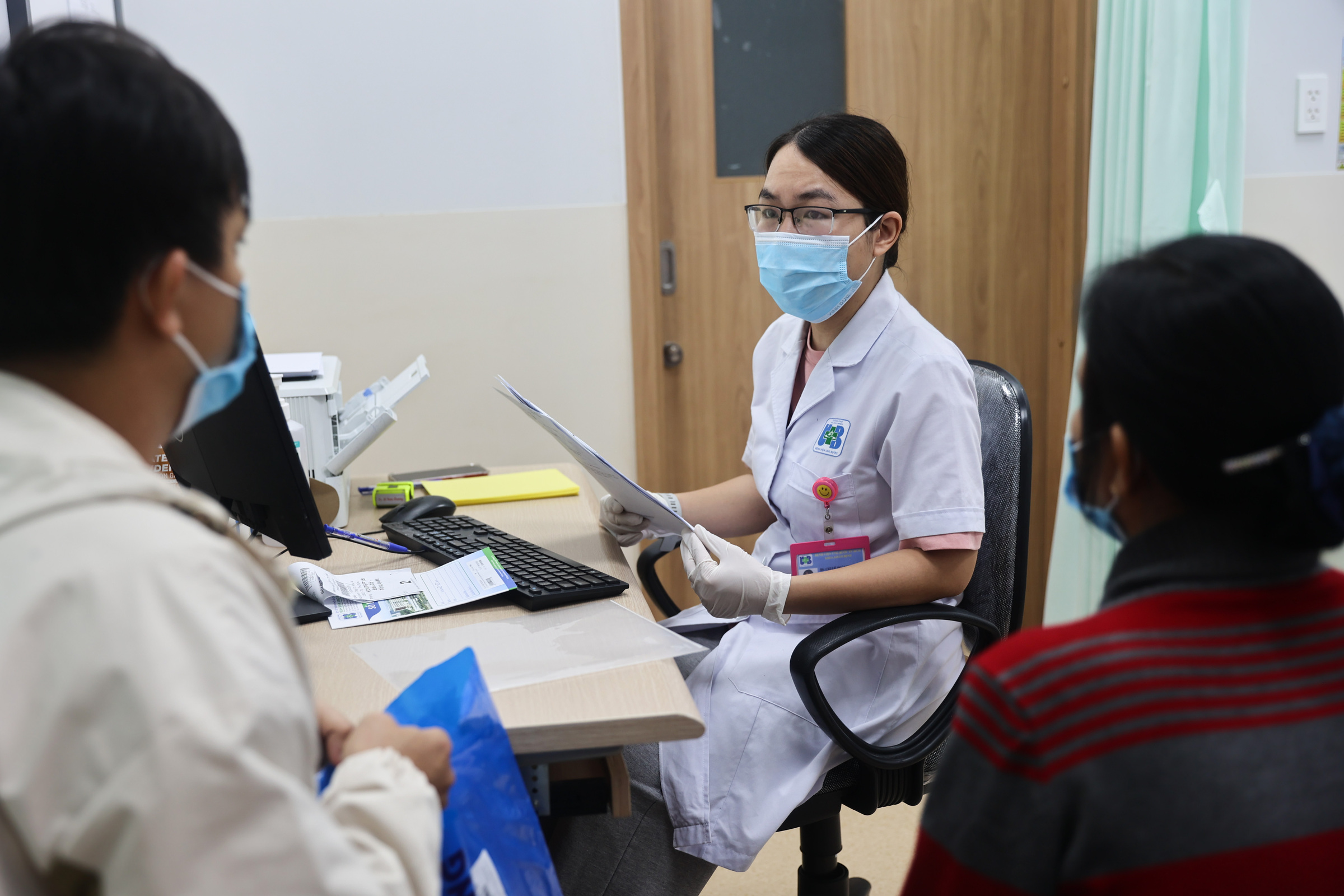 |
Doctors examining patients at Ho Chi Minh City Oncology Hospital. *Photo: Quynh Tran* |
According to Doctor Hoang, early signs of nasopharyngeal cancer are often subtle and easily mistaken for common ear, nose, and throat conditions. These symptoms include: persistent unilateral nasal congestion, nosebleeds or bloody nasal discharge, bloody sputum, unexplained tinnitus or hearing loss, dull headaches, and painless, gradually enlarging neck lymph nodes.
Doctor Hoang emphasized that "nasopharyngeal cancer is not exclusive to anyone, but men are placing themselves in a higher risk group." Therefore, limiting alcohol and tobacco consumption, improving the living environment, and seeking early medical attention for any abnormal signs are the most effective strategies for timely detection and treatment.
Le Phuong