


Doctor of First Degree Specialist Nguyen Duc Huy, from Tam Anh General Clinic District 7's High-Tech Ophthalmology Department, recommends daily outdoor activities for children. This practice reduces myopia risk and better manages refractive error progression, contrasting with frequent indoor time. Dr. Huy highlights several positive impacts on children's eyes from active outdoor engagement.
Prevents eyeball elongation
Outdoor light is much stronger than indoor light. Strong natural light exposure triggers increased dopamine secretion in the retina. This neurotransmitter prevents excessive eyeball elongation, a primary cause of myopia, thereby reducing its development and progression.
Enhances accommodation, reduces dry eyes
Dr. Huy states that outdoors, eyes constantly shift focus between near and far. This varying focal length boosts the eyes' ability to accommodate and process images. Outdoor play also limits screen time on computers and phones, reducing blue light exposure and lessening dry, tired eyes.
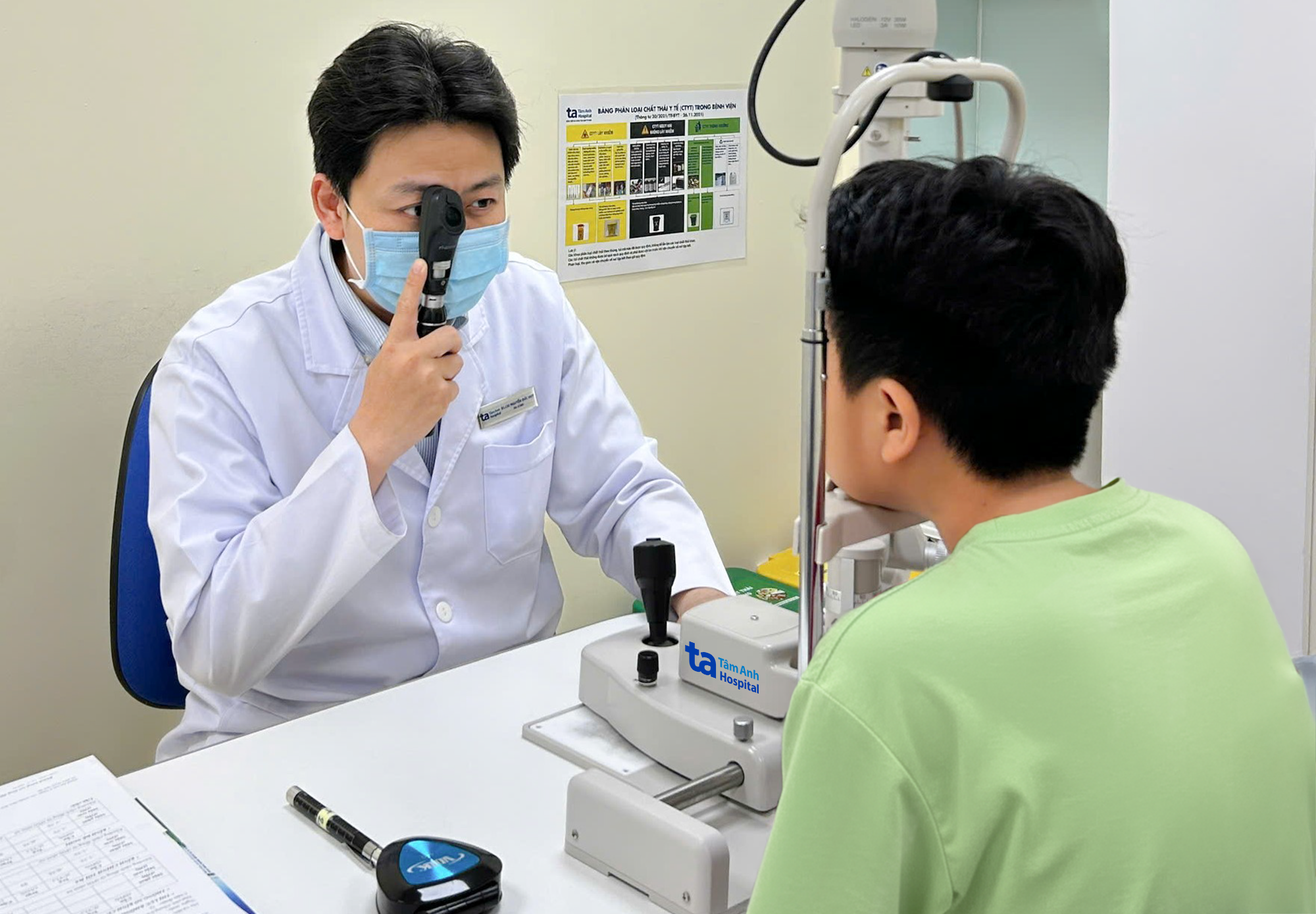 |
Dr. Huy examines a boy's eyes with a specialized ophthalmoscope. Illustration: Tam Anh General Hospital |
Supports circadian rhythm
Natural light on the retina sends signals to the brain, stimulating melatonin secretion. This hormone regulates sleep and circadian rhythm.
Strong natural light inhibits melatonin during the day, promoting alertness. At night, low light increases melatonin, causing drowsiness and deep sleep. Children's sufficient daytime light exposure from outdoor activities fosters a regular sleep cycle, reducing sleep difficulties or restlessness at night.
Adequate sleep helps the corneal surface recover, reducing eye fatigue and dryness. A stable circadian rhythm aids tissue growth and retinal cell metabolism. For children, this is crucial for sustainable visual function development.
Dr. Huy emphasizes that outdoor activities are vital for eye development but require moderation. Avoid intense sun between 10h and 15h; children should wear hats or sunglasses. They also need sufficient water, appropriate for their age, weight, activity level, and the weather.
Nhat Minh
| Readers can submit ophthalmology questions here for doctors to answer |


