Tetanus patients remain conscious and feel intense pain because the neurotoxin tetanospasmin, secreted by the bacteria, primarily affects motor nerves, not cognitive function. This potent toxin, once it enters the body through a wound, travels through the blood and nervous system to the spinal cord and brainstem, causing severe muscle spasms, increased muscle tone, and profound pain. Initially, patients experience stiffness in the jaw, face, and neck, which then spreads throughout the body.
In severe cases, these muscle spasms can affect respiratory muscles, leading to difficulty breathing and potential respiratory failure. The powerful muscle contractions can even result in muscle tears and bone fractures. To alleviate this suffering, doctors administer high-dose muscle relaxants and sedatives, often requiring mechanical ventilation via tracheostomy. Once these interventions are in place, patients are no longer conscious and thus do not perceive pain.
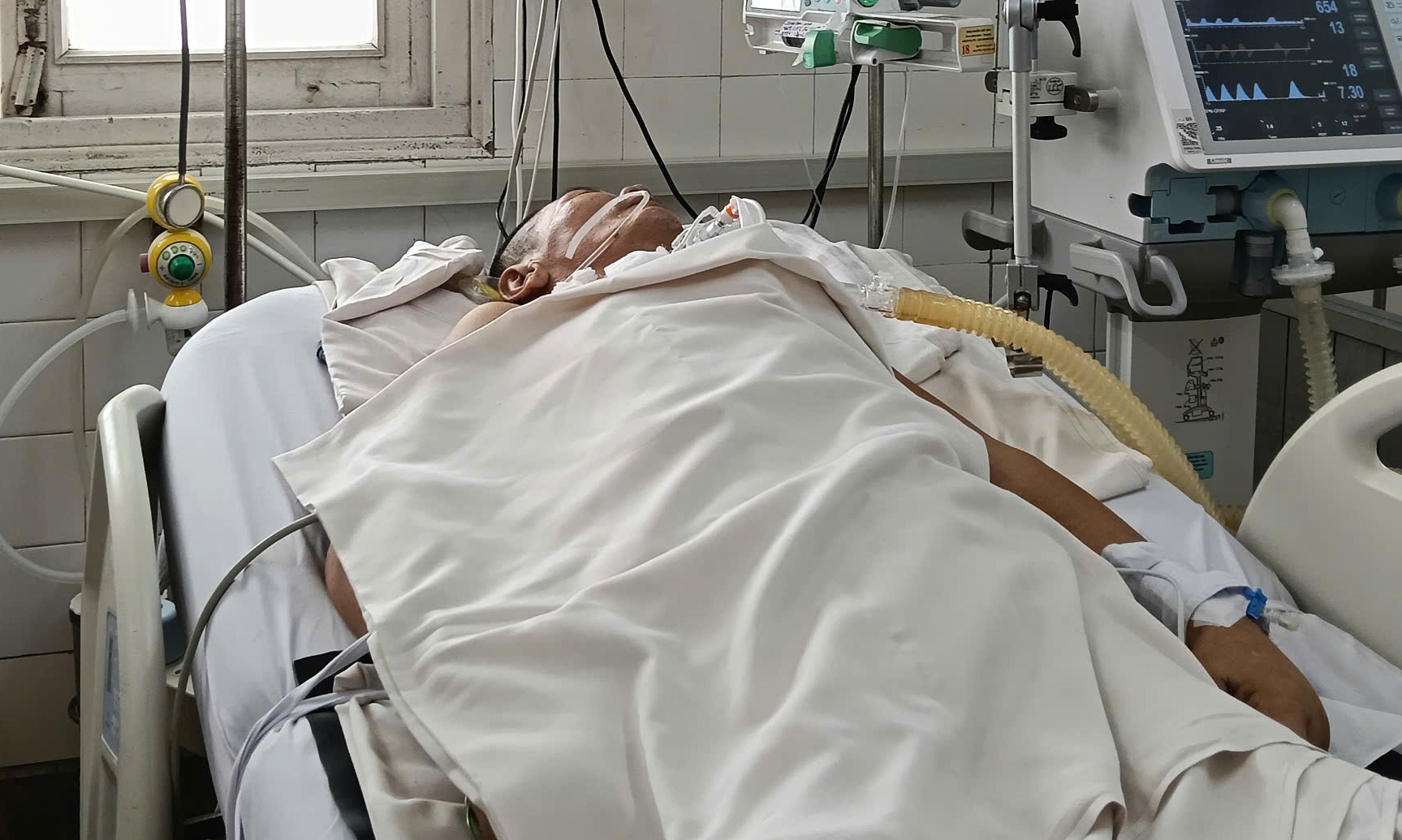 |
Severe tetanus patients receive sedatives and mechanical ventilation via tracheostomy. *Photo: Khanh Hoa* |
The tetanus pathogen is ubiquitous in the natural environment, commonly found in soil. Infection typically occurs when the bacteria enter the body through open wounds, such as scrapes, cuts, lacerations, or injuries from stepping on nails, splinters, or thorns.
Treating severe tetanus is an arduous and costly process. Patients often require intensive care for several months, with treatment expenses reaching hundreds of millions of dong. Beyond the financial strain, family members frequently need to take time off work to provide care. Even after discharge, full recovery can take an additional 6 to 12 months.
Given the severity and widespread presence of the pathogen, health authorities strongly recommend proactive tetanus prevention measures in daily life. These include: maintaining good personal hygiene, using protective gear like gloves and boots during work, and crucially, getting vaccinated against tetanus.
Vietnam offers a variety of tetanus vaccines, available as single-component doses or in combination forms. These include: 6-in-1, 5-in-1, and 4-in-1 vaccines that protect against diphtheria, pertussis, tetanus, and polio; a 3-in-1 vaccine for diphtheria, pertussis, and tetanus; and a 2-in-1 vaccine for diphtheria and tetanus. Doctors provide tailored advice on vaccine types and regimens based on a patient's age and vaccination history. It is important to note that even individuals who have recovered from tetanus require vaccination, as the infection itself does not confer lasting immune antibodies.
Doctor Bui Cong Su
Medical Manager, VNVC Vaccination System
Readers can submit vaccine questions for doctors to answer here.