Answer:
Blankets on passenger buses help keep travelers warm when the air conditioning is cold. However, these are shared items that often come into direct contact with the skin and clothes of many individuals. If not replaced, washed, and dried after each use, blankets can accumulate sweat, dead skin cells, dirt, odors, and allergens.
Microorganisms can also survive on fabric surfaces for a period. The U.S. Centers for Disease Control and Prevention (CDC) states that soiled linens may contain various microorganisms, but the number of identified disease cases linked to contaminated linens is generally low. Some skin conditions, such as scabies, can spread via shared clothing, towels, or bedding, although prolonged skin-to-skin contact with an infected person remains the primary transmission route.
Therefore, if you are unsure whether a blanket has been cleaned, prioritize using a jacket, shawl, or a personal blanket. If you must use a shared blanket, check for any odors, stains, or dampness. Only use it over your clothes and avoid bringing it close to your eyes, nose, or mouth. After exiting the bus, wash your hands with soap or hand sanitizer, and wash your clothes if you notice any dirt.
Beyond blankets, other high-touch surfaces include seat cushions, armrests, tray tables, and door handles. Passengers should limit touching their eyes, nose, and mouth. Sanitize hands before eating and after touching shared surfaces.
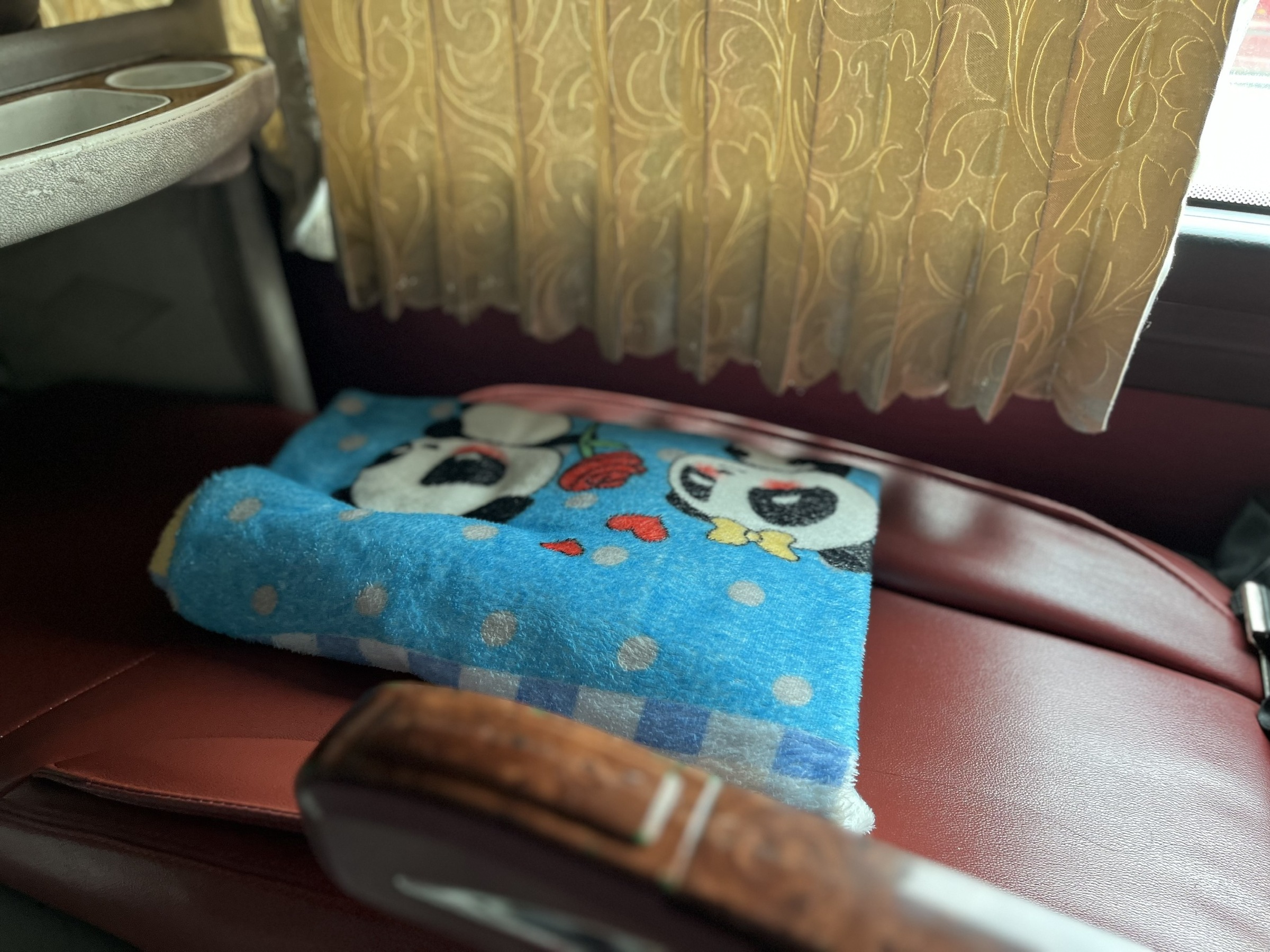 |
Blankets on passenger buses are provided for passengers, but their shared use makes them prone to carrying pathogens. *Photo: Dieu Thuan* |
The risk of spreading respiratory diseases on buses primarily stems from many people spending extended periods in confined, crowded spaces with limited ventilation. Viruses causing flu, Covid-19, measles, or chickenpox can spread through the air or respiratory droplets from an infected person. Wearing a well-fitting mask, covering your mouth when coughing, maintaining distance if possible, and increasing ventilation are measures that help reduce this risk.
Before long journeys or crowded holiday periods, everyone should also review their own and their family's vaccination schedules. Vaccines reduce the risk of contracting and developing severe forms of certain infectious diseases.
Depending on age, underlying conditions, medical history, vaccination status, and destination, passengers may need initial or booster doses of vaccines for flu, Covid-19, measles, chickenpox, or meningococcal disease. The flu vaccine has 4 types, administered to children from 6 months old to adults of any age, requiring an annual booster shot. Measles and chickenpox vaccines come in single forms or combined with mumps and rubella protection; two doses provide up to 98% disease prevention. The meningococcal vaccine has 5 types, offering comprehensive protection against the 5 common serogroups A, B, C, Y, W that cause pharyngitis, pneumonia, meningitis, and sepsis in both children and adults. Everyone needs a combination of meningococcal vaccines for groups B and A, C, Y, W for effective protection. It is advisable to consult a doctor or healthcare professional before traveling to choose the appropriate vaccines and timing, rather than applying a general schedule for everyone.
Doctor of First Degree Specialization Danh Thi My Hong
Medical Manager, VNVC Vaccination System
Readers can ask vaccine-related questions for a doctor to answer here.