Mr. Phuong's condition is critical, with three coronary arteries, the blood vessels supplying the heart, severely narrowed by 90-95%, and one artery completely blocked. The left main coronary artery, a vital vessel for heart blood supply, is 80% obstructed. Additionally, he has widespread narrowing in other major arteries, including the subclavian, celiac, iliac, and upper limb arteries. Without timely intervention, Mr. Phuong faces a high risk of acute myocardial infarction, heart failure, arrhythmia, and sudden death.
Mr. Phuong smoked over one pack of cigarettes daily for more than 40 years, with no genetic factors or underlying health conditions contributing to his illness. According to Master of Science, Doctor of Medicine, Level II Specialist Huynh Hoang Khang, head of the cardiovascular surgery department at the interventional cardiology center, Tam Anh General Hospital TP HCM, smoking is the primary risk factor accelerating atherosclerosis. Doctor Khang stated, "This is the most severe case of widespread systemic vascular narrowing due to smoking I have ever encountered."
 |
Doctor Khang checks on the patient's health one week after coronary artery bypass surgery. *Photo: Tam Anh General Hospital*
Given the complex, widespread damage and severe calcification, percutaneous coronary intervention was deemed insufficient for complete revascularization. Consequently, the medical team opted for off-pump coronary artery bypass graft surgery, which does not require a heart-lung machine.
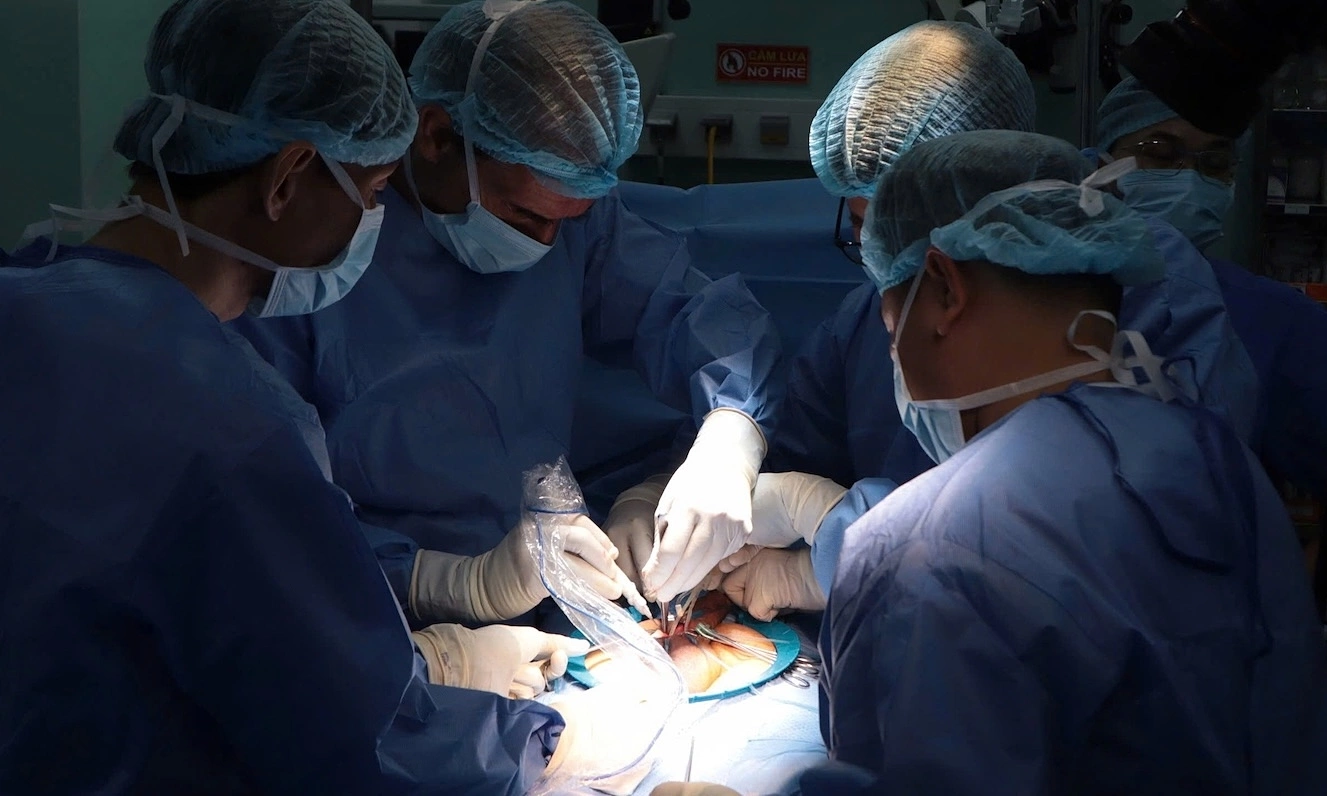
During the surgery, Doctor Khang utilized the right internal mammary artery and saphenous vein to create three bypasses for the three blocked coronary arteries. As the heart continued to beat throughout the procedure, maintaining stable hemodynamics was critical. The surgical team continuously monitored cardiac output, invasive hemodynamics, and cerebral oxygen levels to ensure adequate blood supply to vital organs. Blood flow to the heart was successfully restored after four hours.
Following surgery, Mr. Phuong recovered quickly, with his chest pain resolved. He was discharged after one week and currently does not require intervention for other narrowed areas. He received instructions to quit smoking and take medication to stabilize blood lipid levels and manage underlying conditions, aiming to slow the progression of systemic atherosclerosis.
The primary cause of vascular narrowing is the accumulation of atherosclerotic plaque, composed of unhealthy blood fats, inflammatory cells, and other substances, within the blood vessels. Smoking is a leading risk factor that significantly accelerates the widespread and rapid progression of atherosclerosis throughout the body.
Thu Ha
* Patient's name has been changed
| Readers can submit questions about cardiovascular health here for doctors to answer. |