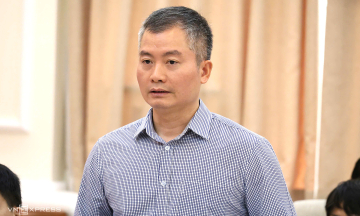
On the morning of 5/8, Minister of Justice Hoang Thanh Tung, authorized by the Prime Minister, presented to the National Assembly the draft Law on Grassroots Conciliation (amended).
One significant new point in the draft is the expansion of conciliators' powers. Beyond existing rights, they can request the People's Committee or commune police to implement security and order measures when conciliating conflicts, disputes, or legal violations that could lead to violence or public disorder.
According to the government, the 2013 law stipulated conciliators' rights and obligations, but "some important rights and obligations were not recognized," complicating the resolution of certain cases. The new regulation aims to enable conciliators to better fulfill their duties.
The draft also proposes that funding for grassroots conciliation activities be guaranteed by the state budget, instead of merely supported as currently.
Conciliators will receive training in legal knowledge and professional skills, be provided with documents for their work, and receive remuneration per case. They will also be rewarded and supported in overcoming consequences if they encounter accidents or risks affecting their health or lives during conciliation.
Online conciliation possible
Another change is allowing online conciliation.
According to Article 25 of the draft, conciliation can be conducted in person, online, or a combination of both, with the participation of all parties. If a person with a disability or someone who does not speak Vietnamese participates, appropriate support measures will be applied.
The current law stipulates in-person conciliation, verbally and with all parties present; in cases of persons with disabilities, support measures are applied to enable their participation.
The government believes that information technology has developed strongly, with most areas of social life promoting digital applications, while grassroots conciliation is still primarily conducted through traditional methods.
Legalizing online conciliation aims to create a legal basis for this form, resolving practical difficulties. Specific details will be regulated by the government.
Court recognition of conciliation results possible
The draft also completes the legal basis for successful conciliation results.
According to Article 21, parties can request the competent court to recognize successful conciliation results under civil procedure law. Article 12 also requires conciliators to prepare a written report on the results after a case concludes.
The government stated that the 2015 Civil Procedure Code stipulated procedures for requesting court recognition of out-of-court conciliation results, but the 2013 Law on Grassroots Conciliation did not have a corresponding provision.
This addition aims to ensure consistency between the two laws and facilitate parties seeking court recognition of successful conciliation results.
The Committee for Culture and Society, the verifying agency, endorsed the comprehensive amendment of the Law on Grassroots Conciliation to create a clear, unified legal basis for this activity, and to link conciliation with building a culture of legal compliance to prevent disputes.
The committee also agreed that the state should guarantee funding for grassroots conciliation work and maintain the provision for the central budget to supplement localities unable to balance their own budgets.
The verifying agency endorsed adding village elders, hamlet chiefs, religious dignitaries, and functionaries to the group who can be invited to participate in conciliation and expanding their rights. To attract individuals knowledgeable in law to support conciliators, the committee proposed a commensurate remuneration policy.
The National Assembly is expected to approve the draft law at an extraordinary session.
Son Ha