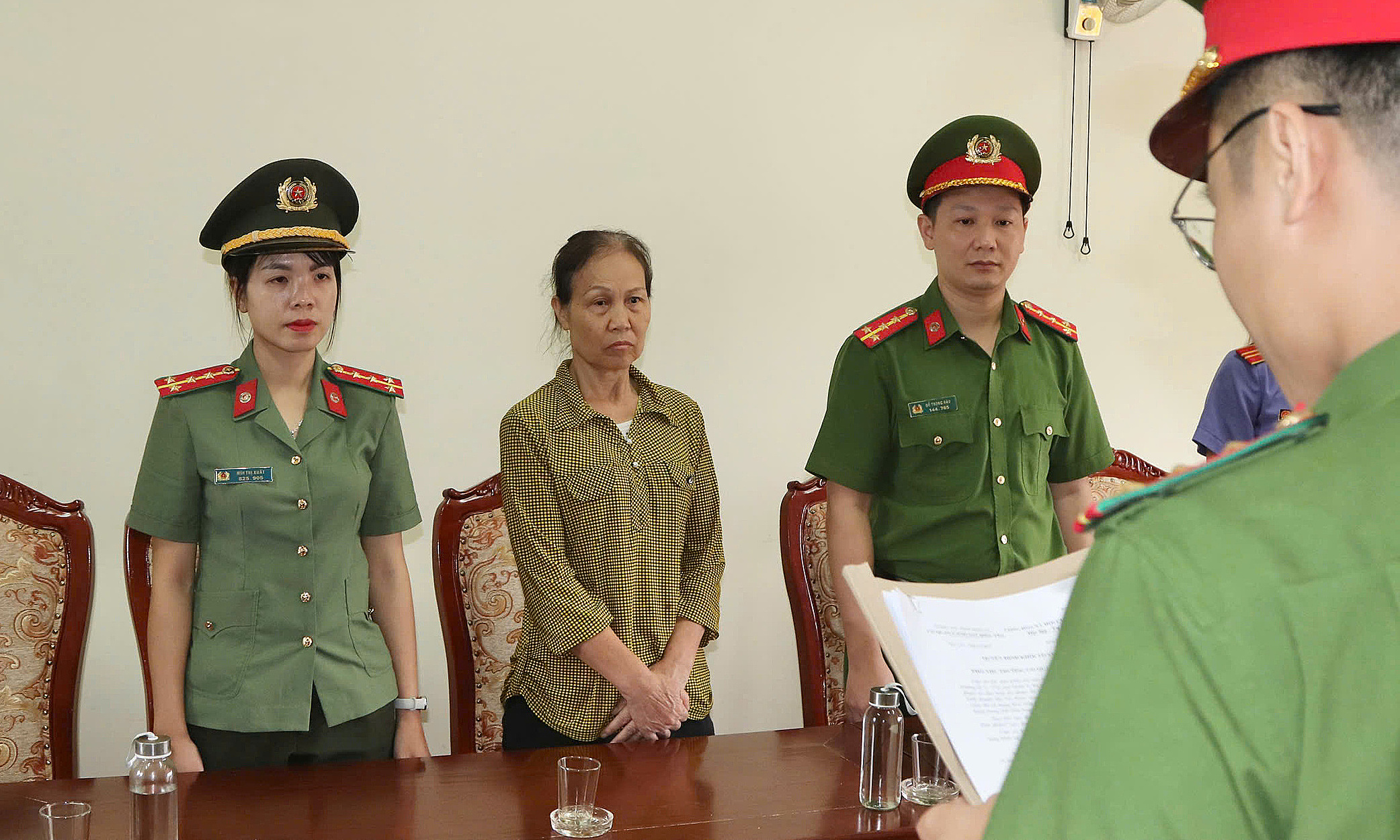
After the Hanoi People's Court returned the case file three months ago, the Hanoi Police recently issued a supplementary investigation conclusion concerning Nguyen Dinh Bang, 75; Nguyen Huy Khang, 67; and Hoang Thi Xuan, 63. All three are accused of fraud and appropriation of assets.
The case has now spanned 16 years. Khang was held in temporary detention for 13 years, 4 months, before being released on bail in 6/2024. Bang was also held in temporary detention for five years.
Previously, in 2016 and 2020, the first-instance court tried the case two times, sentencing Khang and Bang to 16-18 years in prison respectively. Both initial verdicts were overturned by the appellate court in 2017 and 2022. Both defendants maintain their innocence.
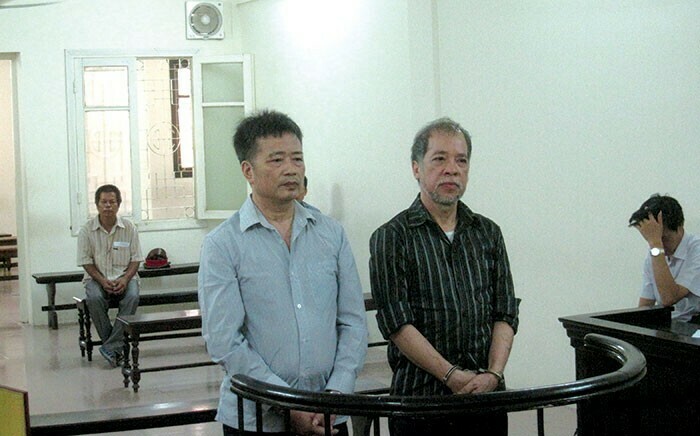 |
The defendants at the first-instance trial in 2015 and the most recent session in 3/2026. *Photo: Danh Lam*
During the most recent first-instance trial in March, Bang's lawyer presented evidence suggesting that three case files had been removed and swapped with other documents, altering the nature of the case. The defense alleges that the documents provided by the victim were fabricated and contained forged signatures.
This was the reason the court returned the file for further investigation. In its recently issued supplementary investigation conclusion, the Hanoi Police acknowledged "changes" in the documents submitted by the victim. However, the police determined that these changes did not affect the evidence assessment or distort the case, thus not constituting the crime of falsifying case files.
The investigative agency has maintained the charges and accusations against the defendants.
The case originated from a dispute over a project 18 years ago. In 7/2008, Truong Sinh Industrial Co., Ltd., directed by Bang, was assigned by Ha Tay province as the investor for the An Khanh commercial center and high-end housing project. Although the project involved shared capital with another company and lacked city approval, Bang allegedly transferred shares to "illegally raise capital," according to the prosecutor's accusation.
In late 2009, Bang transferred 80% of the project's shares to Khang. Khang had only paid a deposit of 800 million VND, but Bang confirmed him as the purchaser of these shares.
Five months later, in 3/2010, Bang unilaterally liquidated the contract, citing Khang's inability to execute the project. Bang only notified Khang of the contract cancellation by phone, without retrieving the documents he had given to Khang.
Meanwhile, Khang allegedly used these documents to secure a pledge, claiming to have purchased 80% of the shares. He then invited Toan, the victim, to contribute capital to acquire the remaining 20%. When Khang brought Toan to Bang's house, Bang confirmed that he had transferred 80% of Truong Sinh Company to Khang.
Believing Khang, Toan agreed and signed a capital contribution contract with him. In 4/2010, after receiving 22 billion VND from Toan, Bang initiated procedures to transfer the company and change its legal representative. However, according to the accusation, Bang forged the signature of another shareholder, preventing the Department of Planning and Investment from approving the transfer.
When Khang failed to complete the procedures for his company to participate in the project, Toan repeatedly demanded his money back without success. In 6/2010, he filed a complaint.
After the case was initiated, to repay Toan, defendant Xuan, Khang's girlfriend, allegedly misrepresented herself as a Deputy Director of Truong Sinh Company. She raised capital by defrauding four individuals, totaling over 57 billion VND, of which 22 billion VND was used to repay Toan.
At previous trials, Bang testified that in 2009, he transferred his capital contribution in the company to Khang. Khang subsequently transferred 19 billion VND to fulfill the transfer contract. Bang claimed he was unaware of the source of the funds from Khang. Both parties agreed the transfer was complete, with only paperwork remaining to finalize the procedures. Bang stated he handed over all project and company related documents to Khang.
Khang, however, maintains his innocence, asserting that he did not commit fraud. He stated that he borrowed 19 billion VND from Toan for one month at a high interest rate, as he lacked funds to acquire Bang's capital contribution. Khang claimed that the capital contribution contract between them was merely collateral for the loan, and Toan had no actual intention of investing in the project.
The first appellate verdict in 2017, which overturned the initial judgment, found insufficient grounds to conclude that Bang was an accomplice in Khang's alleged fraud. This was due to the fact that Bang and the victim did not know each other. Bang was also not informed or aware of the capital contribution contract between Khang and the victim.
The money transferred into Bang's account was also not pre-notified, as it was effectively Khang's payment for Bang's shares in Truong Sinh Company and a debt settlement. After receiving the money, Bang handed over all documents, land use rights certificates, and the company seal to Khang and Toan to complete the business registration change procedures. The case file contains no evidence indicating that the two defendants colluded or agreed to commit any criminal act.
"The assessment of Bang's complicity needs to be re-evaluated," the 2017 appellate court stated.
Bang argues that this 16-year-long case originated from Toan's complaint. Despite dozens of trial sessions throughout this period, Toan has never appeared in court. The defendant believes Toan should attend the trial for confrontation, as his previous testimonies have been inconsistent and contained false information. However, the court and the Prosecutor's Office stated that Toan's previous statements are on record, and he requested to be tried in absentia, which does not affect the trial proceedings.