Authorities have released preliminary details of the case, warning businesses to identify and avoid involvement in such violations.
Police reported that the suspects operated a sophisticated, closed-loop scheme. They established a network of shell companies, often registered in Vietnam under local nominees hired by foreign individuals. These companies then formed a chain of domestic and international entities in Hong Kong, China, and Singapore, operating in the temporary import-re-export sector.
Under current law, temporary import-re-export involves bringing goods from abroad or special zones within Vietnam and then re-exporting those same goods. While this is a legitimate business activity, all international payments for such goods must comply with regulations; otherwise, penalties will apply.
The group collected illegal funds by targeting individuals and businesses seeking to transfer money unlawfully, both out of and into Vietnam.
To circumvent legal scrutiny, the funds were split into amounts under 500 million VND per transaction. These smaller sums were then transferred through multiple personal accounts using vague descriptions like "goods payment," "buy USDT," or with no content at all. This tactic aimed to avoid reporting to the State Bank, after which cash was withdrawn and deposited into shell company accounts for legitimization.
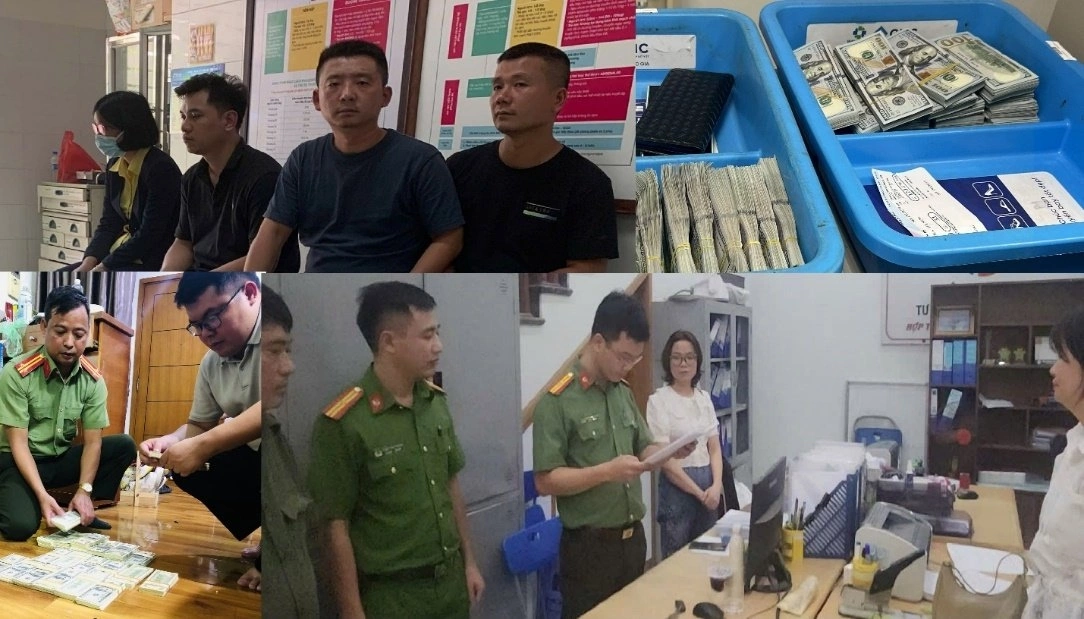 |
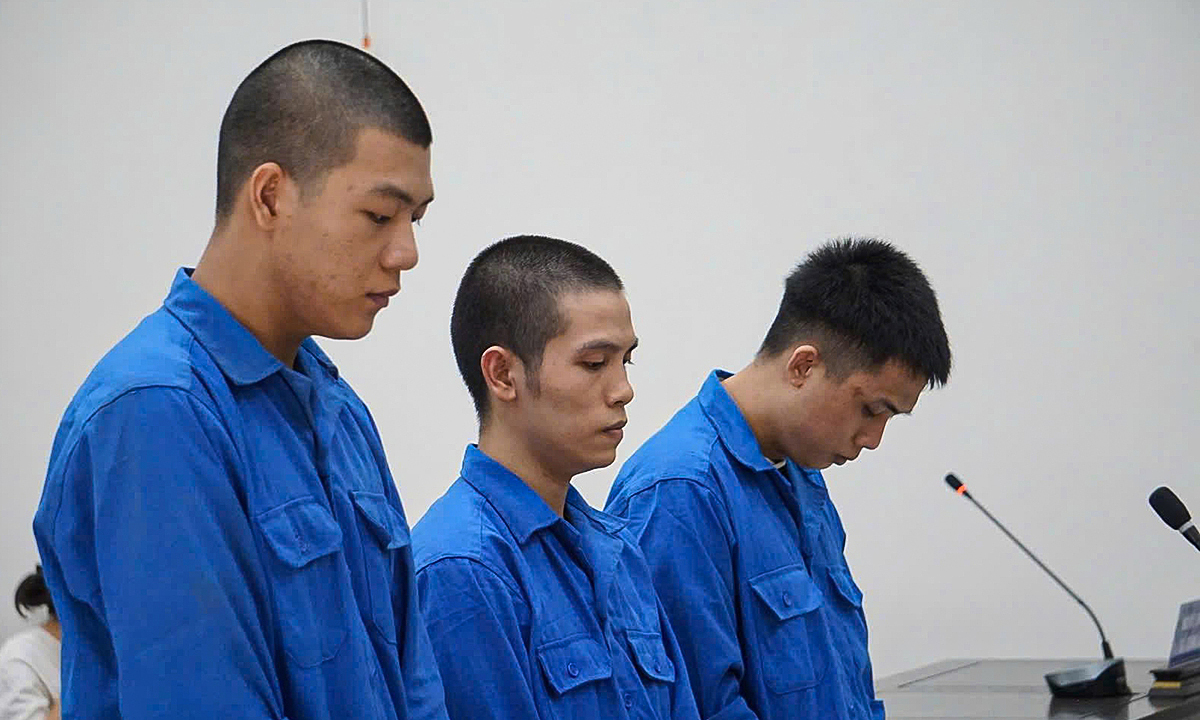
Suspects and seized evidence. Photo: Police provided. |
Suspects and seized evidence. Photo: Police provided.
The suspects also created high-value, vaguely worded contracts for electronic chips (chip resistors), which are small, difficult to value, and lack clear branding. These contracts typically omitted technical standards, manufacturers, or production years. Crucially, they included clauses allowing sellers immediate payment while buyers could delay payment for up to 12 months, enabling the suspects to manipulate cash flow.
Furthermore, the suspects allegedly exploited customs clearance mechanisms, specifically green and yellow lanes, to expedite customs processes and reduce physical inspections. They also leveraged vulnerabilities in commercial banks' document appraisal processes to issue irrevocable deferred payment letters of credit (UPAS L/C) or to purchase foreign currency for direct telegraphic transfer (T/T) payments to move funds.
After transferring funds for temporary imports, the suspects either failed to re-export the money or re-exported only minimal amounts, thereby creating illicit financial discrepancies.
Police advise businesses not to lease or lend their legal entities or company accounts for proxy transactions or payments. Credit institutions and commercial banks must enhance the verification of supporting documents and reconcile temporary import and re-export fund flows within 12 months. They are also urged to promptly report suspicious transactions in accordance with the Anti-Money Laundering Law.