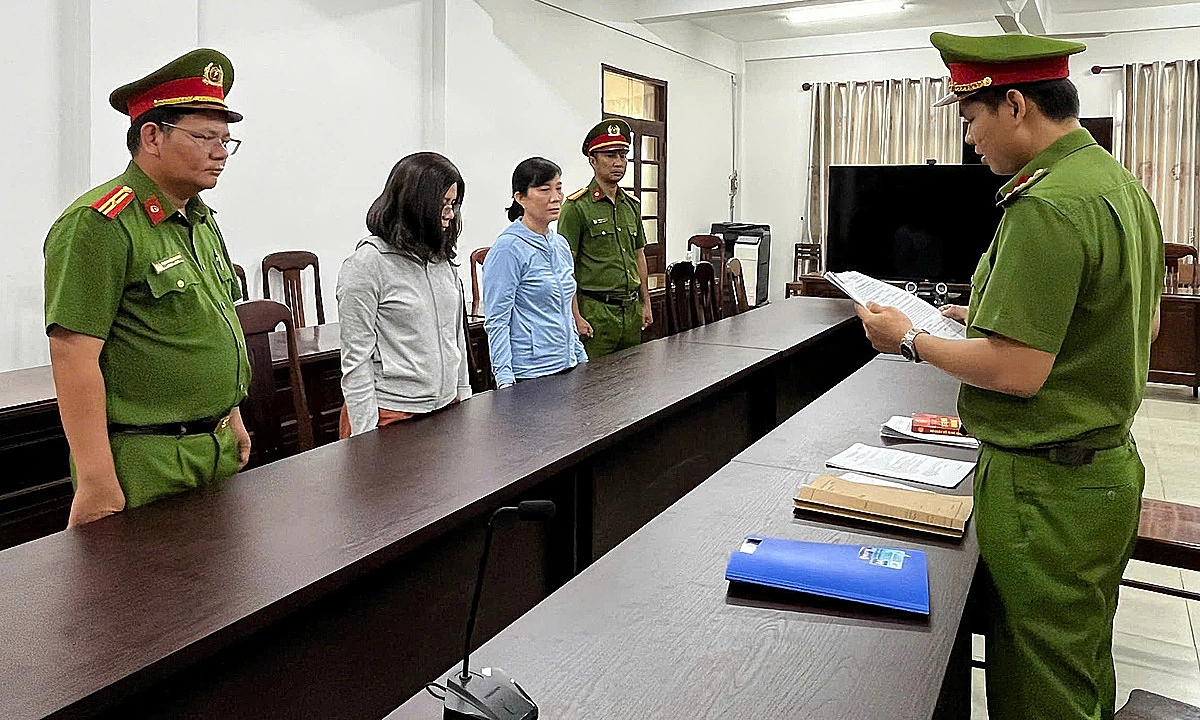
Ho Chi Minh City Police recently indicted Hoang Thi Bich Ngoc, owner of the Dat Lanh Ao Dai Fabric brand, for investigation into copyright infringement under Article 225 of the Penal Code.
According to information from the investigating agency, designer Do Trinh Hoai Nam is the author and legal owner of the "Thu Tu Pho Thi" ao dai collection, which has been granted a copyright registration certificate. Ms. Ngoc allegedly used images of design samples from this collection, processed them with AI, and then modified and finalized them for production, advertising, and business activities.
This is one of the rare instances in the fashion industry where criminal charges have been filed for copyright infringement. It has also sparked debate about the blurred lines between creativity, inspiration, and actions considered copyright infringement in the age of AI.
Experts view the case as a warning about the legal risks associated with using AI in creative and business activities without respecting the intellectual property rights of others.
Is using AI always illegal?
According to lawyer Truong Anh Tu, Chairman of TAT Law Firm, the crucial aspect of the case is not whether the perpetrator used AI. While using AI does not automatically incur legal liability, it also does not automatically exempt one from it.
"AI is merely a tool. The law does not evaluate actions based on the use of Photoshop, AI, or any other software, but rather on whether a protected work has been exploited unlawfully," said lawyer Tu.
Lawyer Tu noted that many people currently believe that simply inputting a design into an AI system for editing, modification, or recreation automatically makes the output a new work. However, this interpretation is not entirely accurate.
In intellectual property law, determining infringement hinges on the origin of the input data and the extent to which the creative elements of the original work are used. If the core elements that define the author's creative imprint are reproduced in a different form, then the use of AI is not a decisive factor in legal liability.
In other words, AI can change how a product is created, but it does not alter the principles protecting the rights of creators.
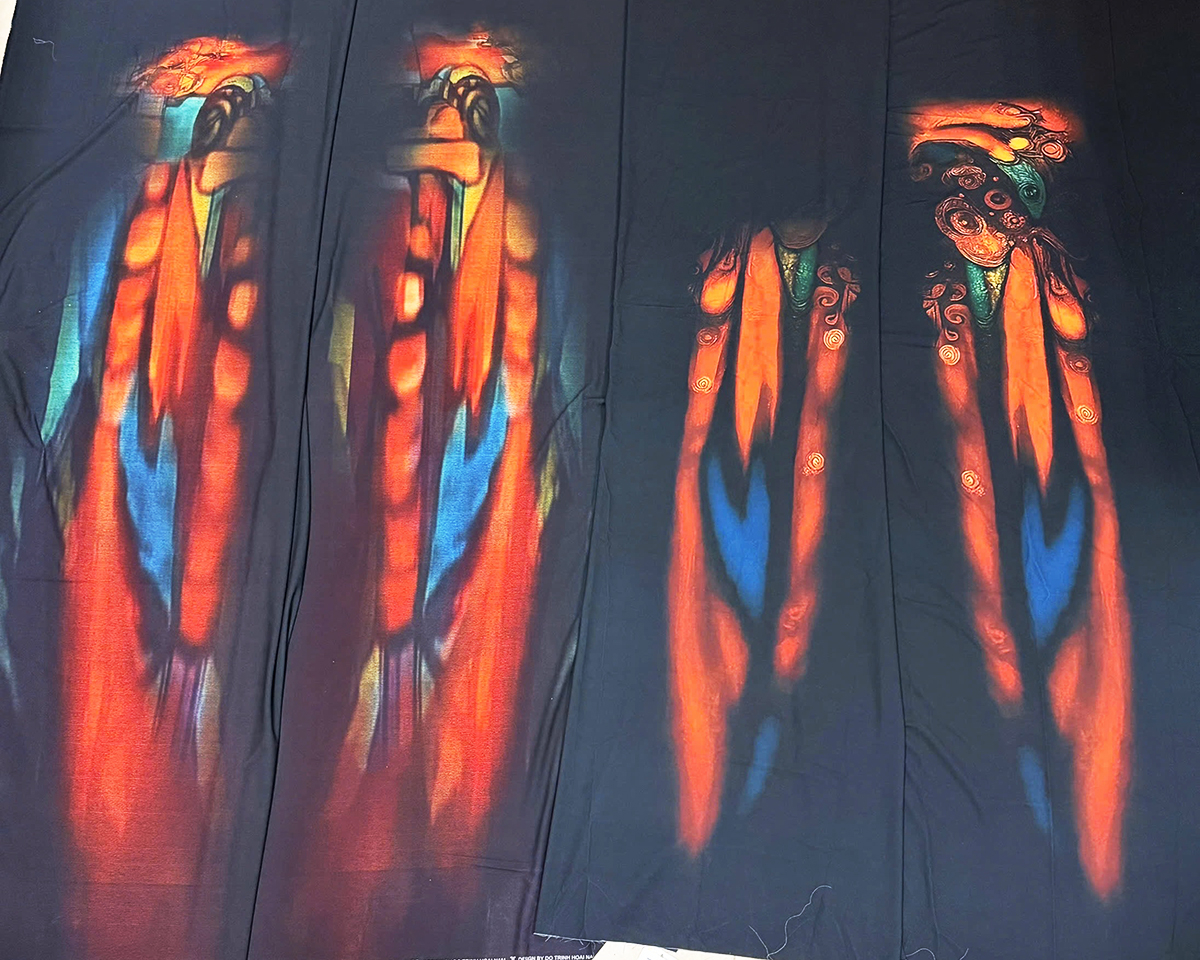 |
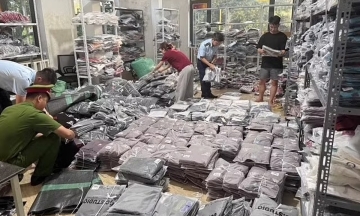
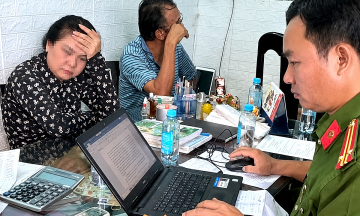
Evidence seized by investigators in the case related to alleged design copying. *Photo: Ho Chi Minh City Police*. |
When do criminal charges apply?
According to lawyer Mai Thi Thao, Deputy Director of TAT Law Firm, not all acts of copying another's work lead to criminal liability. Criminal prosecution only arises when the infringing act reaches a significant level of social danger, as defined by the Penal Code's criteria.
To consider copyright infringement charges, it must first be established that a work is protected by law. In this case, the investigating agency stated that the "Thu Tu Pho Thi" collection has been granted a copyright registration certificate.
Next, the alleged infringing act must be clarified. According to published information, the investigating agency believes that images of design samples from the protected collection were used for production and business activities. The Copyright Protection Center also concluded that there was copying between the expression of this design sample and the products manufactured and sold by Dat Lanh Ao Dai Fabric Co., Ltd.
However, whether the act of copying occurred, the extent of the copying, and the responsibility of each individual involved still need to be further clarified during the investigation.
In addition to the element of copying, investigators must also prove intent, commercial purpose, illicit gains, damages caused, or the value of the infringing goods.
Article 225 of the Penal Code stipulates that individuals infringing on copyright may face criminal prosecution if the copying or distribution of the work is for commercial purposes and meets legal thresholds regarding damages, illicit gains, or the value of the infringing goods.
In this case, the investigating agency initially determined that the production and business activities were organized under a corporate model with various departments: design, production, business, logistics, and accounting, along with a sales network across many localities. According to lawyer Thao, this could be one of the bases for assessing the scale of the commercial exploitation of the act.
Is partial copying permissible?
Lawyer Mai Thi Thao, Deputy Director of TAT Law Firm, stated that the law does not specify "what percentage of copying" constitutes an infringement, nor does the concept of "minor copying being permissible" exist.
What is considered is not the percentage of similarity, but whether the used portion constitutes the unique creative imprint of the original work, and whether its use is for commercial purposes.
In many cases, simply copying a significant portion of a protected work without the copyright owner's consent can be considered copyright infringement.
However, not all acts of copyright infringement result in criminal prosecution. If there are insufficient grounds for criminal charges, the copyright owner can still demand cessation of the infringing activity, removal of the product, a public apology, compensation for damages, or request administrative penalties from competent authorities.
"Minor copying is not inherently legal, nor does extensive copying solely trigger criminal charges. The core issue is whether the perpetrator unlawfully used another's legally protected creative work," lawyer Thao stated.
Sharing this view, lawyer Truong Anh Tu, Chairman of TAT Law Firm, asserted that AI is not a legal entity responsible for liability. The ultimate responsibility lies with the individual or organization behind the decision to use this technology.
"AI may change the method of creation, but it does not change the principles of protecting creators' rights. If AI is considered a basis to legitimize the exploitation of others' creative works, then, in essence, it is merely a change of tool, not a change of behavior," Mr. Tu said.
Hai Duyen