Ms. Lam and Mr. Ha married in the early 1970s. Their nearly 30-year marriage was sustained by Ms. Lam's close bond with her mother-in-law, despite a strained relationship with her father-in-law and ongoing family conflicts. The couple ultimately divorced due to their fractured relationship.
Years later, Ms. Lam learned of her former in-laws' passing. As the marriage had long ended, she never visited their graves. However, her daughter's visit accidentally revealed Ms. Lam's name inscribed on the tombstone as "daughter-in-law."
Ms. Lam argued that since her marriage to Mr. Ha ended, she was no longer a daughter-in-law of the Ha family. She contended that Mr. Ha's unauthorized inscription of her name infringed upon her personal rights and caused severe emotional distress. She filed a lawsuit, demanding Mr. Ha immediately remove her name from the tombstone and provide compensation for emotional damages.
Mr. Ha stated that although they divorced years ago, his mother had always been close to Ms. Lam during her lifetime, and Ms. Lam often visited her. He inscribed Ms. Lam's name on the tombstone according to his mother's dying wish. His mother has been buried for over 20 years, and he did not want to alter the tombstone, disturbing the deceased.
The Yangpu District People's Court in Shanghai recognized the case as more than a personal rights dispute; it also caused emotional division between the two families.
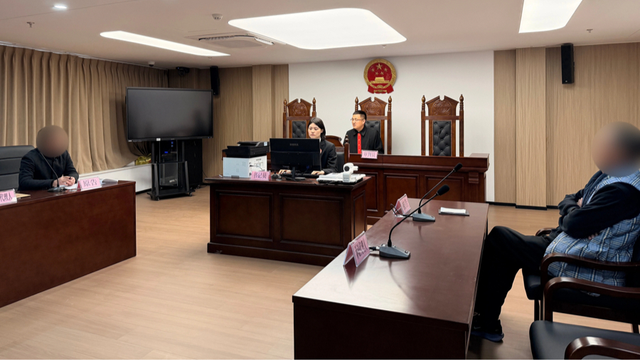 |
The court's mediation session with both parties. *Photo: Sina* |
Legally, Ms. Lam's request to remove her name was justified. According to China's Civil Code, individuals have rights to their names, including the right to decide, use, change, or authorize others to use their names. Since the legal relationship between the two parties ended after divorce, neither party had the right to unilaterally inscribe the other's name on a tombstone.
However, Mr. Ha's concerns were practical. Forcibly removing the inscription would go against traditional customs and potentially cause dissatisfaction among other family members.
The court mediated with the motto: "The issue is not simply who is right or wrong, but how the past does not harm the present, so that the deceased can rest in peace and the living can find tranquility."
At the hearing, the judge emphasized that "removing a name" does not mean "erasing the past," and "compensation" can substitute for "confrontation."
Ms. Lam expressed her willingness to concede on emotional damages if her name was removed. Mr. Ha understood his ex-wife's perspective and promised to discuss it with other family members, agreeing to remove Ms. Lam's name and provide compensation.
Ultimately, both parties reached a settlement agreement for "name removal with compensation." Mr. Ha will complete the removal of Ms. Lam's name from the tombstone within one month and voluntarily provide financial compensation to Ms. Lam to "express an apology and close the past." Both parties confirmed that once the name is removed from the tombstone, there will be no further disputes.
According to the Civil Code, parents, spouses, children, and direct relatives have the legal right to have their names inscribed on a tombstone. If other family members exclude their right to this for reasons such as "getting married into another family," "filial impiety," or "family conflicts," it could constitute an infringement of personal rights.
Disputes arising from tombstone inscriptions, similar to this case, often extend from family conflicts. After divorce, the marital relationship ends, and neither party has the right to arbitrarily inscribe the other's name on a tombstone. The rights holder has the right to demand the removal of the name, an apology, and compensation for emotional distress.
Tue Anh (according to Shanghai Morning Post, Shanghai Observer)