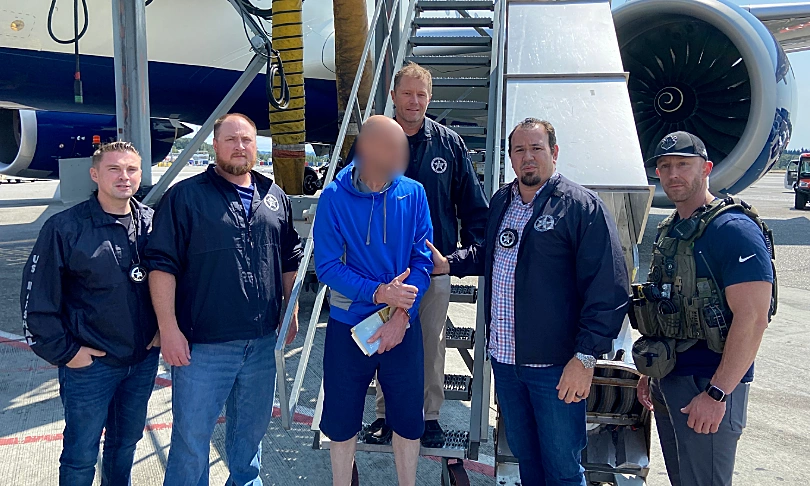
Police used facial recognition software as key evidence to refute Richard's alibi, claiming it matched the suspect's image to his photo.
Richard was later exonerated. On 10/6, he filed a lawsuit against the Jacksonville Beach Police Department and other parties, alleging that artificial intelligence (AI) facial matching technology was misused in his case.
The lawsuit states, "Instead of conducting a proper investigation, police relied on an artificial intelligence system with a high error rate to draw conclusions."
Facial recognition has become a common investigative tool. According to the Center on Privacy and Technology at Georgetown Law, public databases hold images of approximately 117 million US citizens, providing a vast data source for this technology.
The lawsuit represents the latest effort to establish limits on AI technology, which police increasingly rely on to identify suspects from unclear photographs.
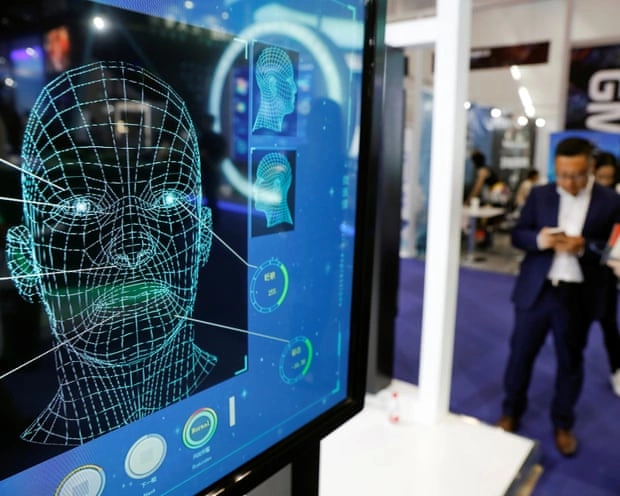 |
Facial recognition software displayed at the Global Mobile Internet Conference (GMIC) in Beijing in 2018. Photo: Reuters |
The incident involving Richard occurred in 11/2023. Police reported that a man approached a 12-year-old girl at a McDonald's and attempted to lure her away from her parents.
One month later, Richard received a call from police officer Scott O'Connell of Jacksonville Beach. Richard stated that during the call, O'Connell "repeatedly accused me of a terrible crime I was certain I did not commit."
Richard recounted thinking, "My life is over, AI says I did it, so how can I prove my innocence?"
During the phone call with O'Connell, Richard asserted he had never been to Jacksonville Beach and described "distinctive scars" from his hairline to his nose due to skin cancer surgery. Upon seeing his photo next to the suspect's, Richard was shocked by the "completely different scars."
After the call, Richard, who lives elsewhere in Florida, contacted his local police department, fearing a scam. He stated that both the Jacksonville Beach Police Department and his local police department called it a "hoax" and said the call he received was "contrary to procedure or policy."
However, in 8/2024, Richard was arrested at his home, despite his repeated claims of mistaken identity. He was held overnight in jail and then "forced to borrow money and mortgage vehicle documents to post bail."
The charges were dropped about two months later, but Richard stated he was haunted by the incident, afraid to interact with children, and feared stigmatization.
The facial recognition system that misidentified Richard is called the Facial Analysis, Comparison, and Evaluation System (FACESNXT).
According to the lawsuit, officer David Cohill took a mobile phone photo of the suspect from a computer screen displaying surveillance video of the incident. These images were then entered into the FACESNXT system by the Jacksonville Sheriff's Office for analysis. The system indicated Richard had a "93% facial feature match" with the person in the photo.
According to 2015 FACESNXT training documents, the system provides specific examples illustrating the difference between good and poor-quality images. The documents also warn that photos taken at an angle or with uneven lighting can create low-quality input data for the software. In the lawsuit, Richard claims the images used to identify him "were taken at an angle and his face was partially obscured by shadows."
Nathan Freed Wessler, deputy director of the Speech, Privacy, and Technology Project at the American Civil Liberties Union (ACLU), warns that police often err by treating a "match" generated by facial recognition software as definitive proof of a suspect's identity.
Wessler stated that both the technology developers and many police departments emphasize: "This technology does not and cannot produce a definitive confirmation." It only provides a list of potential candidates as a clue, from which police must conduct independent investigation and verification before drawing conclusions.
Richard's case is one of over a dozen publicized incidents where AI facial recognition technology led to false arrests.
The lawsuit also alleges that officer O'Connell deliberately ignored "numerous easily verifiable exculpatory evidence," such as license plate readers showing none of Richard's vehicles were ever near the restaurant.
Richard, 52, hopes the lawsuit will help him find justice while also raising awareness about the repercussions of misusing AI facial recognition technology.
Tue Anh (via CBS News, The Guardian)