The Ministry of Public Security has proposed separating two categories of acts in the draft amendment to the 2026 Penal Code, which is open for public comment until 7/5. This move aims to differentiate criminal liability, preventing the application of a single legal framework to violations that are different in nature.
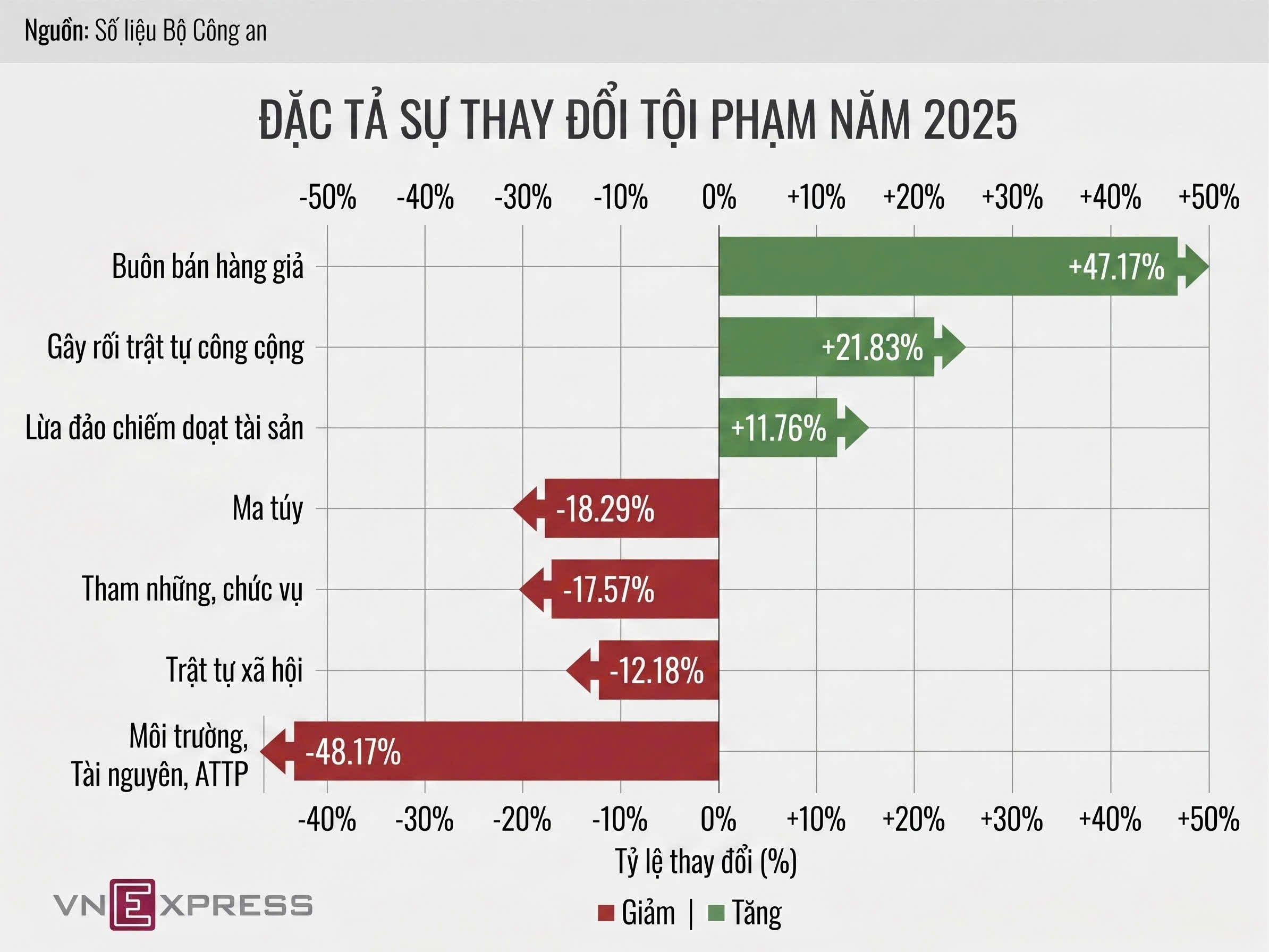
In 2025, data from the Ministry of Public Security indicated a 47,17% increase in crimes related to the production and trade of counterfeit goods. Specifically, over 123,000 violations were detected and processed, contributing more than 15 trillion VND to the state budget, according to the National Steering Committee for Anti-Smuggling, Commercial Fraud, and Counterfeit Goods. Many significant cases involved counterfeit medicines, health protection foods, and fake milk.
 |
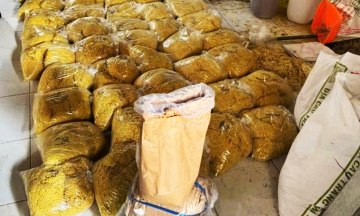
Police inspect abandoned boxes of functional foods on a vacant lot along Nguyen Van Linh street, former Binh Chanh district, midday on 6/6/2025. Photo: Dinh Van |
A notable issue arises from applying the same legal article to different violations.
Current laws specify four offenses related to the production and trade of counterfeit goods: non-specific goods (Article 192); food, foodstuffs, food additives (Article 193); curative and preventive medicines (Article 194); and animal feed, fertilizers, veterinary medicines, plant protection drugs, plant varieties, and livestock (Article 195).
However, there is no clear distinction between counterfeit goods and substandard goods, compelling authorities to apply the same legal article to both types of acts. These two types of violations pose different levels of danger to society: counterfeit goods often involve deception from the outset, whereas substandard goods may result from procedural errors. The Ministry of Public Security states that this unified approach prevents the law from adequately differentiating liability and ensuring fairness.
Another gap in the current legal framework is the absence of criminal provisions for using counterfeit packaging for food products. In practice, plastic packaging, foam containers, and food wraps can be produced from harmful recycled plastics or substandard materials. These products are then falsely labeled with trademarks and quality standards of legitimate brands to deceive consumers and businesses.
Therefore, in the draft amendment to the 2026 Penal Code, the Ministry of Public Security proposes separating two groups of acts. The first involves the production and trade of substandard goods, treated as an independent category to distinguish it from counterfeit goods. The second addresses the production and trade of counterfeit food processing aids and food packaging materials.
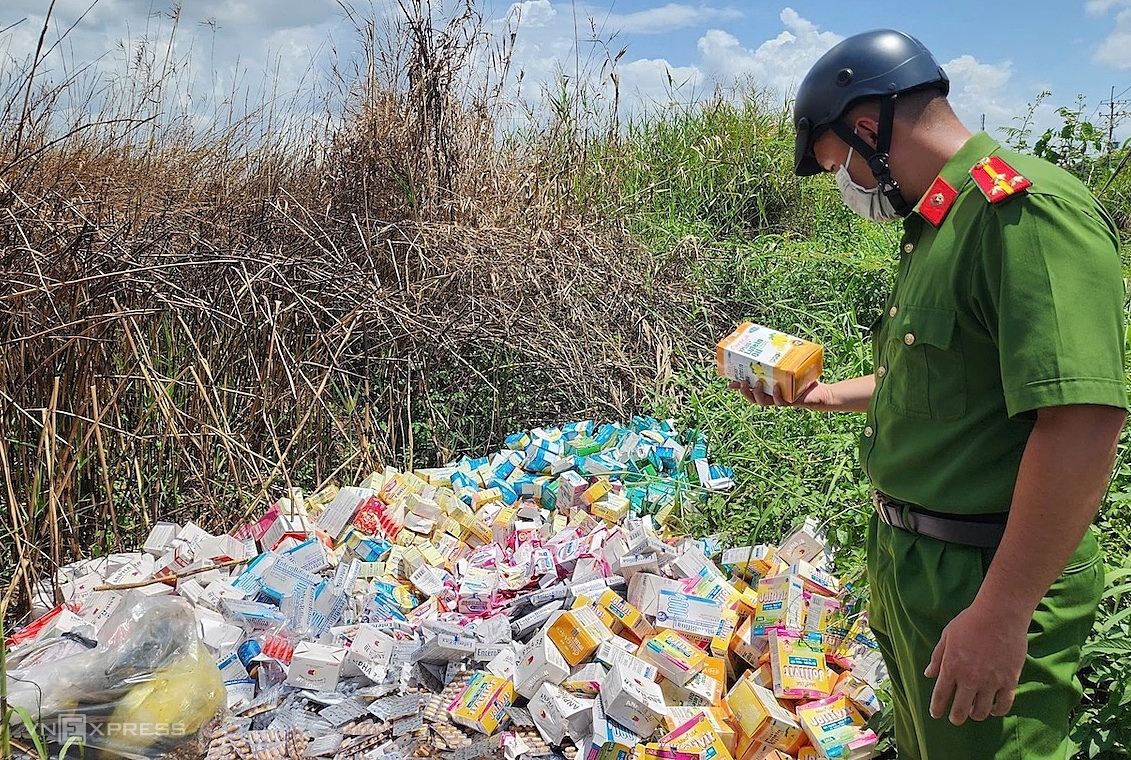 |
Police inspect abandoned boxes of functional foods on a vacant lot along Nguyen Van Linh street, former Binh Chanh district, midday on 6/6/2025. Photo: Dinh Van
The difference between counterfeit and substandard goods is clearly defined in legal documents.
According to Clause 7, Article 3 of Decree 98/2020/ND-CP, counterfeit goods are defined as products that do not match their true nature or intended use; have no use value or deviate from declared specifications; or have quality indicators that meet 70% or less of the minimum level according to registered and published standards. Additionally, counterfeit goods include fake medicines as per the 2016 Pharmaceutical Law; veterinary medicines and plant protection drugs lacking or having insufficient active ingredients; goods with fake labels, packaging, origin, or source; and fake stamps, labels, or packaging.
Conversely, Joint Circular 10/2000 defines substandard goods as products that still have use value but whose quality indicators are lower than declared or minimum standards, without causing harm to health, production, or the environment. This definition also includes goods with altered composition or quantity that are not harmful.
Hai Thu