Miss Nguyen Thuc Thuy Tien admitted to the misconduct outlined in the indictment regarding her involvement in the Kera vegetable candy business, during a hearing on the afternoon of 19/11.
Thuy Tien was accused of investing in Chi Em Rot Group Joint Stock Company to produce and sell Kera vegetable candy. She, alongside key opinion leaders Quang Linh Vlogs and Hang Du Muc, filmed promotional videos that exaggerated the product's benefits on the company's "KERA VIETNAM" Facebook and TikTok accounts.
Laboratory tests revealed the product samples lacked the 10 types of vegetable, root, and fruit powders advertised on the label and in the company's self-declaration. Instead, the samples contained an average of 33,8% sorbitol, a laxative known to cause diarrhea and abdominal pain, and contraindicated for those with biliary obstruction. This ingredient was not disclosed on the product label.
 |
Miss Thuy Tien answers questions. *Photo: Quynh Tran* |
When questioned about her participation in the vegetable candy venture, Thuy Tien explained that Le Thanh Cong, a founding shareholder of Chi Em Rot Company, initially invited her to be a product representative and advertiser. Finding the project "very interesting and with many business development ideas," she later sought a deeper operational role. She requested 25% of sales profits but did not contribute capital, as the investment amount was never finalized.
Asked about her reaction to the Kera candy assessment results, Tien expressed "great surprise." She stated, "I, and my father, also directly used this product because I do not eat vegetables. This is a very big lesson in my life, and I hope this serves as a lesson for everyone."
Thuy Tien clarified that while she did not directly sell products, she acted as a brand representative, linking a shopping cart on her personal page. For this, she received 6,8 million VND in sales commission. Following the incident, she arranged for her family to pay 3,2 billion VND to mitigate the case's consequences, proportional to her proposed shareholding.
"I understand that my false advertising significantly impacted consumer health," Tien stated. "Had I known the product's true quality, I would never have participated, as I have worked diligently to build my personal reputation."
Thuy Tien further testified that in late 2/2025, amidst social media discussions regarding the product's fiber content, she requested Le Tuan Linh, Director of Chi Em Rot Company, to sign a fabricated advertising contract with her management company, Sen Vang Company. This contract, backdated to 5/12/2024—before her Facebook advertisements—was intended to formally sever her role as a shareholder. Under this contract, Thuy Tien's involvement was limited to promoting Chi Em Rot Company's vegetable candy. When questioned by the court about who advised her on signing the contract, Tien stated she consulted many people but could not recall specific names. The court noted that the management company and consultants might be held accountable for concealing these violations.
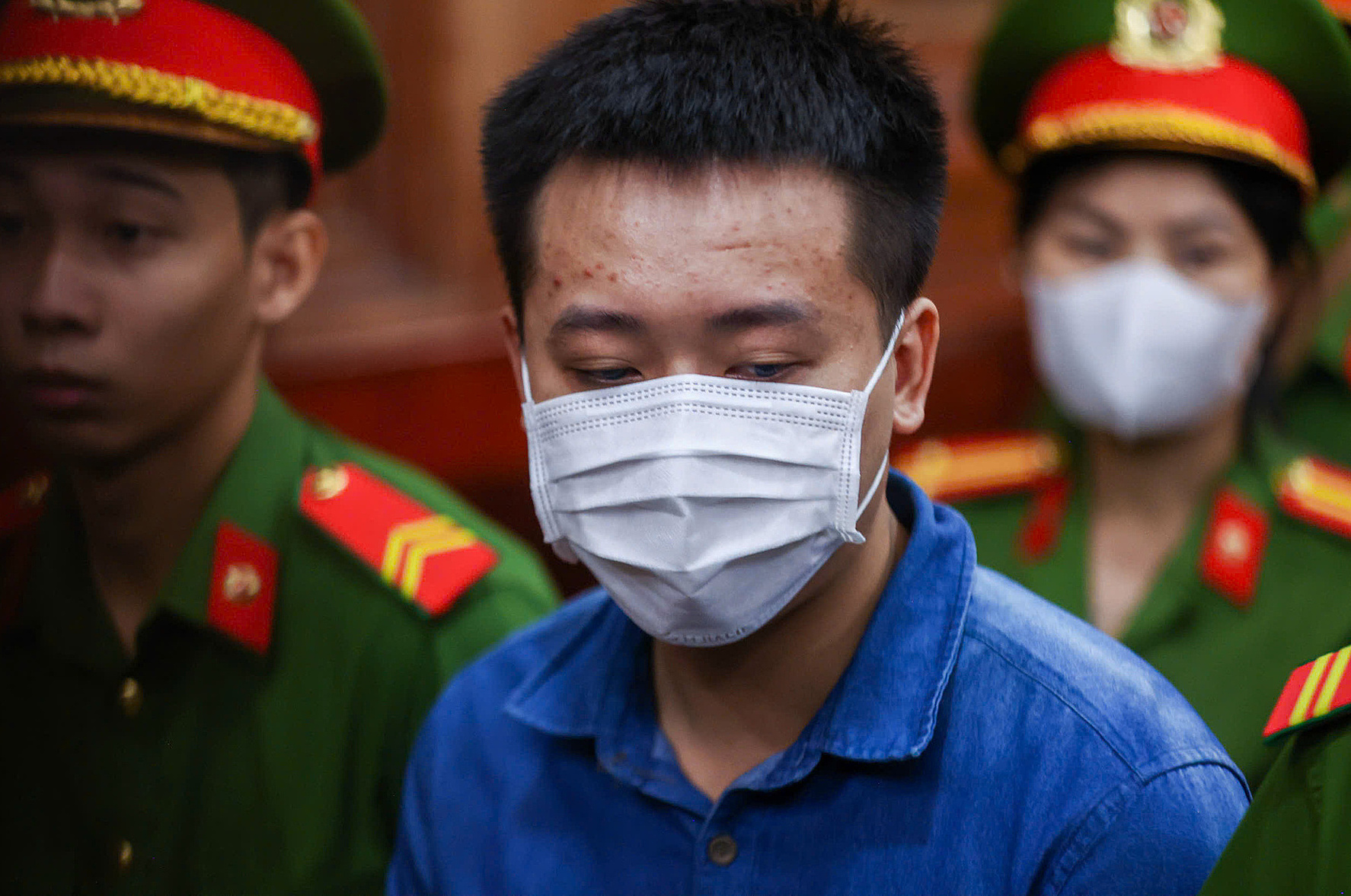 |
Defendant Pham Quang Linh in court. *Photo: Quynh Tran* |
KOL Quang Linh, the last to be questioned, admitted to false advertising and product sales. He also confessed to not fully understanding fiber content, relying instead on information from other shareholders. Following the incident, Quang Linh arranged for his family to repay 1,2 billion VND to mitigate the consequences.
The indictment states that laboratory tests showed 100 grams of candy contained only 0,51 grams of fiber and none of the 10 advertised vegetable powders. Instead, it contained 33,8% sorbitol, an unlabeled laxative. Over two months, the company generated 17,5 billion VND in sales, allegedly making 12,4 billion VND in illicit profits.
In this case, Thuy Tien, Quang Linh, Nguyen Thi Thai Hang (Chairman of the Board of Directors of Chi Em Rot Group Joint Stock Company - CER), and two others face charges of deceiving customers under Clause 2, Article 198 of the Penal Code. Nguyen Phong, Chairman of the Board of Directors of Asia Life, and others involved in production are accused of manufacturing counterfeit food. The Investigation Police Agency of the Ministry of Public Security opted to separate these charges for ongoing investigation, citing the need for additional time.
By Hai Duyen