These are new provisions within the draft Decree detailing the implementation of several articles of the Law on Execution of Criminal Judgments. This draft is expected to take effect on 1/7, replacing Decree 118/2024/ND-CP.
In an effort to concretize human rights under the Constitution, the draft introduces regulations to ensure inmates' freedom of belief and religion, recognizing this as an official activity regime.
Provisions for inmates to express religious beliefs
Under current regulations in Decree 118/2024/ND-CP, inmates' freedom of belief and religion has not been separated into a distinct activity regime. Specifically, in the study program for new inmates, the topic "Respect for Humanity" is allocated approximately two hours of study.
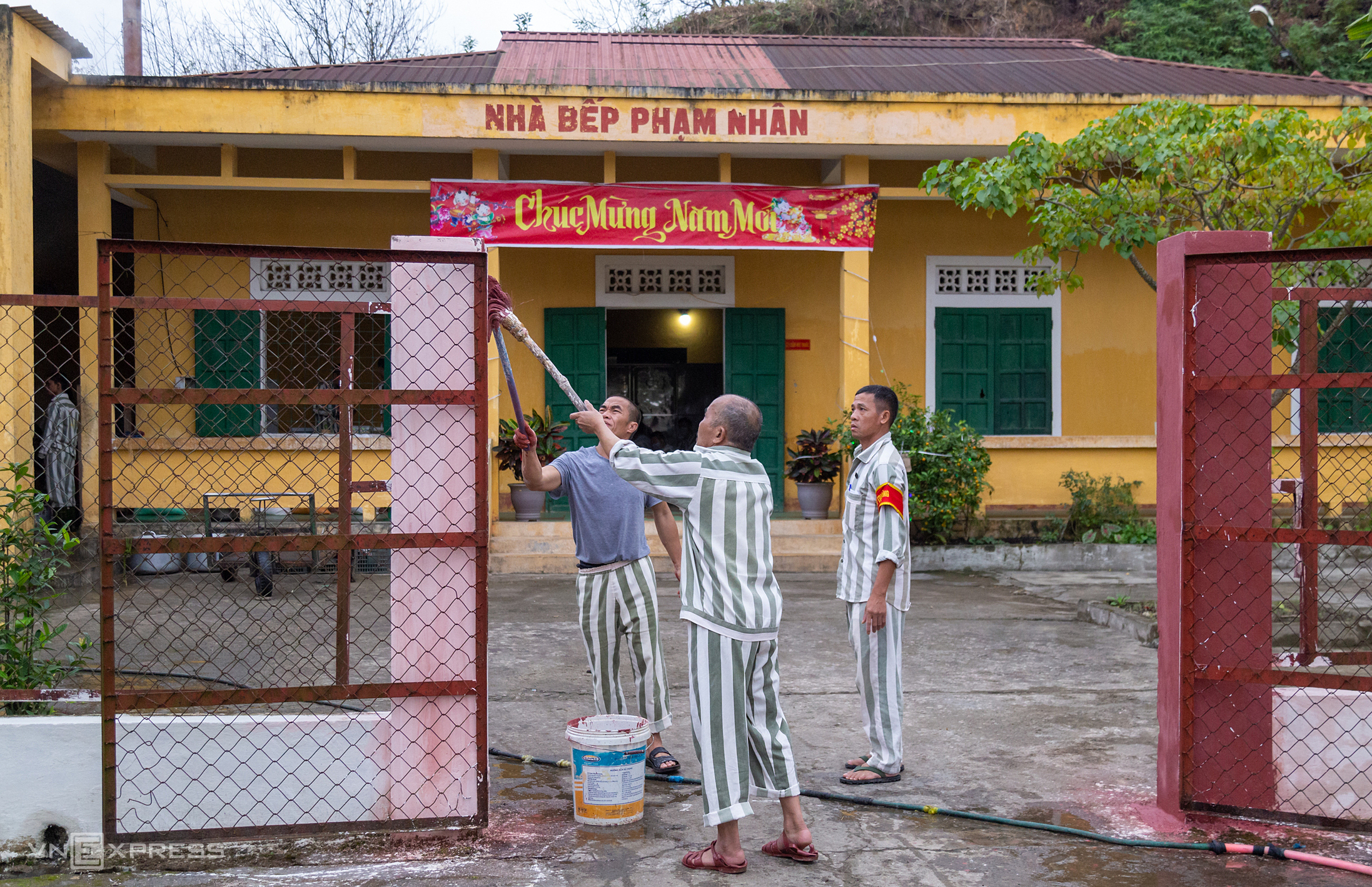 |
Inmates at Nghia An Prison, Quang Tri province, decorate their space to welcome Tet. Photo: Hoang Tao
In Article 7 of the draft, the Ministry of Public Security proposes for the first time to formally legalize "the regime for inmates to use religious texts and express religious beliefs" with specific regulations.
Accordingly, inmates practicing a religion are permitted to use legally published and distributed religious texts once a week. This is a significant step, providing inmates with official materials for spiritual cultivation.
To exercise this right, inmates must register with an education officer for the use of religious texts and the expression of personal beliefs.
The draft clearly stipulates that inmates will be allocated specific locations and times for these activities. However, these activities must be regulated by the prison warden or temporary detention facility supervisor and must not affect other individuals.
To ensure security and legality, detention facilities are responsible for managing and censoring religious texts before inmates are allowed to use them.
The inclusion of these regulations in the draft is expected to bring many positive values. According to the Ministry of Public Security, completing this regime aims to ensure the full exercise of human rights and citizen rights under the Constitution and the Law on Execution of Criminal Judgments 2025. The State affirms that the freedom of belief is not lost even when an individual is serving a prison sentence.
Respecting spiritual life helps inmates feel secure in their rehabilitation, restore their character, and reintegrate into the community sooner. Religion is considered an effective channel for moral education and promoting good deeds, alongside legal and civic education programs.
2% increase in welfare for inmates' cultural and artistic activities
The draft adds and significantly standardizes the regime for inmates' physical exercise, sports, cultural, and artistic activities. This ensures that inmates' rights are uniformly and mandatorily implemented across all detention facilities.
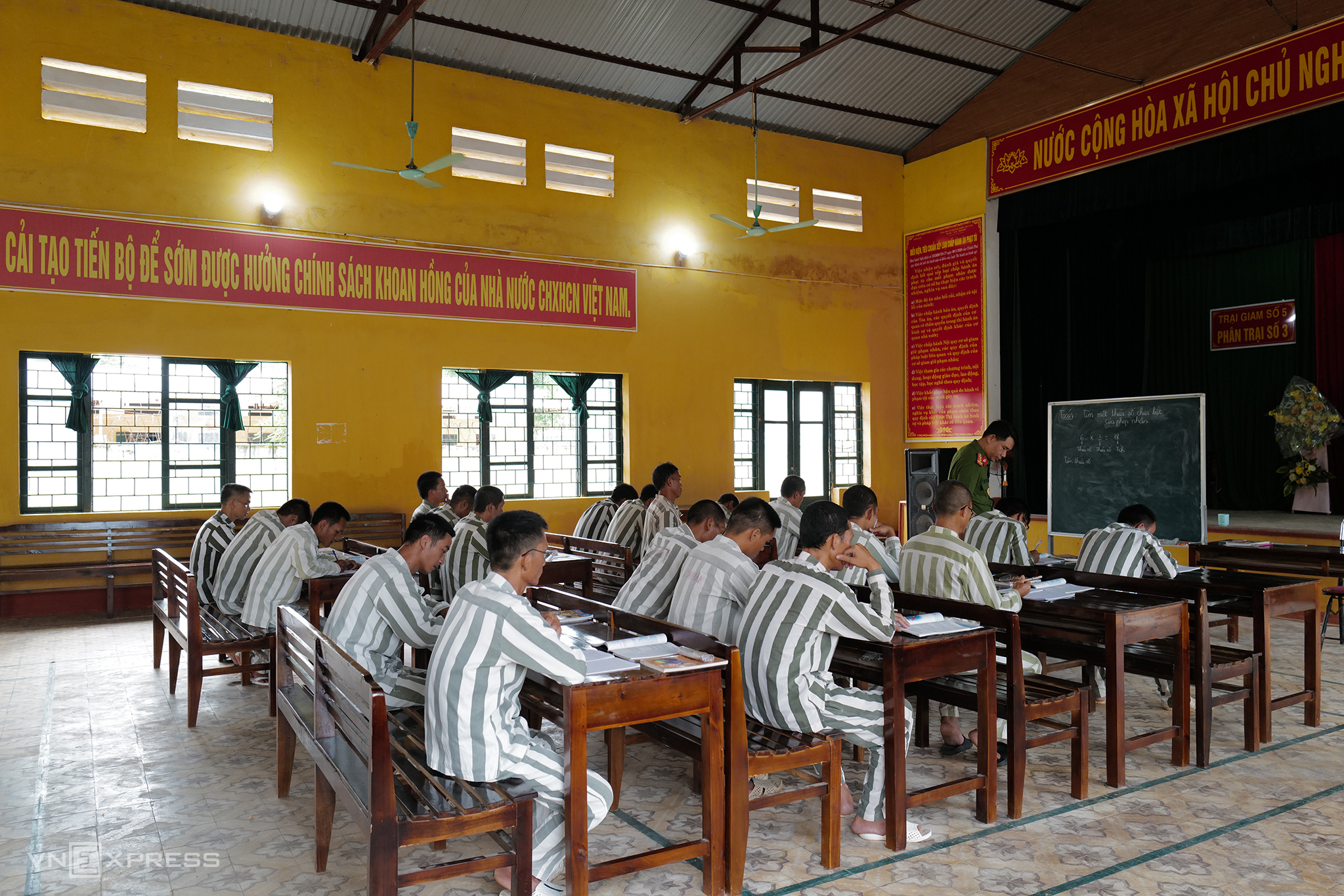 |
A literacy class at Prison 5, Thanh Hoa province. Photo: Ngoc Thanh
Article 7 of the draft details the equipment that each sub-camp and cell must be furnished with to serve the spiritual needs of inmates, such as: newspapers, sound systems, and audiovisual equipment. Specifically, "inmate groups and teams will receive Nhan Dan Newspaper according to its publication schedule. Each sub-camp will be equipped with an internal public address system and a sound system for cultural and artistic activities, and each communal cell will be equipped with one television," the draft states.
Funding for these activities is drawn from the Welfare Fund, which is formed from the results of inmates' labor.
The current Decree 118 stipulates that 16% of the Welfare Fund is allocated to support inmates in organizing cultural, artistic, physical exercise, and sports activities.
This draft has increased the allocation to 18% of the Welfare Fund for these activities. The 2% increase in funding demonstrates a greater commitment to improving the quality of inmates' spiritual lives.
The draft also encourages the participation of social resources to enhance inmates' spiritual lives. Specifically, the State encourages inmates' families and other agencies and organizations to provide books, newspapers, and documents to enrich their cultural and spiritual well-being.
Beyond these provisions, the draft also introduces a breakthrough by regulating a 16-day procedure for inmates wishing to donate organs to relatives. It also proposes to increase the amount of meat, fish, and eggs in their diet, and improve clothing and daily living conditions.
Hai Thu