These are some of the new provisions outlined in Decree 279/2025, which regulates the Road Accident Damage Reduction Fund and takes effect from 15/12.
The Road Accident Damage Reduction Fund (RADRF), established by the Government and managed by the Ministry of Public Security, is an off-budget state financial fund. It mobilizes social resources to support the reduction of road accident damages.
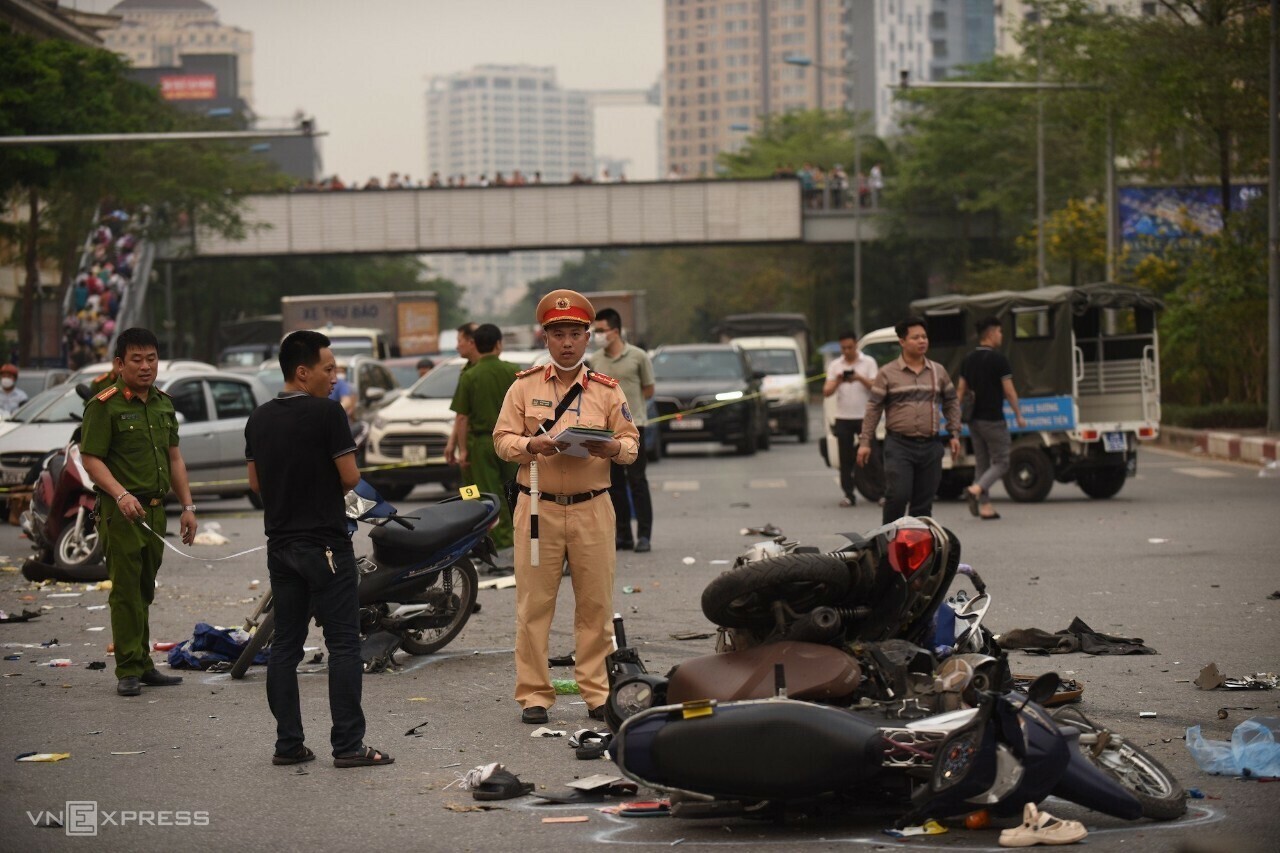 |
Traffic police on duty after a road accident in Hanoi. Photo: Pham Chieu
The fund's charter capital received a one-time allocation of 500 billion VND from the central budget. Financial sources for the fund include: non-budgetary aid and support; voluntary contributions from organizations and individuals; interest earned from deposit accounts; and surplus funds from the previous year carried over to the next.
Information regarding the fund's operations, financial reports, and performance results will be publicly disclosed by the Ministry of Public Security on 31/1 annually on its electronic information portal.
Financial support for victims, next of kin, and rescuers
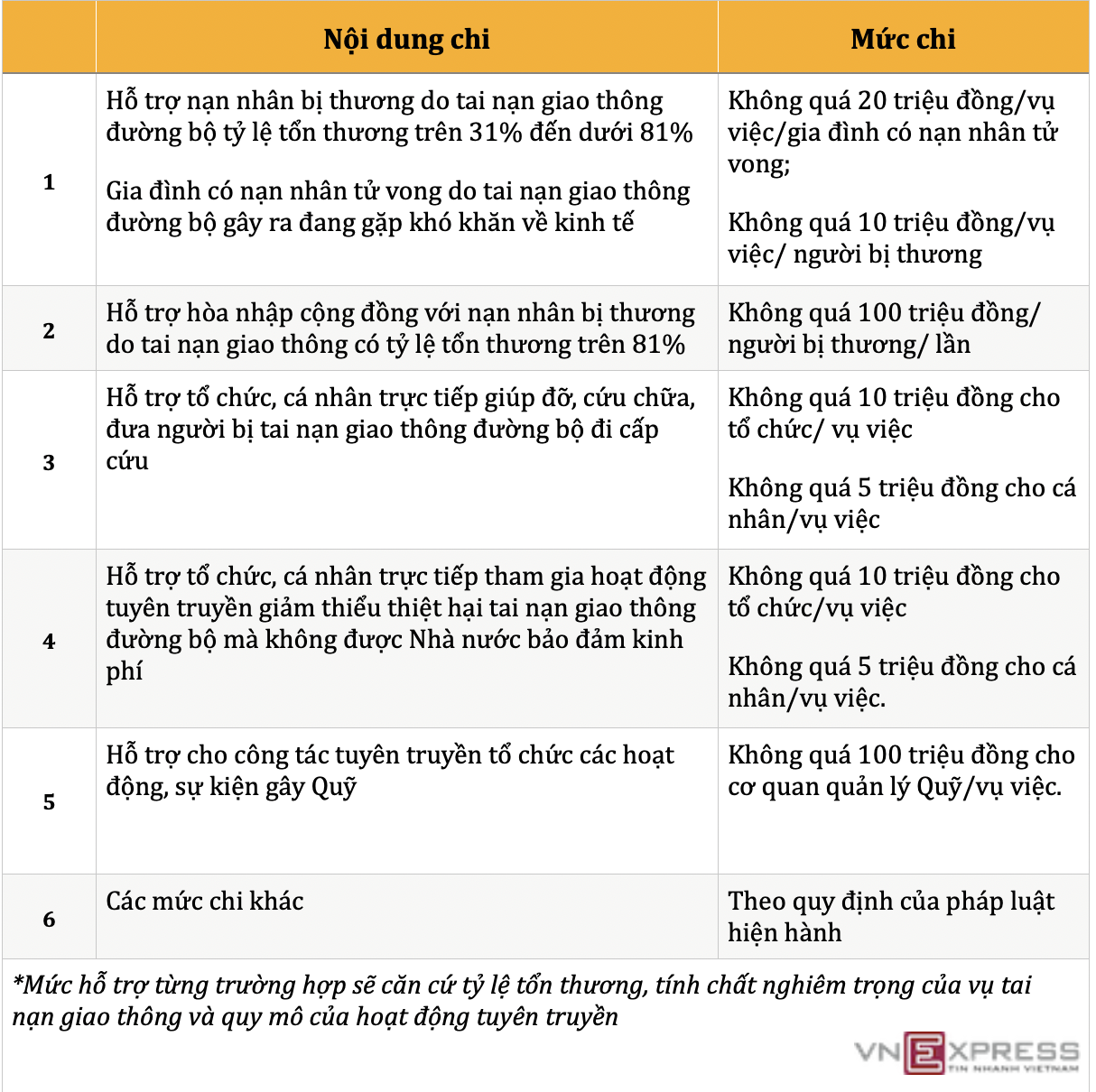
According to the upcoming decree, the fund will disburse funds across six categories, focusing on supporting road accident victims with injuries; the next of kin of deceased victims; organizations and individuals directly involved in assisting, treating, and transporting road accident victims for emergency care; and expenditures for public awareness campaigns.
Specific expenditure levels will be determined by the Minister of Public Security. For organizations and individuals directly involved in assisting, treating, and transporting road accident victims for emergency care, the fund will provide support based on the severity of the accident, not exceeding 10 million VND per organization per incident and not exceeding 5 million VND per individual per incident.
Other support categories are regulated as follows:
 |
Also, under Decree 279, the People's Committees of provinces and cities are responsible for compiling local damages and proposing expenditure items and support needs once every three months. These proposals are then sent to the fund's management agency for consolidation and submission to the Minister of Public Security for decision.
For cases not covered by the aforementioned support regulations, provinces and cities must allocate budget support for situations not falling under Articles 11 and 12 of this decree.
Ensuring support reaches those in need
According to the Ministry of Public Security, road accidents have decreased but remain high. In the past three years, an average of over 10,000 people have died and over 15,000 have been injured annually. Most victims are of working age, often serving as the primary breadwinners and income sources for their families.
Addressing the consequences of accidents is costly, leading many families into difficult circumstances and creating significant burdens for society.
However, if all victims were supported, the fund might not have sufficient resources. Therefore, the decree stipulates that only victims with an injury level of 31% or more will be considered for support.
For families with a deceased road accident victim, the criteria for financial support are households facing extremely difficult circumstances (poor households, near-poor households). This ensures that fund disbursements meet practical demands and target the appropriate beneficiaries.
The Ministry of Public Security notes that current victim support efforts are fragmented, relying on various, often irregular, sources. Some public awareness campaigns heavily depend on state budgets or corporate social responsibility initiatives. Many of these campaigns primarily serve as business or product promotions rather than genuinely humanitarian efforts to ensure road safety. Consequently, this decree was issued to manage and utilize the Road Accident Damage Reduction Fund, which is deemed "very necessary and urgent."
Hai Thu