In 1997, the Itaewon area in central Seoul was one of the liveliest nightlife spots. Located near the US Yongsan military base, this neighborhood was popular with American soldiers, foreigners, and young South Koreans, featuring bars and restaurants open late into the night.
On 3/4/1997, Cho Jung-pil, a 22-year-old Hongik University student, visited a Burger King restaurant near Itaewon station with a friend for dinner.
Around 23h, Cho entered the restroom on the second floor. Minutes later, the student was found collapsed in the stall with multiple stab wounds, concentrated around the neck and upper body. Despite being rushed to the emergency room, the victim succumbed to severe blood loss.
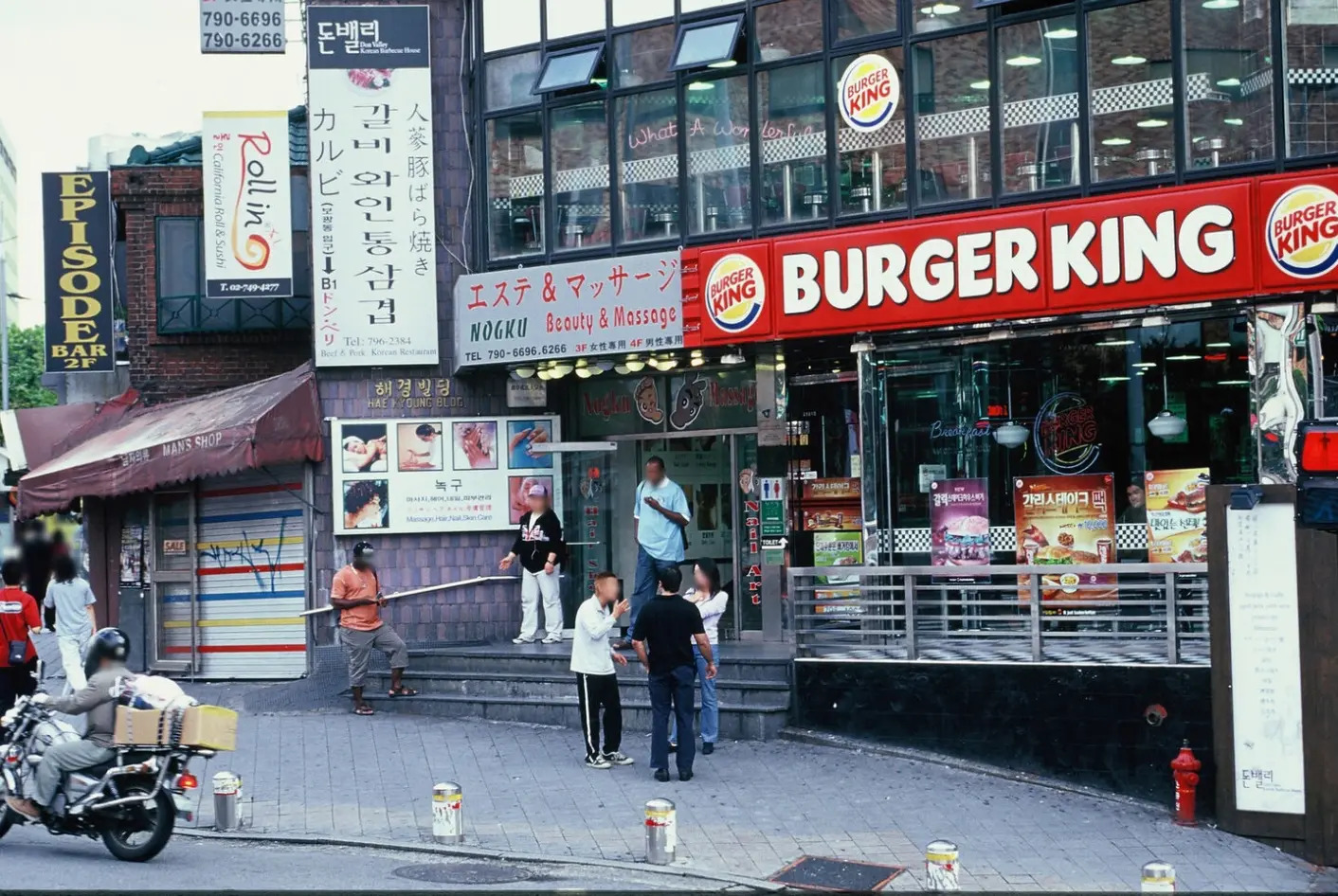 |
The Burger King restaurant outside exit 3 of Itaewon station in Yongsan district, central Seoul, in 9/2005. Photo: Seoul Research Data Service |
Two suspects at the scene
The investigation quickly focused on two American teenagers present at the scene: Arthur John Patterson, 17, and Edward Lee, 18.
According to case files, Patterson was a US citizen born in South Korea, whose father was a civilian contractor for the US military and mother was South Korean. Lee was also a Korean-American US citizen. Both were out with a group of nearly 20 people in Itaewon on the night of the murder.
Testimonies during legal proceedings indicated that the group of teenagers had challenged each other to "attack a stranger".
Patterson and Lee were both seen in the restroom area just before Cho Jung-pil was murdered. However, no witnesses saw the stabbing, and the restaurant had no cameras in the restroom. Therefore, from the start, the investigation relied primarily on testimonies, physical evidence, and forensic examination results.
Conflicting testimonies
When questioned, Patterson and Lee admitted to being in the restroom at the time of the incident, but each claimed the other was the one who wielded the knife.
Patterson stated that Lee suddenly attacked Cho. During subsequent proceedings, Lee claimed that Patterson was the direct perpetrator. These two contradictory statements became a recurring theme throughout the investigation and trials that spanned nearly two decades.
Investigators gathered statements from those present at Burger King, conducted examinations of traces at the scene, and on the suspects' clothing. The weapon was identified as a pocket knife belonging to Patterson.
Police initially leaned towards Patterson being the one who stabbed the victim. However, after reviewing the file, prosecutors decided to indict Lee for murder, as he had told friends "We stabbed someone in the neck" immediately after the incident. Patterson was indicted on charges related to carrying a weapon and destroying evidence, having burned his shirt and hidden blood-stained shoes.
The differing assessments between the two agencies complicated the handling of the case.
A murder 'without a culprit'
In 10/1997, Lee was convicted of murder and sentenced to life imprisonment, but this was later reduced to 20 years.
However, following an appeal, higher courts ruled that there was insufficient evidence to conclude Lee directly murdered Cho and acquitted him in 9/1997.
Under South Korean law, after a final verdict, Lee could not be tried a second time for the same crime without special legal grounds.
Meanwhile, Patterson received an 18-month prison sentence for destroying evidence. After serving his sentence, he was released.
Just as prosecutors were considering the possibility of indicting Patterson for murder, he left South Korea for the US in 8/1999. The travel ban against Patterson had expired before investigators completed the necessary procedures.
The incident sparked debate about South Korea's handling of cases involving foreign elements, especially given the sensitive nature of the Status of Forces Agreement (SOFA) in South Korea-US relations. However, legal documents indicate that Patterson's departure from South Korea did not stem from SOFA provisions, but rather from procedural errors and exit management oversights.
Prolonged legal battle
After Patterson left South Korea, the Cho Jung-pil case stalled for many years. The victim's family continued to demand a reinvestigation, arguing that the direct perpetrator had not yet been held accountable.
In 2009, the case once again captured public attention when the film "The Case of Itaewon Homicide" was released. Inspired by the true story, the film recreated the controversies surrounding the 1997 investigation. While not an investigative documentary, the movie helped reignite public interest in the cold case.
In the early 2010s, South Korean prosecutors began re-examining the file. The reinvestigation did not arise from entirely new evidence, but from a re-evaluation of previously collected documents, testimonies, and evidence.
Following this review, South Korea decided to re-indict Patterson for murder and submitted an extradition request to the US.
Patterson opposed the extradition, arguing that a retrial after many years was unfair. However, after legal proceedings in the US, South Korea's extradition request was granted.
In 9/2015, Patterson was brought back to South Korea, nearly two decades after the murder.
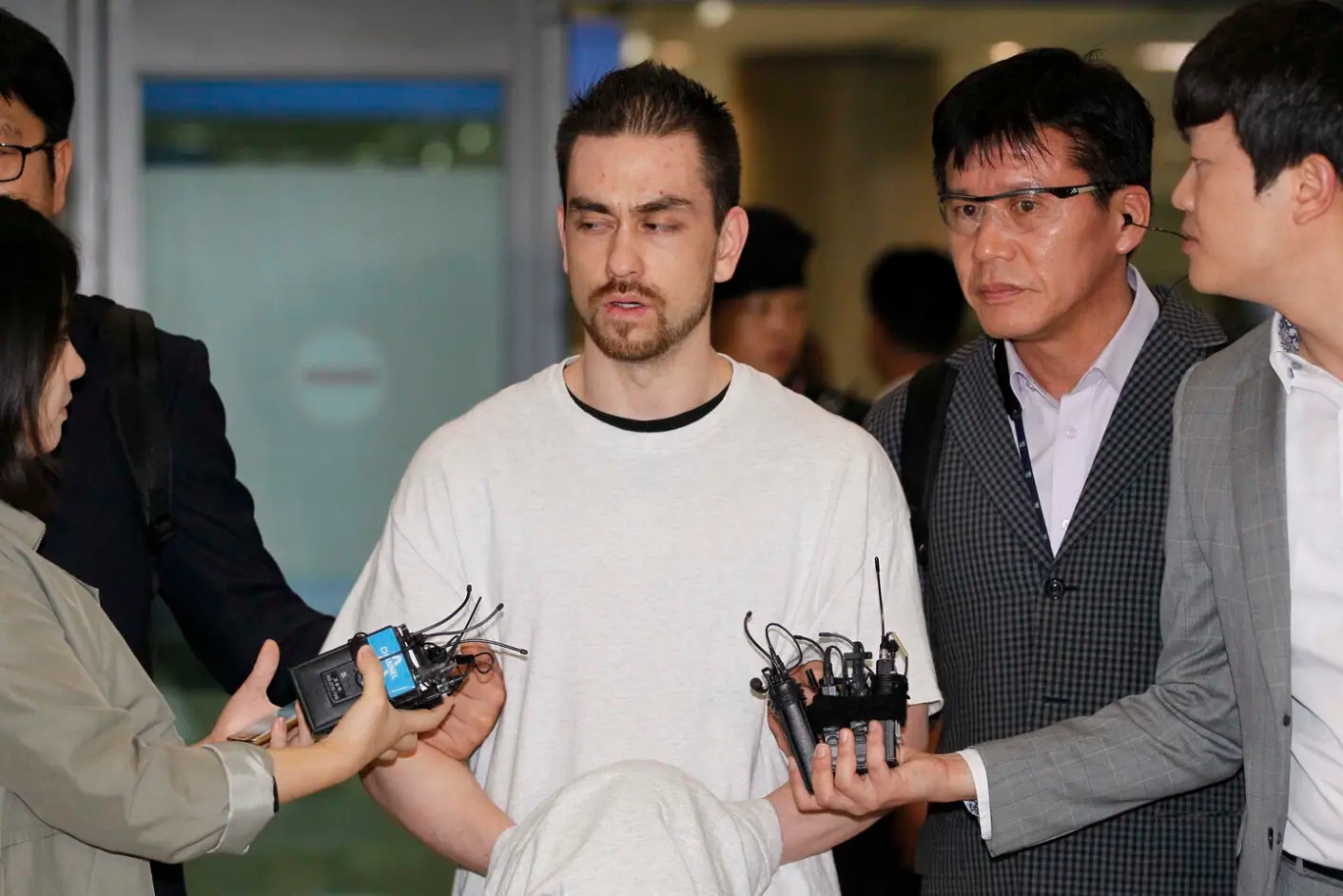 |
Arthur Patterson (center) speaks to reporters at Incheon International Airport on 23/9/2015, after being extradited from California to South Korea on charges of murdering Cho Jung-pil. Photo: JoongAng Daily |
Delayed verdict
At the new trial, Patterson continued to deny the murder charge, asserting that Lee had directly stabbed the victim and that he was only present at the scene.
Lee testified that Patterson had stabbed Cho. However, the defense lawyers countered that Lee's testimony was unreliable because he had been a primary suspect in the case and might have a motive to shift blame.
In addition to the testimonies of Lee and other witnesses, the prosecution used circumstantial evidence including traces collected at the scene, forensic results related to physical evidence, inconsistencies in Patterson's statements, and events after the murder. Prosecutors argued that a comprehensive assessment of this evidence was sufficient to determine Patterson as the direct perpetrator.
The defense did not deny Patterson's presence at the scene but argued that the prosecution's evidence was purely speculative and did not rule out Lee as the killer.
On 29/1/2016, the Seoul Central District Court found Patterson guilty of murder and sentenced him to 20 years in prison.
The court ruled that although there was no direct evidence of the killing, the totality of testimonies, physical evidence, and case circumstances indicated Patterson directly stabbed the victim.
Since Lee had previously been acquitted of the murder charge, he could not be re-indicted for the same crime under the double jeopardy principle.
Patterson appealed, but higher courts successively rejected his appeals, upholding the sentence.
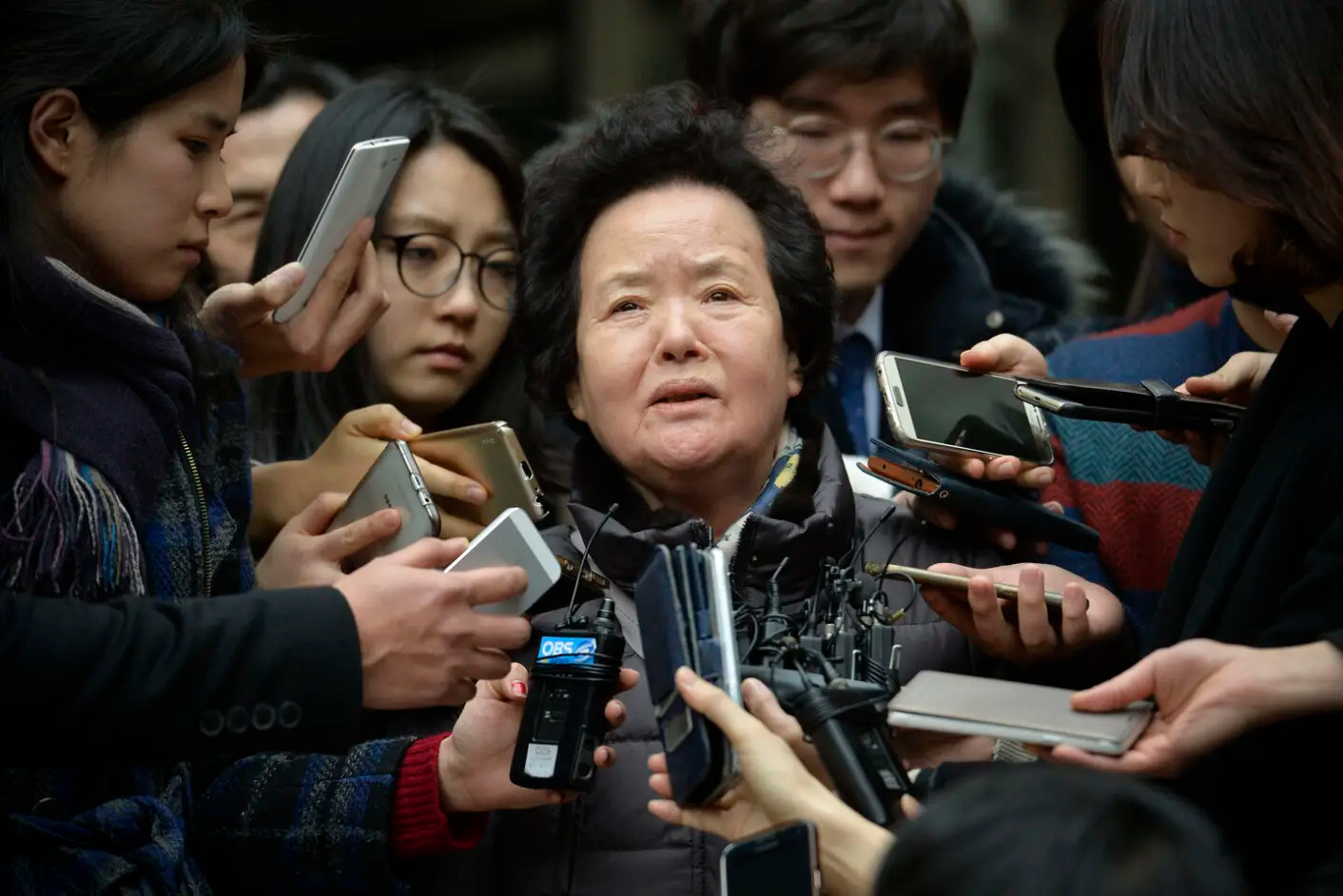 |
Lee Bok-su, Cho Jung-pil’s mother, tearfully stands outside the Seoul Central District Court on 29/1/2016, after Arthur Patterson was convicted. Photo: JoongAng Daily |
Nearly 20 years after Cho Jung-pil's murder, Patterson's conviction concluded a long legal debate but did not resolve questions raised about the South Korean justice system.
One of the largest debates concerned errors in the initial investigation, particularly the differing assessments between police and prosecutors regarding the roles of the two suspects. The failure to clearly identify the direct perpetrator from the outset prolonged the case and forced the victim's family to pursue justice for many years.
In 2018, a court ordered the state to compensate Cho's family for official errors in handling the case.
Tue Anh (according to TIME, Yonhap, JoongAng Daily, Brill)