Have you ever bitten into a boiled egg that felt like chewing an eraser, or seen a plate of steamed fish that was mushy and dry?
Chef Vu Nhat Thong of Eric Cooking Class Center describes boiling at 100 degrees C as a "violent" act for delicate ingredients. Boiling water aggressively tightens protein fibers, forcing moisture out of foods like eggs, fish, and chicken breast.
To avoid this, professional chefs often employ poaching, a cooking method that uses hot water between 71 and 85 degrees C. This gentle process prevents rapid protein coagulation, thereby preserving moisture and ensuring a tender texture in the final dish.
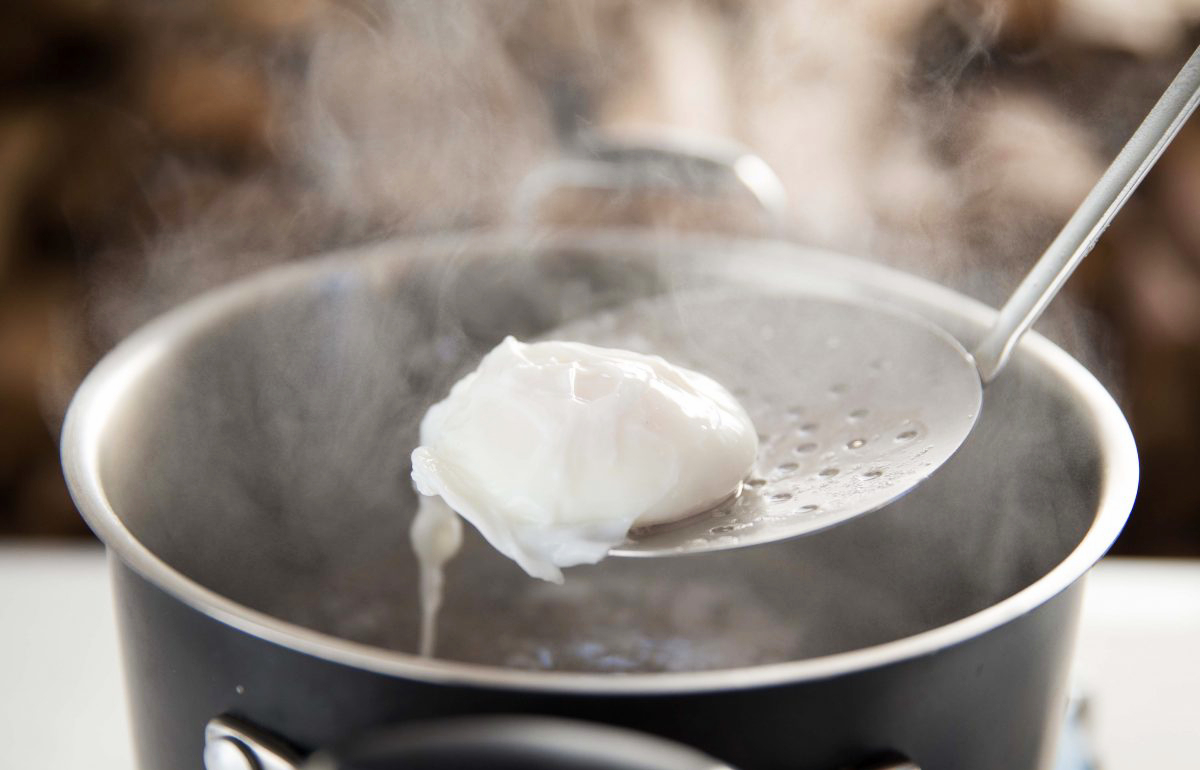 |
Photo: Dontgobaconmyheart
The art of poaching eggs
Poached eggs, with their tender whites encasing a runny yolk, demand strict temperature control. The cook must use a thermometer to maintain the water at 80-85 degrees C, with only small, simmering bubbles at the bottom of the pot, never large air bubbles.
Then, add about 15 ml of white vinegar for each liter of water. The acid in the vinegar helps the egg white set quickly and enclose the yolk. The chef gently stirs with chopsticks to create a vortex, then carefully drops the pre-cracked egg into the center of the swirl. Centrifugal force naturally helps the white wrap around the yolk. Eggs cook for 3-4 minutes before being removed with a slotted spoon.
Poaching fish with herb broth
For fish, poaching often combines with a quick broth, known as court-bouillon, to enhance flavor. This mixture includes water, white wine (for acidity), herbs such as dill, bay leaf, and peppercorns, along with lemon and onion.
Gently boil the mixture for 15 minutes, then reduce the temperature to 75-80 degrees C before adding the fish to poach. This process not only cooks the fish gently but also infuses the rich flavors of herbs and wine deep into its flesh.
Basic principles for perfect poaching
According to Chef Vu Nhat Thong, the essence of refined cooking is to preserve, not destroy, the natural structure of ingredients. To master the poaching technique, home cooks should remember three rules:
Temperature control: Use a cooking thermometer to maintain a stable temperature throughout the process.
Time: Poaching is a slow cooking method, requiring patience for ingredients to cook gradually. Never increase the heat.
Ingredient quality: As this method celebrates natural flavors, the food used—whether eggs, fish, or meat—must be of the freshest quality.
Bao Nhien