The technique of marinating meat with baking soda is often called "velveting". This method is common in Chinese restaurants, transforming tough cuts into tender stir-fries.
This technique is suitable for cuts prone to drying out during stir-frying, such as sirloin, tenderloin, shoulder, or beef shank, and works best with thinly sliced, stripped, or small cubed meat.
Chef Vu Nhat Thong from Eric Cooking Class explains that the principle of this method lies in baking soda's alkalinity. Upon contact with the meat's surface, it increases the pH, preventing protein fibers from contracting under high heat. This retains internal moisture, resulting in a more tender piece of meat.
Thong states that incorrect use of baking soda will ruin a dish. Overdosing can leave a bitter, metallic, or soapy taste. Strong alkalinity also causes muscle fibers to lose elasticity, making the meat mushy, disintegrated, and grey after cooking.
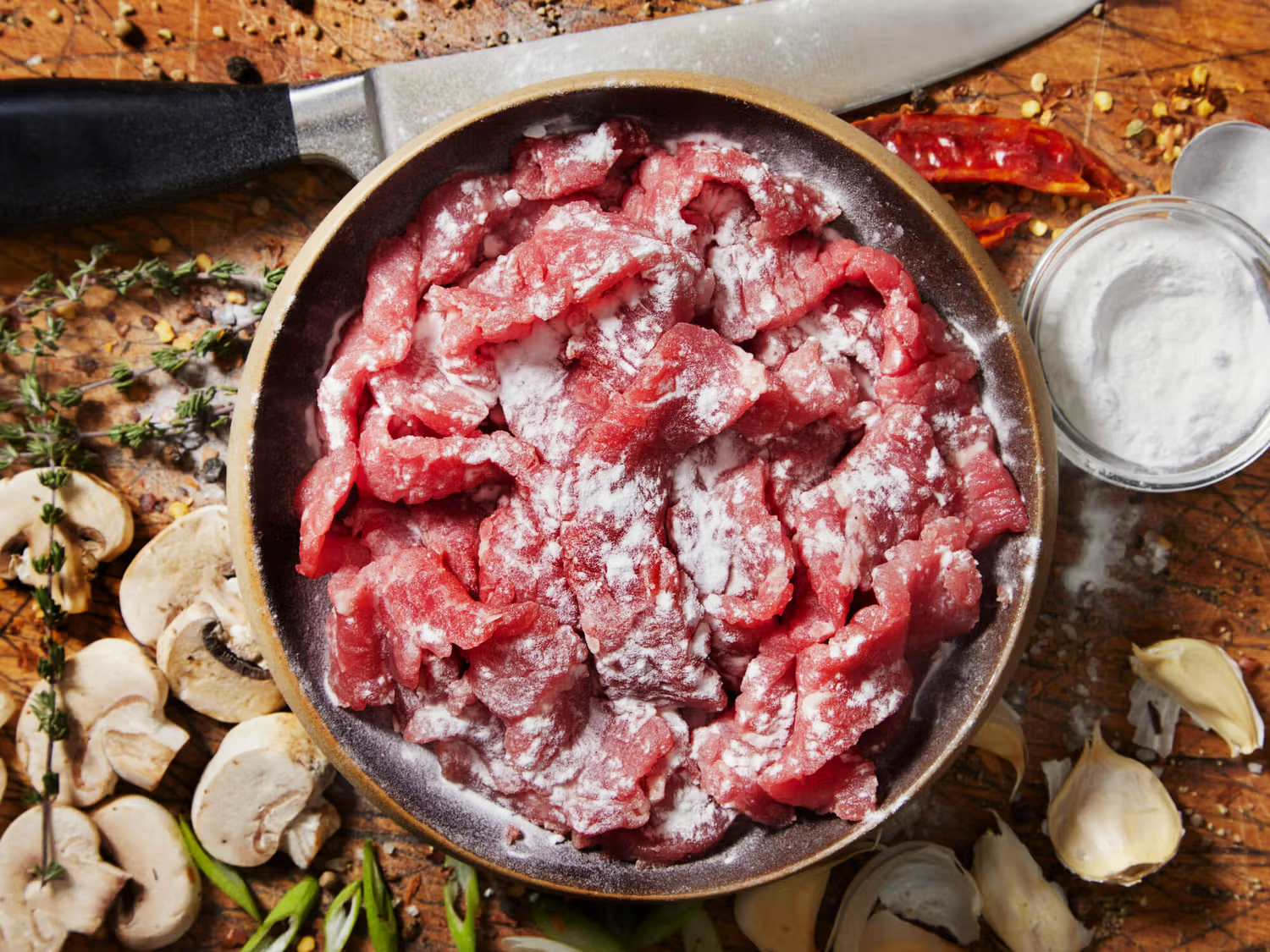 |
Marinating meat with baking soda is a quick, effective method but requires proper technique. Photo: *Americastestkitchen*.
Chef Vu Nhat Thong advises home cooks to prioritize natural tenderizing methods using enzymes from pineapple, papaya, kiwi, or cutting meat against the grain. If baking soda is needed to save time, cooks must adhere to three principles:
First, control the dosage. Use only about 2-3 grams (equivalent to 1/2 teaspoon) of baking soda for 500 grams of meat.
Second, marinate for only 15 to 20 minutes. Soaking baking soda for too long will destroy the ingredient's texture.
Third, rinse the meat. After marinating, cooks must rinse the meat under cold running water to remove excess baking soda from the surface. Afterward, the meat should be patted dry before adding main seasonings. This step helps eliminate metallic and bitter tastes, preserving the dish's original flavor.
Bao Nhien