In 2023, during a dinner to meet her future in-laws in Ha Noi, Tieu Quyen, 26, from Da Lat, Lam Dong, was urged by her boyfriend's mother to "an va di con" (eat directly, without rice). Seeing everyone's welcoming attitude, the linguistics graduate knew she wasn't being scolded, but she still didn't understand the phrase, even mistaking it for "an tat" (get slapped). Later, her boyfriend explained that "an va" meant eating food without accompanying rice. "Everyone laughed when I recounted the story to the family after he explained it," Quyen recalled.
This was the first cultural shock for the southern woman marrying into a Ha Noi family. The next day, her boyfriend invited her to eat "nem". Quyen thought it referred to Da Lat grilled pork sausage or fermented pork roll and readily agreed. Only upon arrival did she realize it was fried spring rolls, a dish southerners call "cha gio", which she dislikes.
Beyond language and food, the volume of speech during conversations also once confused the Da Lat native. Initially, she often felt upset, thinking her husband was yelling at her without reason. Her husband, Tuan Anh, 28, clarified he was just speaking normally. After living together for a while, Quyen realized her husband wasn't being irritable; it was simply the northern custom of speaking loudly and with emphatic pronunciation.
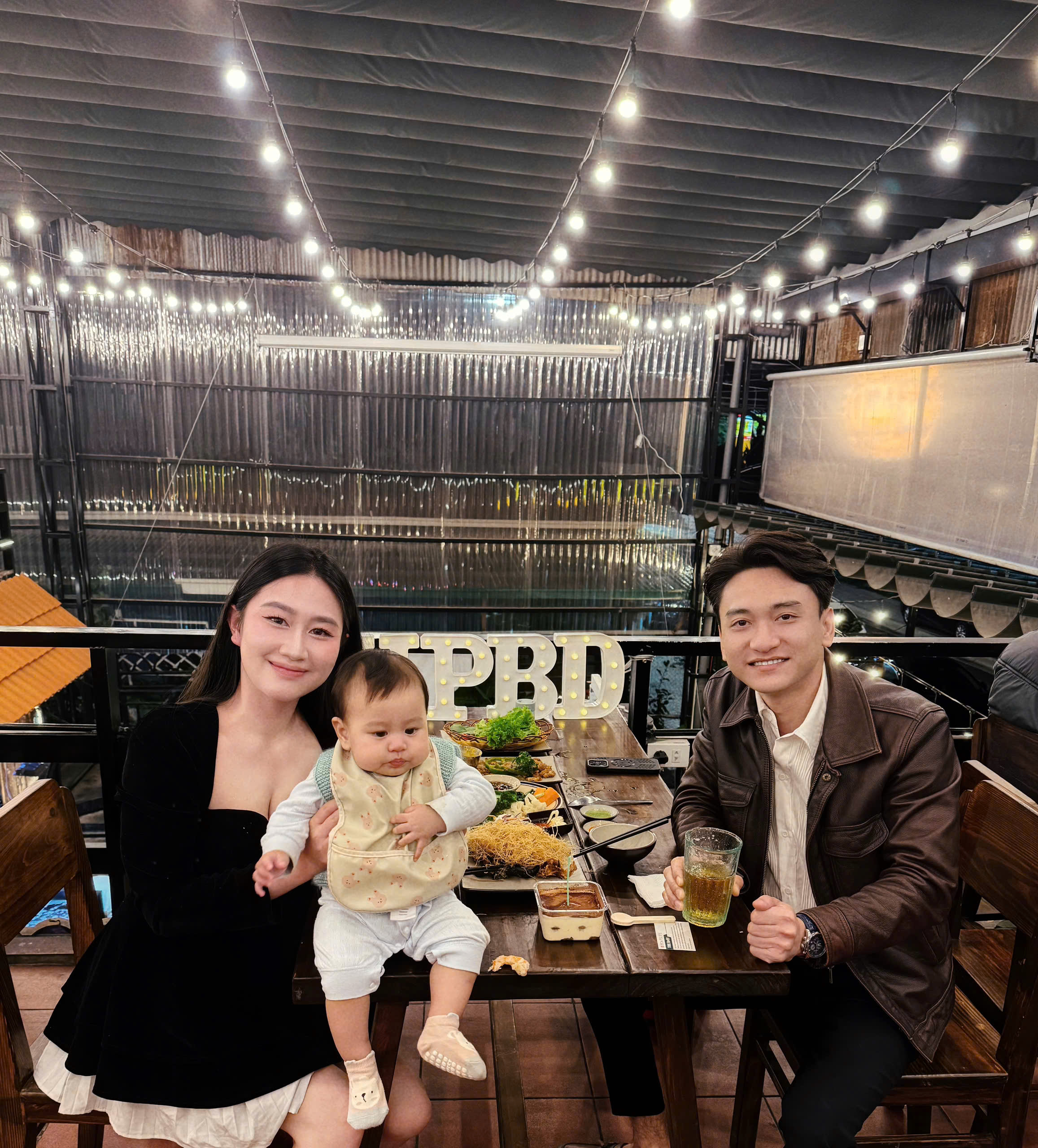 |
Tieu Quyen and Tuan Anh have dinner at a restaurant in Da Lat on Quyen's birthday, 7/2026. Photo: Luong Tieu Quyen |
Although living in the same S-shaped country, each region of Vietnam possesses distinct linguistic, culinary, and lifestyle characteristics. These differences often lead to awkward situations, requiring northern and southern couples to adapt.
A 2021 study titled "Family values vary across socio-economic regions", conducted by the Ministry of Culture, Sports and Tourism, outlined the diverse family values across different regions.
Families in the Red River Delta, heavily influenced by Confucianism, prioritize family traditions, clan cohesion, and the role of children in maintaining marriage, while preserving many traditional rituals.
In the Central Highlands, communities value marriage within the same locality or ethnic group, while also emphasizing the role of children and community cohesion.
Conversely, the Southeast region is the most open to modern family values, supporting gender equality, promoting shared responsibilities in marriage, and more readily accepting diverse family models than other regions.
Born in the Central Highlands, Quyen's family was deeply influenced by generations of traditional thinking. Her parents wanted their children to marry within the region. When they learned Quyen was in love with a man from Ha Noi, her father strongly objected, fearing cultural differences and the stereotype of "patriarchal northern men" would make his daughter unhappy.
Despite these barriers, the couple held hands and entered marriage.
Their wedding blended customs from both regions. Quyen's family in Da Lat held only an engagement ceremony, combining it with the wedding and bridal procession, strictly adhering to an even number of couples. In contrast, Tuan Anh's family in Ha Noi organized three full ceremonies: a formal meeting of families, an engagement, and a wedding, renting a bustling hotel with a large bridal procession.
Cultural differences became more pronounced during Tet (Lunar New Year). In the South, Quyen's family primarily worships Buddha, often traveling for Tet or only visiting pagodas on the first day. However, when she celebrated Tet in Ha Noi with her husband's family, where both paternal and maternal sides were large extended families, she was surprised to see her in-laws visit pagodas from New Year's Eve, elaborate ancestral offering trays prepared, and the burning of incense for ancestors as an essential ritual whenever children and grandchildren returned from afar.
Initially, there were taste disagreements, as the wife preferred sweet flavors while the husband was accustomed to savory ones. Instead of forcing each other to change, they chose to learn to cook for each other. "I learned to make caramelized pork belly and boiled water spinach, while he learned to eat southern dishes," Quyen shared.
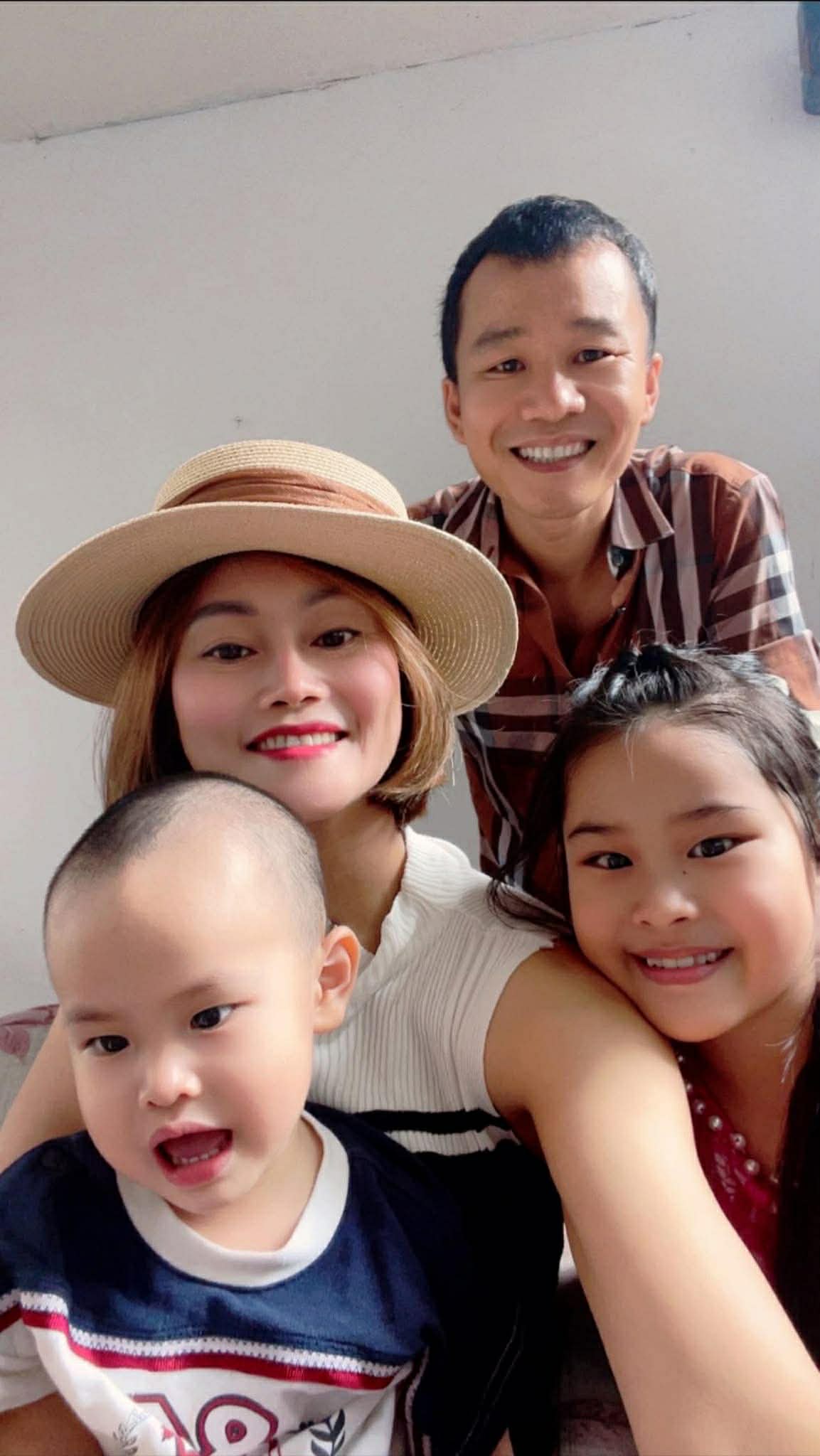 |
Thieu and his wife with their two children, 7/2026. Photo provided by interviewee |
Conversely, Hoang Van Thieu, 43, originally from Ha Tinh but raised in Dong Nai, also experienced a period of "cultural dissonance" after marrying Tran Thi Yen from Lao Cai.
When he first met his wife's family during Tet in 2012, Thieu was unaccustomed to the cold weather, unable to brush his teeth in the morning due to the frigid water. Throughout the holiday, his wife's family gathered around a fire instead of traveling, a common southern custom. In the early days of their marriage, family meals always featured two dipping sauces: sweet fish sauce with garlic and chili for the husband, and pure fish sauce with sliced chili for the wife.
Yen describes herself as "authoritarian", living by principles, requiring clothes to be straightened after washing, the house to be swept clean, and neat attire when going out.
"My wife always speaks logically and clearly," Thieu confided. "I often tease her, 'If you were a lawyer, everyone around you would be done for'. But thanks to her meticulousness, our family has saved money and taken care of both sides of the family."
In contrast, the southern husband spoke awkwardly and dressed casually, often drawing criticism from his wife. "But he is very honest, says what he thinks, and often helps others," she recounted.
After 12 years together and raising two children, aged 9 and 3, initial clashes gradually gave way to understanding. Thieu proactively accommodated his wife, adapting to northern tastes, while Yen gradually became more open and familiar with southern dishes.
Doctor Nguyen Thi Minh, a psychology lecturer at the Academy of Politics Region II (Ho Chi Minh City), explains that regional differences stem from living environments and family cultures. She advises couples to research each other's family backgrounds before marriage. "The most important thing is not to equate a behavior or habit with the other person's character," Doctor Minh stated.
The expert notes that the biggest obstacle is the mindset of considering one's own culture as the standard. To overcome this, couples should practice communication skills, express emotions instead of criticizing, and enter marriage ready to learn and ask why their partner lives a certain way, rather than assuming they are wrong.
Reflecting on her marriage, Tieu Quyen says she is fortunate to be someone who enjoys exploring, making her open to new things in her husband's hometown. According to her, when problems arise from cultural differences, each person simply needs to empathize with the other.
"Because with enough love, all cultural differences will become sweet seasoning for love," she said.
Pham Nga