Initially, the refrigeration service quoted 200,000-250,000 dong per unit for maintenance and cleaning of two 9,000 BTU and one 12,000 BTU air conditioners. During the cleaning, technicians informed Ms. Huong that the units needed more refrigerant. "At that time, I researched online, estimating it would cost around 2-3 million dong, so I agreed to their service", Ms. Huong recounted the incident on 13/8.
After about one hour, the technicians presented a total bill of 10,650,000 dong, with 10 million dong allocated solely for the refrigerant refill. According to their calculation, the refrigerant pressure of the three units was combined to 670 PSI and then multiplied by a unit price. Despite her suspicions, Ms. Huong paid the bill.
Immediately afterward, Ms. Huong consulted with an air conditioner manufacturer's technician and realized she might have been scammed, prompting her to file a complaint. The service provider initially offered a 4 million dong refund, then 8 million dong to drop the case, but she refused.
She is currently working with consumer protection agencies and has shared her story on social media to raise awareness.
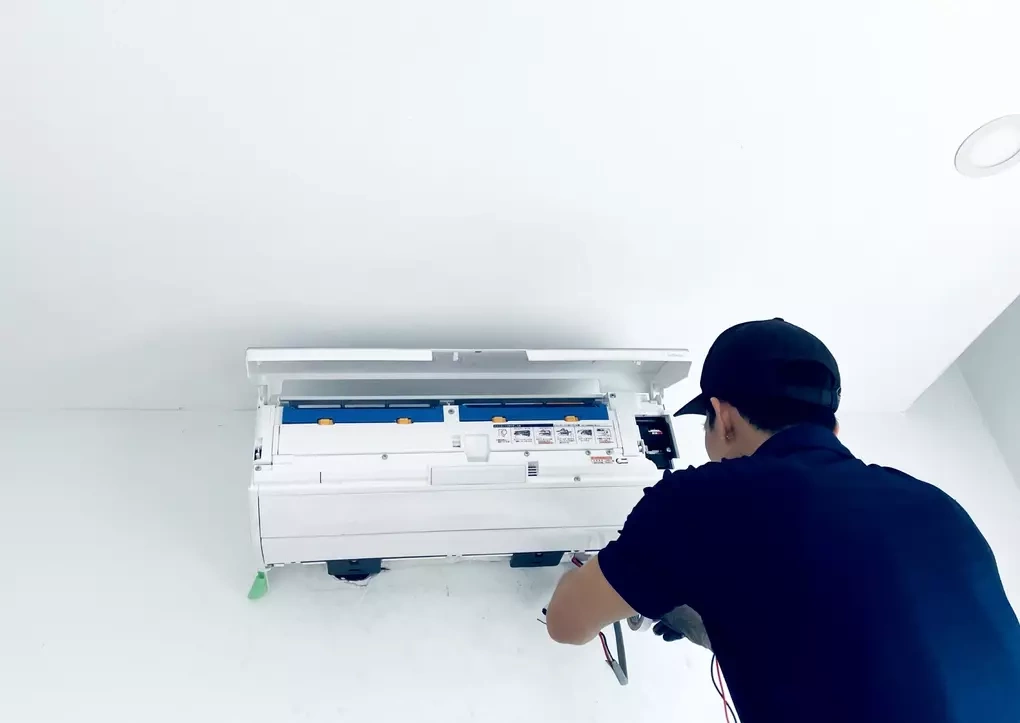 |
A technician installing an air conditioner in Hanoi. Photo: P.D |
Ms. Huong's experience is one of many instances where refrigeration technicians "diagnose" false issues and inflate material costs during hot seasons. A VnExpress survey of nearly 1,000 readers revealed that 63% had been told their air conditioner was "low on refrigerant" and paid for a refill.
According to experts, "low refrigerant" is a diagnosis difficult for consumers to verify independently. Technical terms like PSI or refrigerant can lead customers to readily accept charges without understanding the actual problem.
Professor Doctor Nguyen Duc Loi, from the Vietnam Association of Refrigeration and Air Conditioning Science and Technology, affirmed that calculating refrigerant refill costs by accumulating PSI pressure, as in Ms. Huong's case, is incorrect. "Cleaning costs are by agreement, but refrigerant refills must be calculated by the kilogram added, never by PSI pressure", he stated.
According to Professor Loi, refrigerant circulates within a closed system and is not consumed during use. If there are no leaks, an air conditioner can operate for 15-25 years without needing a refill. Manufacturers also do not recommend periodic refrigerant refills based on usage time. "A normally operating unit does not need refrigerant pumped in", he emphasized.
According to the US Environmental Protection Agency (EPA) and air conditioner manufacturers, if a unit genuinely has low refrigerant, it indicates a leak in the piping or connections. In such cases, the solution is not merely to add more refrigerant. Technicians must locate and repair the leak, vacuum the system, and then refill the refrigerant to the correct specifications.
If refrigerant is simply added without addressing the leak, it will continue to escape, and the unit will quickly return to a state of poor cooling.
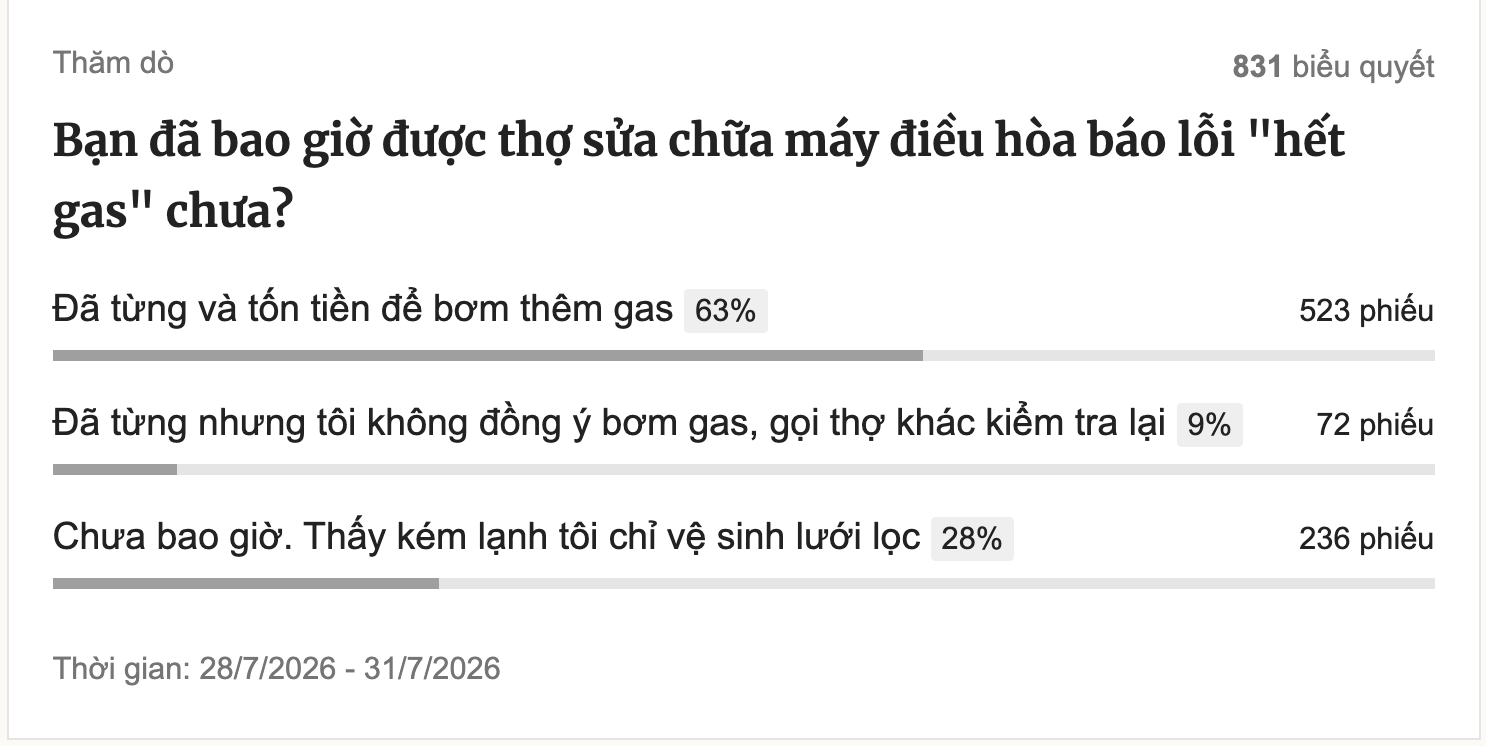 |
A VnExpress survey of over 800 readers in late July showed that 63% had paid for refrigerant refills during air conditioner maintenance. |
Professor Loi also noted that poor air conditioner cooling does not automatically mean low refrigerant. Dirty outdoor or indoor coils, clogged filters, an unsealed room, a large heat source in the room, or even overcharging with refrigerant can all reduce cooling efficiency.
Instead of rushing to call a technician for a refrigerant refill, users should regularly clean air filters, periodically maintain the outdoor and indoor coils, and check the room's airtightness. If the unit is operating normally, there is no reason to add refrigerant simply because it has been used for a long time.
Bao Nhien