In 2018, Ngoc Huyen married Van Bien, an engineer working in Sulaymaniyah, northern Iraq. Immediately upon arriving in the Middle East, the 29-year-old woman from Bac Ninh faced a significant culinary "culture shock".
Local residents favored long-grain rice imported from India, which had a strong aroma and remained dry and crumbly even when cooked with plenty of water. Green vegetables were scarce, limited to a few types like spinach and cauliflower. In this Muslim-majority country, pork—a staple of Vietnamese cuisine—was completely absent. Market stalls primarily sold frozen lamb, beef, and chicken.
"The first meal my husband cooked, I couldn't even swallow half a bowl of rice. I felt like I wouldn't be able to survive here", Huyen recalled. This feeling intensified when she became pregnant with her first child; morning sickness combined with a deep longing for northern Vietnamese dishes often brought her to tears.
 |
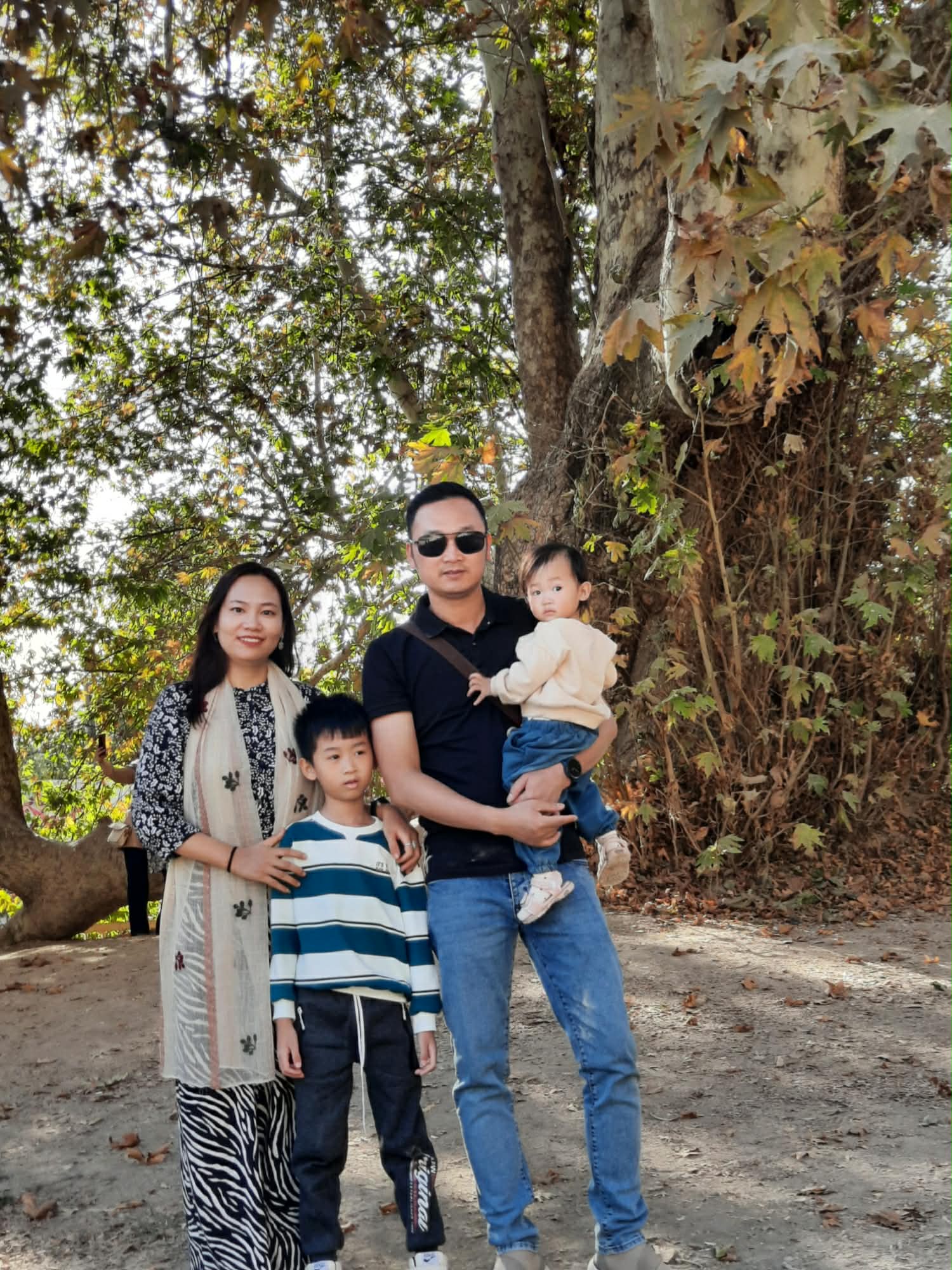
Ngoc Huyen's family in Iraq, December 2025. Photo: Provided by subject
Determined "not to lose her roots", after returning to Vietnam to give birth and then coming back to Iraq in 2019, Huyen's suitcase contained no fancy clothes. Instead, it was packed with fish sauce, MSG, seasoning powder, and various dried spices. The first dish Huyen attempted to cook in Iraq was not a savory meal, but a pot of sweet soup (che). Iraq had plenty of beans, but lacked tapioca starch to thicken the soup, sago pearls, and jelly for toppings. The sweet soup ended up being just cooked beans and sugar. Despite this, that evening, the couple ate every last spoonful, nodding in satisfaction.
She began her journey to "Vietnamize" her meals in the desert.
To achieve soft, sticky rice, the couple searched all the food stores until they found a type of short-grain Thai rice similar to Vietnamese rice. However, the biggest challenge was recreating the flavors of home without pork.
"Necessity is the mother of invention", Huyen decided, transforming chicken into a "versatile ingredient". She deboned chicken thighs, minced them, and mixed them with shrimp and squid to mask the chicken smell. She then pounded the mixture thoroughly to make Vietnamese chicken sausage (gio lua) and cinnamon-flavored chicken sausage (cha que). When the first batches of chicken sausage came out of the oven, their chewy texture and fragrant aroma halved the couple's homesickness.
Her most successful creation was fried spring rolls (nem ran). Huyen had initially set aside the rice paper wrappers she brought from Vietnam, thinking, "How can I make spring rolls without pork?". After several failed attempts with beef, she switched to using finely minced chicken breast combined with wood ear mushrooms, glass noodles, and carrots. Huyen's secret was to use chicken seasoning powder and drizzle a bit of premium fish sauce, making the spring rolls golden, aromatic, and just as delicious as traditional ones.
Green vegetables were rare, so every bunch was carefully considered. Everyday meals often featured stir-fried spinach with garlic and boiled cabbage. In winter, when napa cabbage was available, she bought it to make soup or stir-fry, considering it a "luxury" meal.
"Becoming a mother changed me. I won't allow my kitchen to lack the taste of home-cooked meals", she said. "Moreover, I grew up with the rice of my homeland, so I want to preserve Vietnamese cuisine and teach my children to remember their roots".
Tet (Lunar New Year) in Sulaymaniyah was when Huyen's creativity peaked. Without dong leaves, she used parchment paper and food wrap, coloring the square sticky rice cakes (banh chung) green with pandan extract or food coloring. Sticky rice and mung beans were cooked into sticky rice (xoi) before wrapping to reduce boiling time.
The filling for the square sticky rice cakes, instead of fatty pork belly, featured chicken thighs marinated with plenty of white peppercorns. "Each cake took an hour to prepare; the shape might not be as perfectly square as back home, but it was our greatest effort to have a meaningful Tet", Huyen shared.
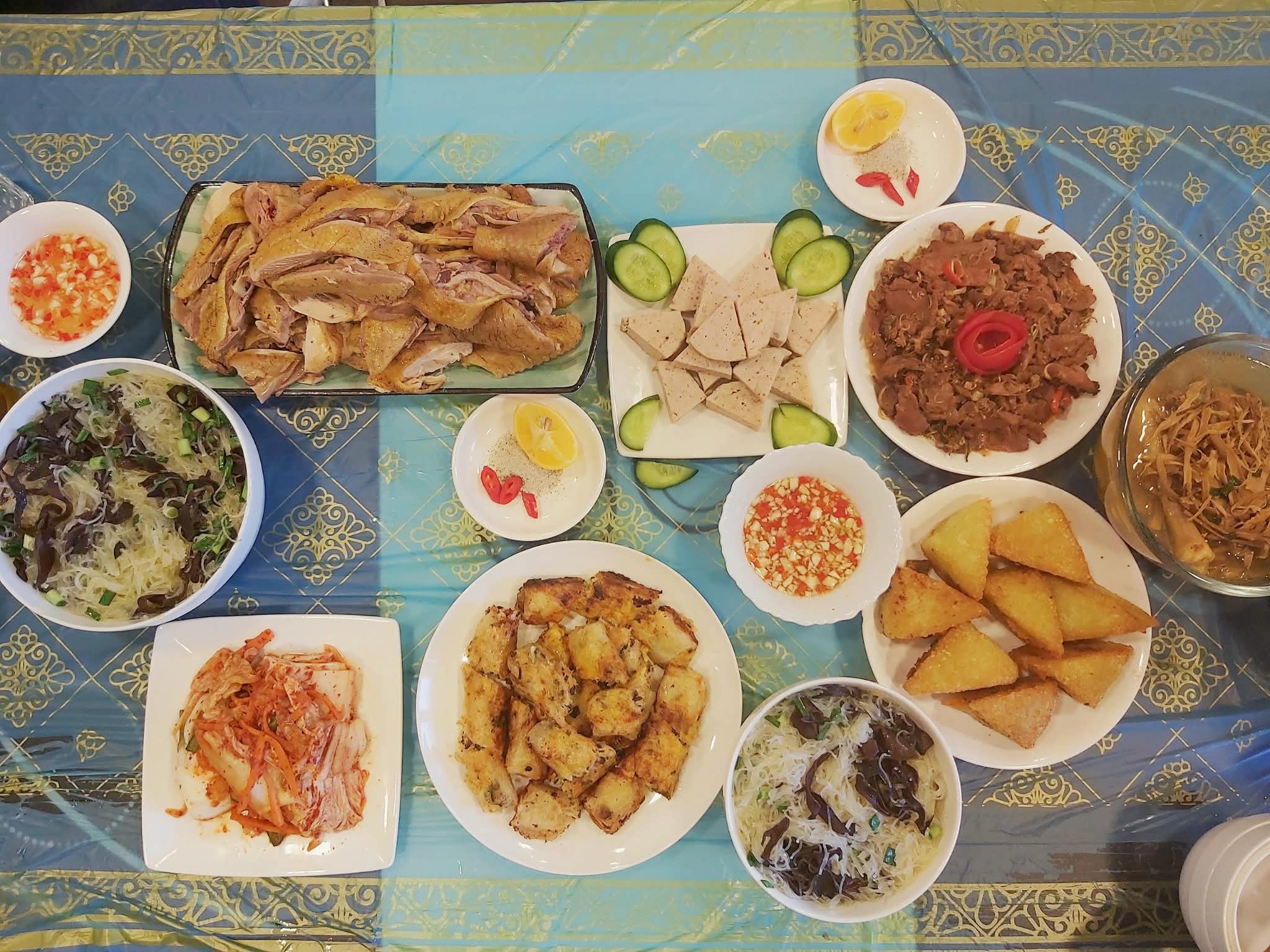
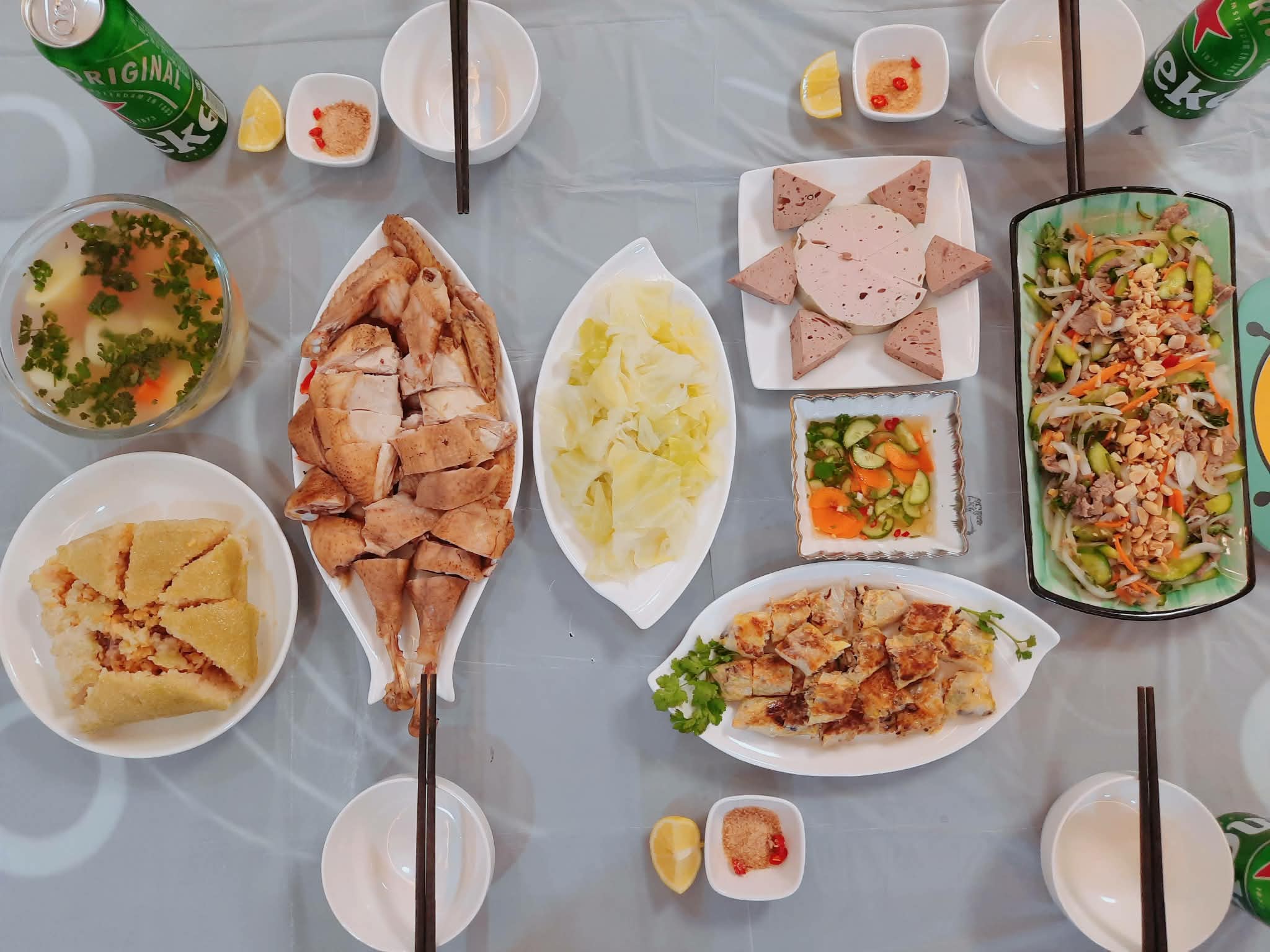
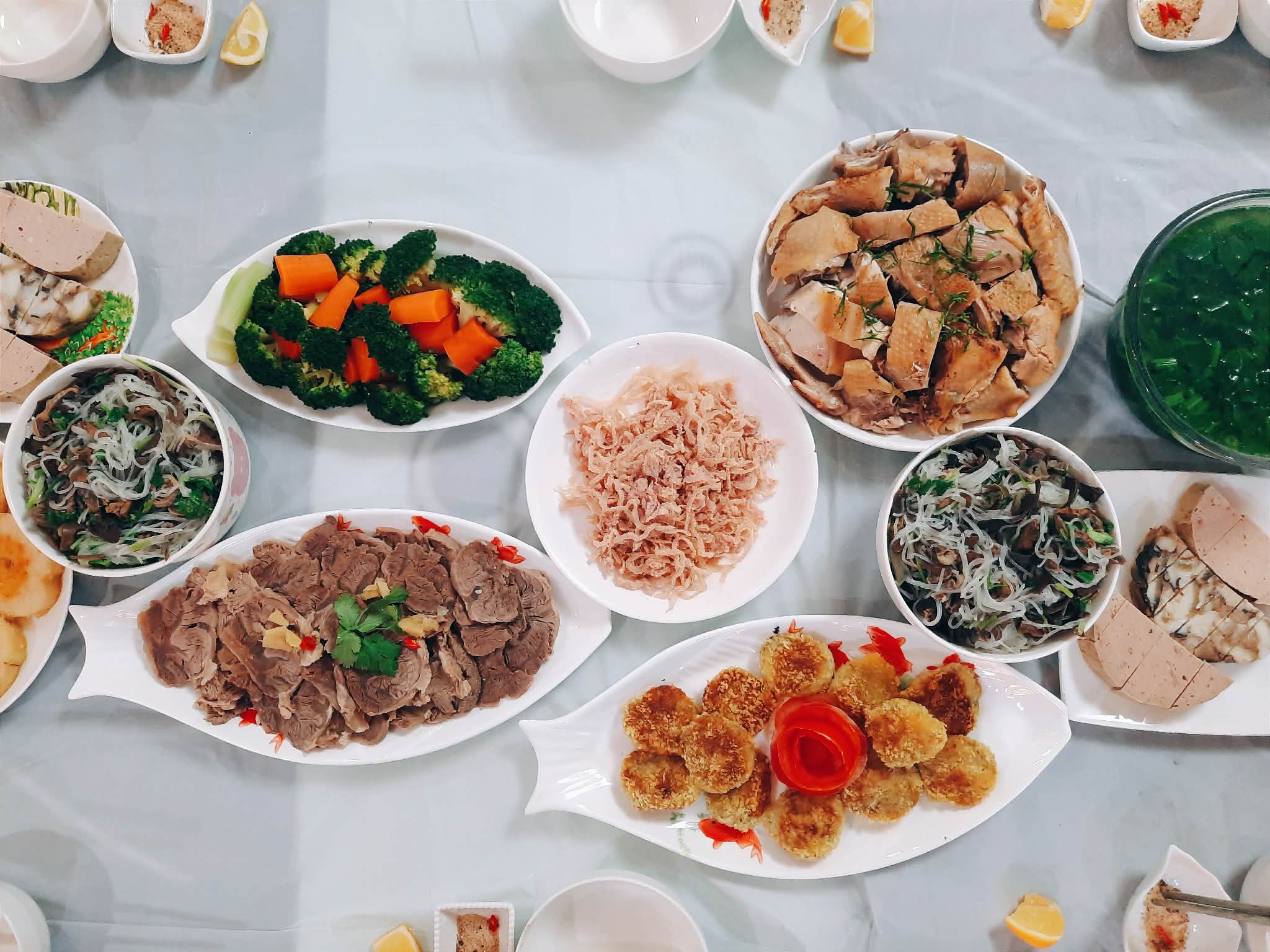
Last year, Huyen's New Year's Eve feast in the mountains of Iraq was still complete: boiled chicken with kaffir lime leaves, glass noodle soup with chicken giblets, fried spring rolls, and a platter of fresh green square sticky rice cakes. Although outside the window lay the arid Gulf landscape, inside the small kitchen, the scent of fish sauce and incense wafted warmly, signaling a family reunion for Tet.
 |
The New Year's Eve meal of Huyen's family in Iraq in 2023.
 |
Ngoc Huyen's family's Tet feast in 2024 in Iraq.
 |
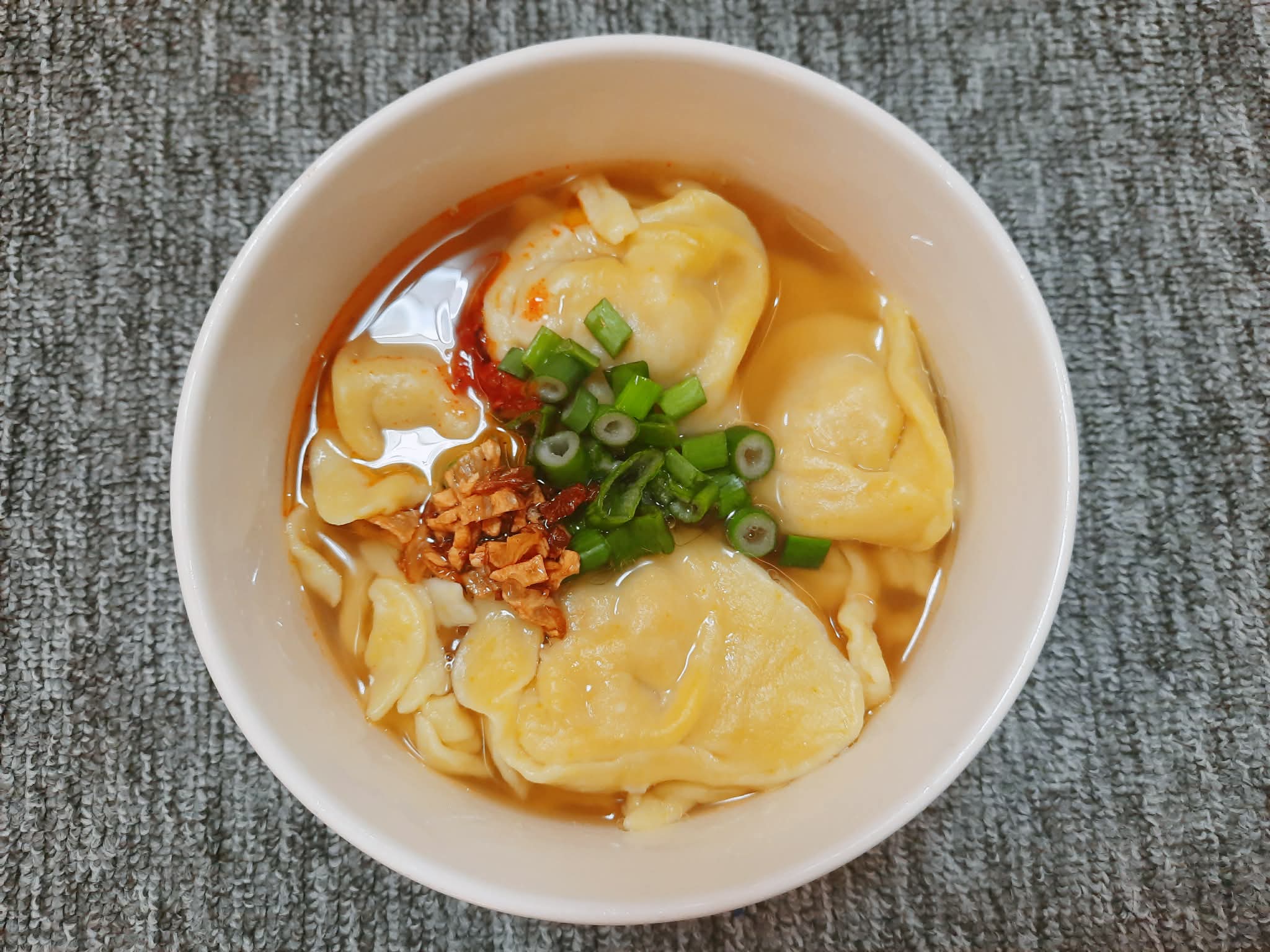
Wontons, filled with chicken by Ngoc Huyen, served for breakfast.
 |
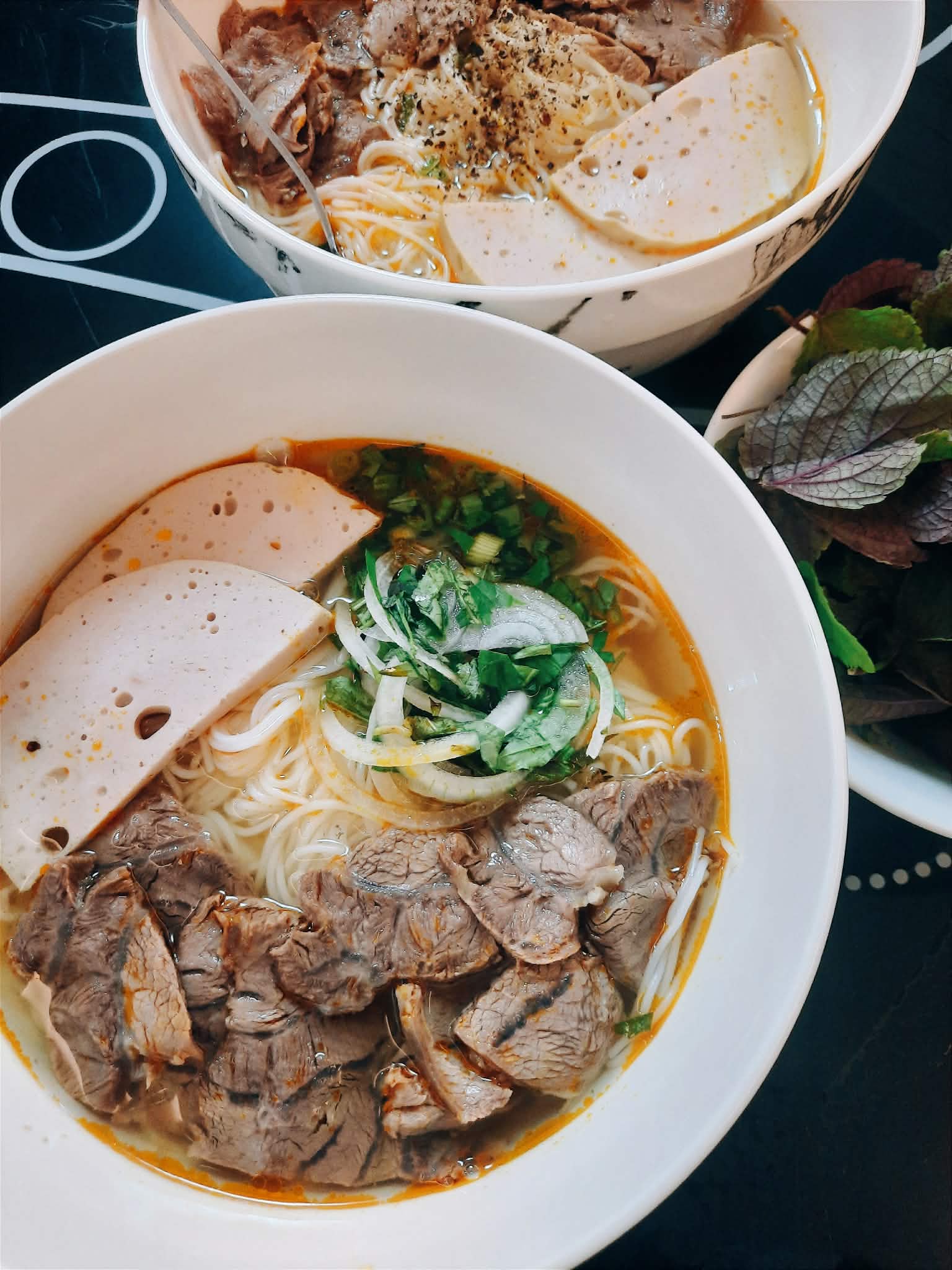
Hue-style beef noodle soup (bun bo Hue).
 |
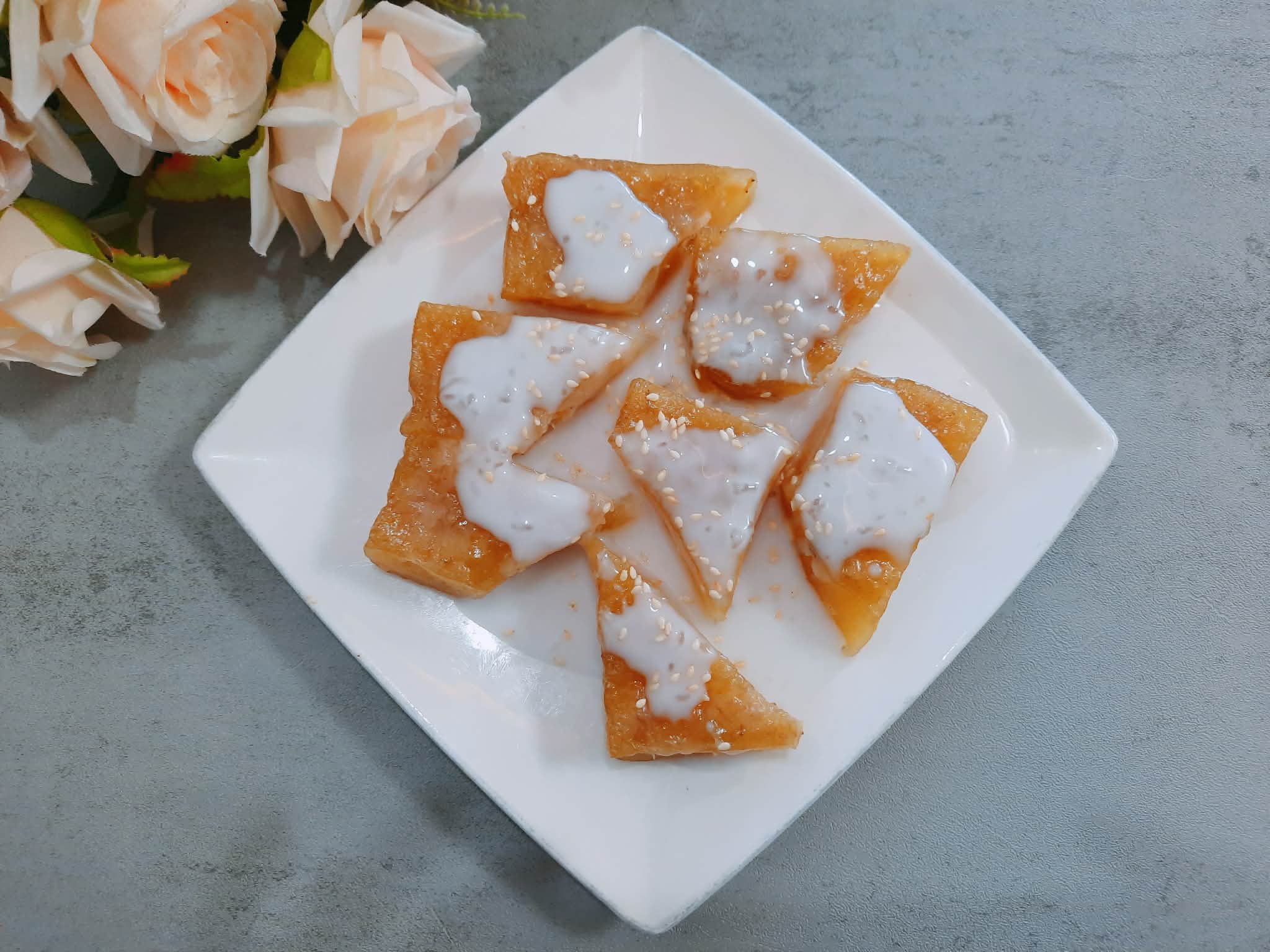
Banana coconut cake, made from Iraqi plantains and tapioca starch, rice flour from Vietnam.
 |
Ngoc Huyen's family's meal during Tet 2025.
 |
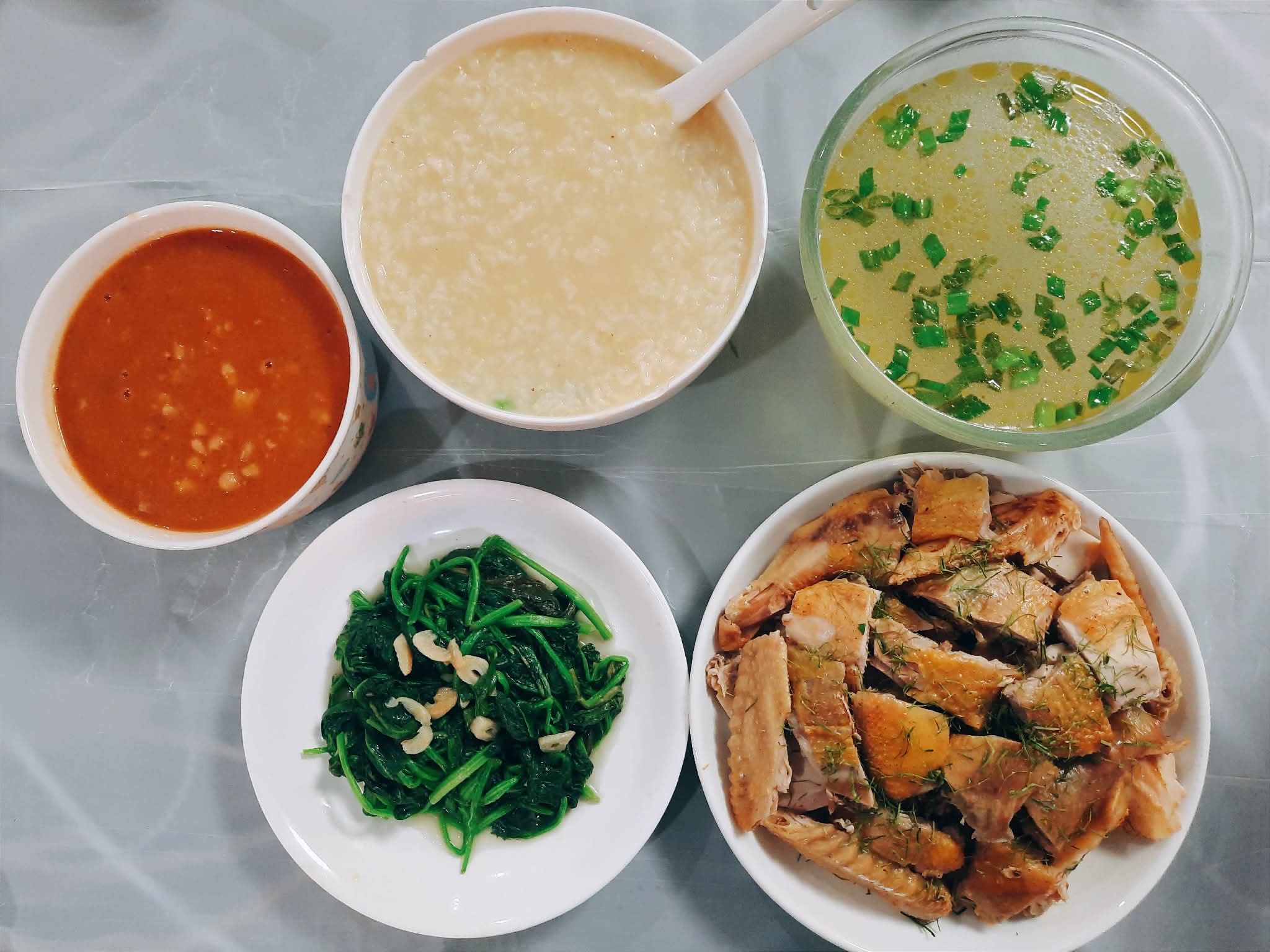
Chicken porridge.
Ngoc Ngan