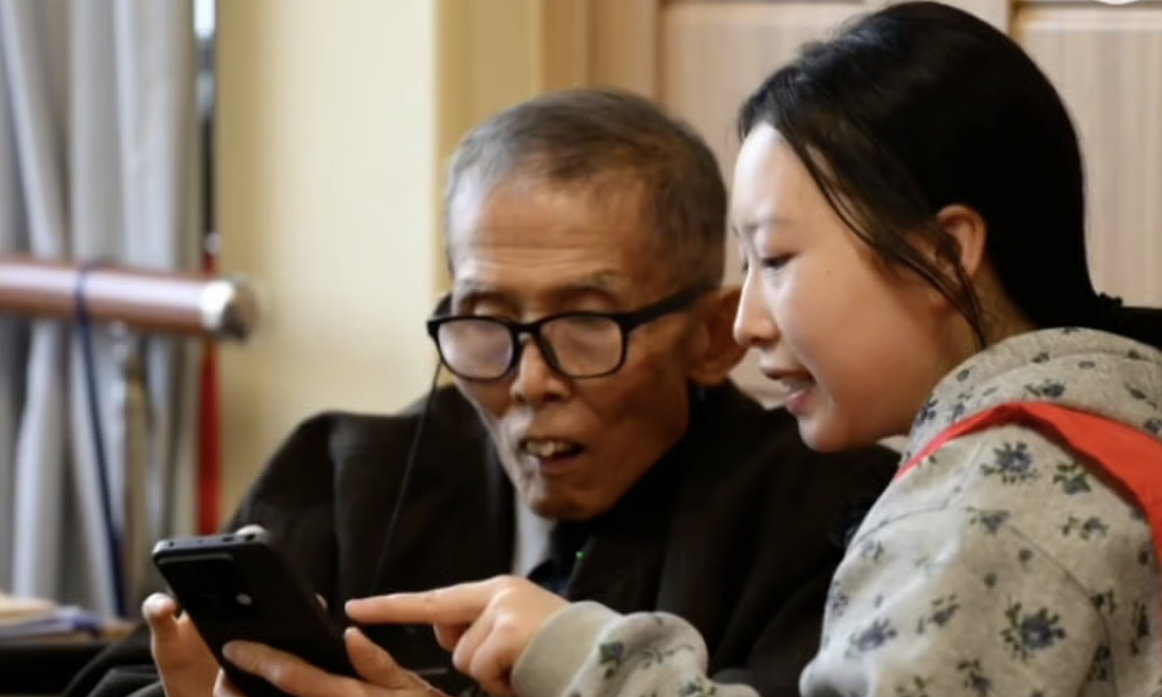
Amie, a British woman, had suffered from a debilitating stomach condition for years. In her home country, the overloaded public healthcare system (National Health Service) meant she could not get an early appointment. In 12/2025, Amie decided to make an "opposite" journey: traveling to Beijing for medical treatment.
Just one day after booking an appointment at the hospital, she met with a doctor and underwent blood tests and an electrocardiogram. The entire process, from consultation and endoscopy to polyp removal and receiving the results report, was completed in just 12 days.
"In the UK, I once had to wait three months just for an emergency scan. Everything here happened so quickly", Amie shared. The total cost for the treatment was 2.800 yuan (approximately 400 USD), which was only one-tenth of the 4.000 - 7.000 USD charged at private clinics in the UK.
Amie's story reflects a growing trend: "reverse medical tourism" to China. On social media, many Western travelers are now comparing medical bills, revealing vast differences.
In China, a cardiac examination costs about 75 USD, whereas in the United States, this figure can reach 10.000-20.000 USD (without insurance). An X-ray priced at 19 USD has astonished many Americans, who quip that it's "cheaper than a medical toy model in a supermarket".
Beyond attracting patients with low costs for basic services, Chinese healthcare also excels in specialized fields.
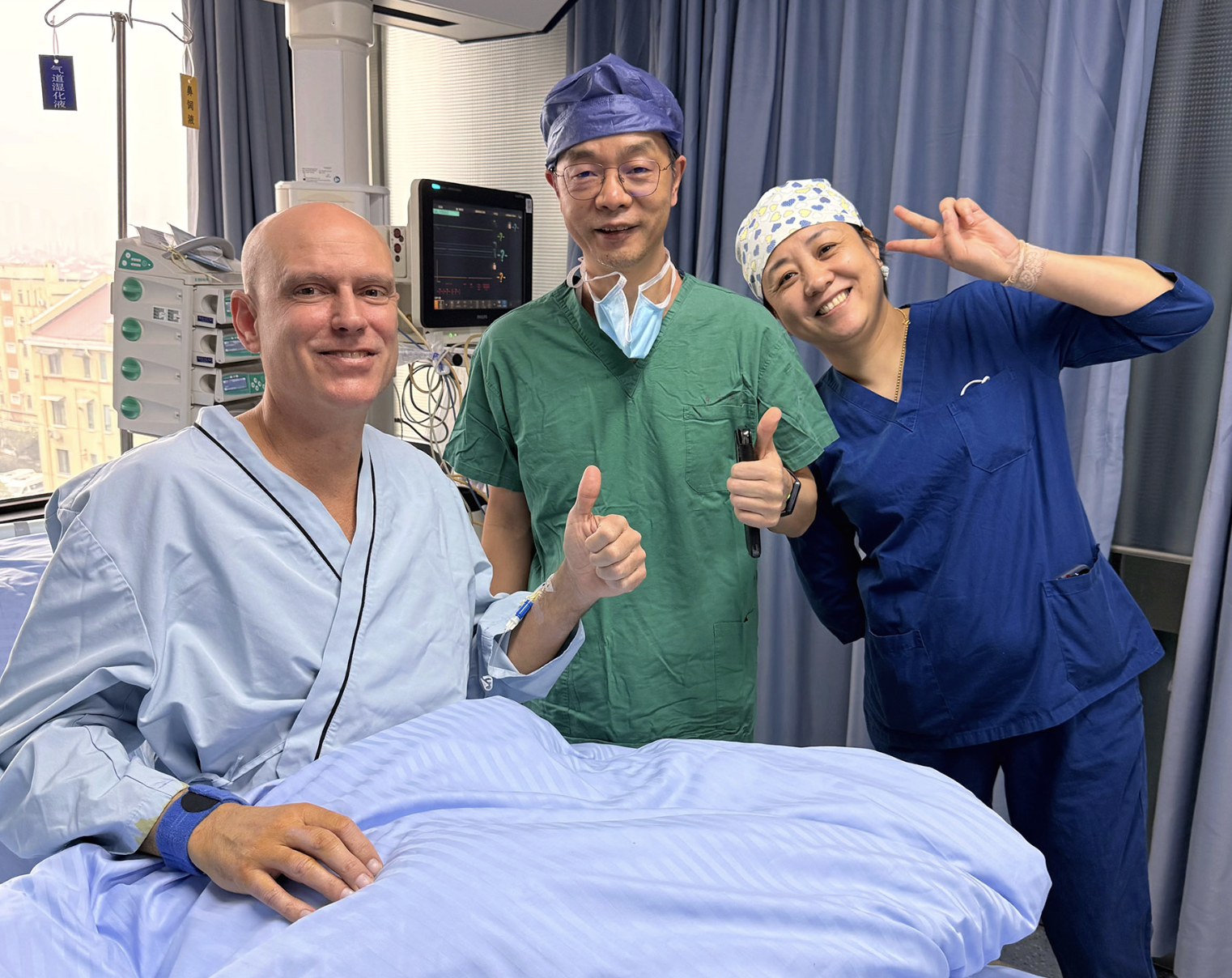 |
A Swedish patient photographed with medical staff after undergoing coronary intervention treatment at Shanghai East Hospital in 1/2026. *China Daily*
Last January, doctor Kevin from Vancouver, Canada, brought his 10-year-old daughter to Shanghai for pancreatic treatment. Previously, specialists in North America and Japan had all recommended removing her spleen. Wanting to preserve his daughter's organ, he sought out Ruijin Hospital, known for its spleen preservation techniques.
The surgery was successful, costing 160.000 yuan (23.000 USD). "This price is completely acceptable. The techniques and nursing services here convinced a professional like me", doctor Kevin stated.
Beyond surgery, the three service categories most popular with foreign patients are: dentistry, ophthalmology, and traditional Chinese medicine therapies such as acupuncture and cupping.
This wave is strongly driven by lenient visa policies. China currently offers 144-hour (six-day) transit visa-free entry for citizens of 54 countries, facilitating short medical trips combined with tourism.
According to China's National Health Commission, in 2025, international departments received 1,28 million foreign patients, a 73,6% increase compared to three years prior. While this number remains modest compared to the billions of domestic medical visits, it signifies China's emergence on the global medical tourism map.
By Thanh Thanh (Shanghai Daily, The Economist, SCMP)