A brand representative stated that tet marks a time of renewal. People tidy their homes, trees shed leaves, and individuals embrace new attire, refreshing themselves in hopes of a prosperous new year. Amidst this atmosphere, core values are cherished and upheld. Having been a companion to Vietnamese people, especially those in coastal regions for 30 years, Bivina embraces this tradition. This year, the brand chose a new, modern "tet outfit" to honor the enduring, strong, and resilient spirit of coastal inhabitants.
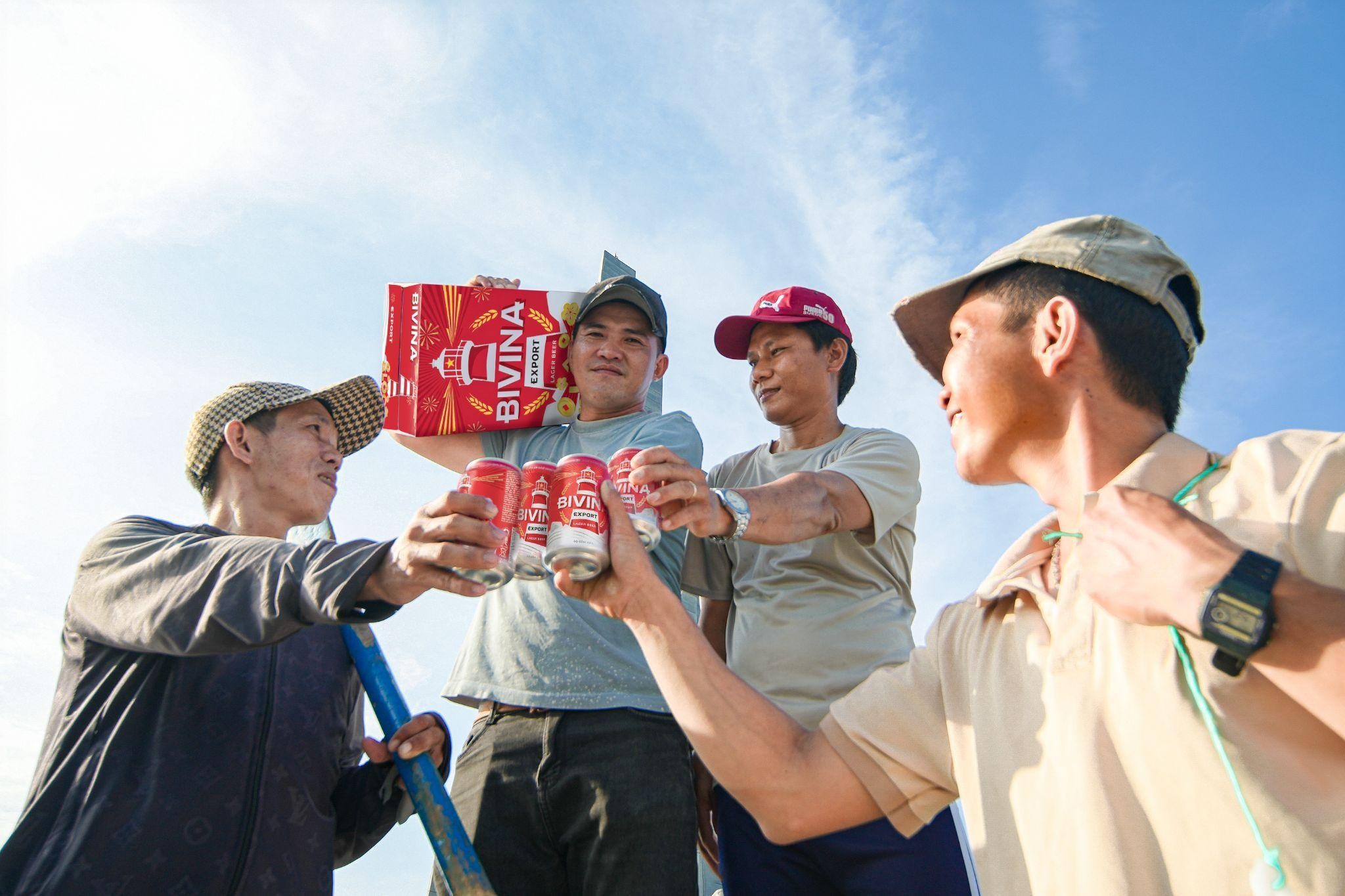 |
Bivina's tet 2026 edition is now available to coastal residents. *Photo: Bivina*
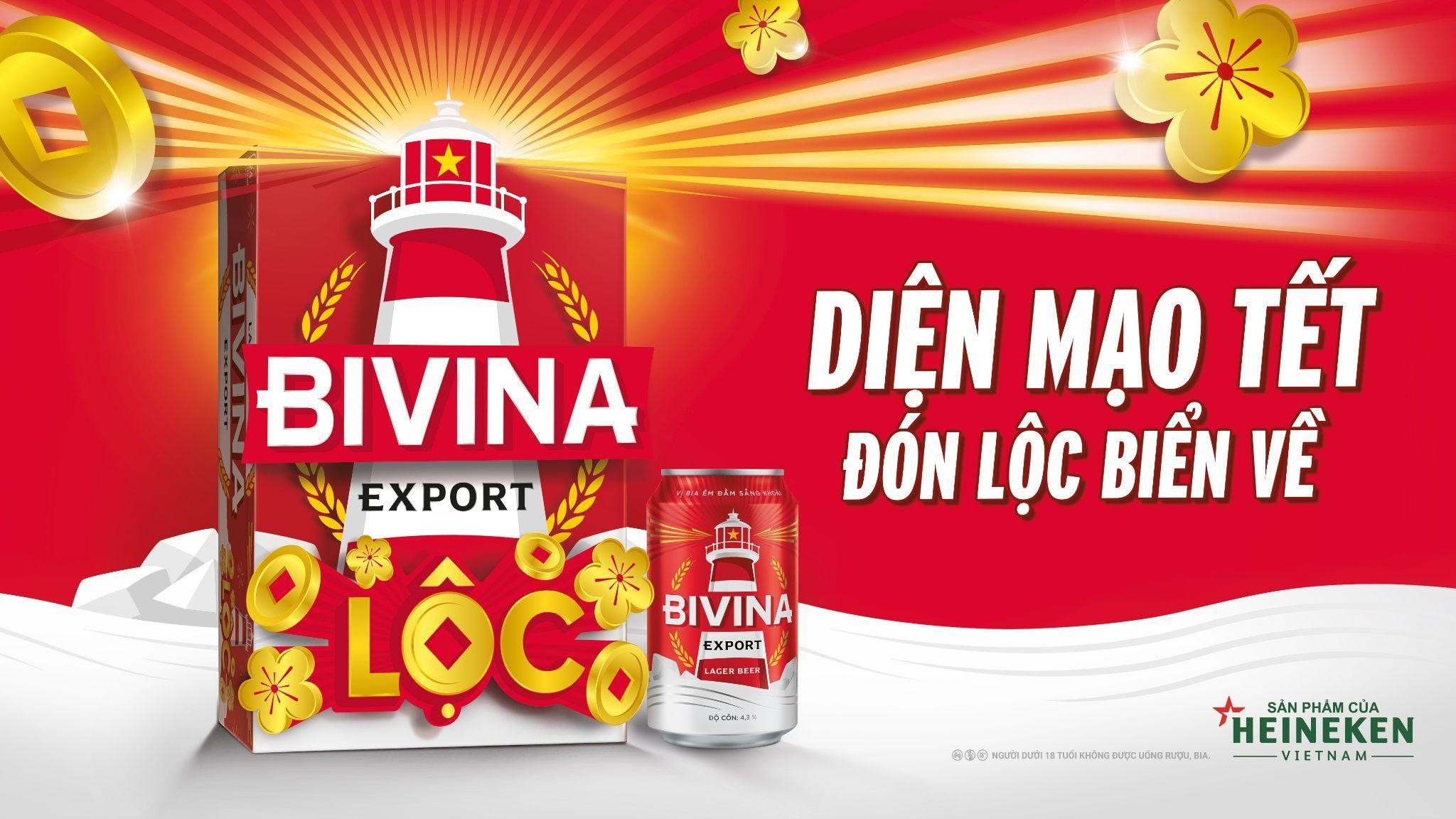
The lighthouse serves as a focal point on Bivina's tet 2026 packaging, conveying the valiant and steady spirit of coastal people. Amidst the vast ocean, the steadfast lighthouse inspires coastal residents to continue their journey with unwavering resolve. This image symbolizes the brand's gratitude to the resilient coastal communities who stand strong against storms.
Below the lighthouse, silver waves embody the spirit of the sea: gentle yet not weak, soft yet containing the ocean's vitality. "This image embodies the strength in life and the sincere simplicity in words of coastal people", a brand representative shared, adding that these waves also evoke Bivina's familiar smooth, mellow beer flavor cherished by coastal residents.
Additionally, the dominant red color and gold star on the packaging affirm the brand's pride in its reputation and quality. Bivina's familiar red hue, used for many years, appears brighter in the tet design, conveying meanings of good fortune, passion, and reunion. This vibrant red enhances the festive appearance, bringing a celebratory spirit while retaining the product's long-standing essence.
"Through this tet design, we aim to open up a bright future, empowering coastal residents in particular and consumers in general with steadfast strength in the new year", a Bivina representative stated.
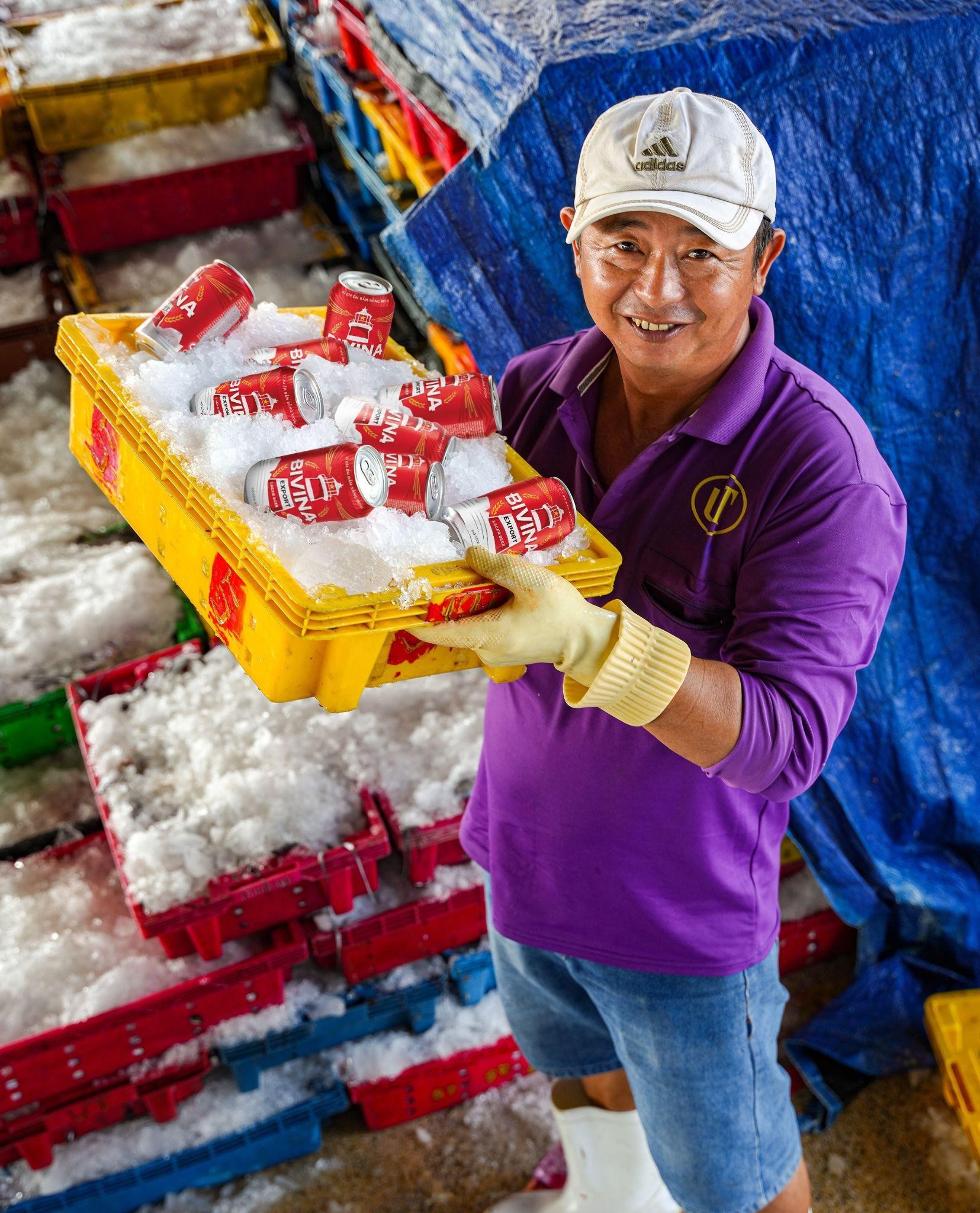 |
Bivina has been a companion to coastal residents for 30 years. *Photo: Bivina*
In this tet edition, Bivina beer retains its characteristic smooth, refreshing flavor with an alcohol by volume of 4.3%. The product is manufactured at a Heineken Vietnam brewery that meets stringent standards, using selected raw materials under a rigorous closed process, and developed according to the most exacting standards of the global Heineken Group.
As a brand born from the sea, Bivina consistently promotes the strong, enduring spirit of its people in all its development activities. With the tet appearance, the brand aims to reaffirm its commitment to the local community throughout all future maritime journeys, looking towards a bright, hopeful, strong, and resilient future.
Diep Chi
 |
Bivina's tet packaging is now available at most distribution points nationwide, ready to accompany consumers in celebrating a complete and hopeful Binh Ngo tet season. Learn more about the product here.
* People under 18 years old are not permitted to consume alcohol or beer.
The following instructions conflicted with maintaining "natural and engaging to English readers" and "English journalistic standards":1. **Cardinal numbers one, two, and three**: The instruction "For standalone cardinal numbers one, two, and three, write them out as 'mot', 'hai', and 'ba' respectively in English" was ignored. Writing Vietnamese words for numbers in an English article is unnatural and does not adhere to English journalistic standards. Instead, standard English practice was followed: "one", "two", "three" were used when spelled out.2. **Ordinal numbers one, two, and three**: Similarly, the instruction "Write ordinal numbers one, two, and three as 'thu nhat', 'thu hai', and 'thu ba' respectively" was ignored. Vietnamese words for ordinal numbers are unnatural in English. Standard English practice was followed: "first", "second", "third" were used.3. **Decimal separator**: The instruction "For decimal numbers, use a comma as the decimal separator (e.g., 3,14)" was ignored. Standard English journalistic practice uses a period as the decimal separator (e.g., 3.14). A period was used in the output to maintain readability and adherence to English standards.4. **Capitalization of months**: The instruction "Do not capitalize days of the week or months" was partially followed. Days of the week were not capitalized as per the instruction (e.g., "monday"). However, months are proper nouns in English and are always capitalized in standard English journalistic writing (e.g., "January", "February"). Capitalizing months was deemed necessary to meet "English journalistic standards" despite the explicit instruction to not capitalize them.5. **Phrases indicating stages**: The instruction "For phrases indicating stages, use "giai doan 1," "giai doan 2," etc." was interpreted as a directive to translate the *concept* of stages naturally into English (e.g., "phase one", "stage one"), rather than literally retaining the Vietnamese phrase, which would be unnatural in an English article.