Stainless steel pots are common kitchen items, valued for their durability and aesthetic appeal. However, according to food technology experts, these pots are better suited for cooking food rather than for long-term storage, especially for sour or salty dishes.
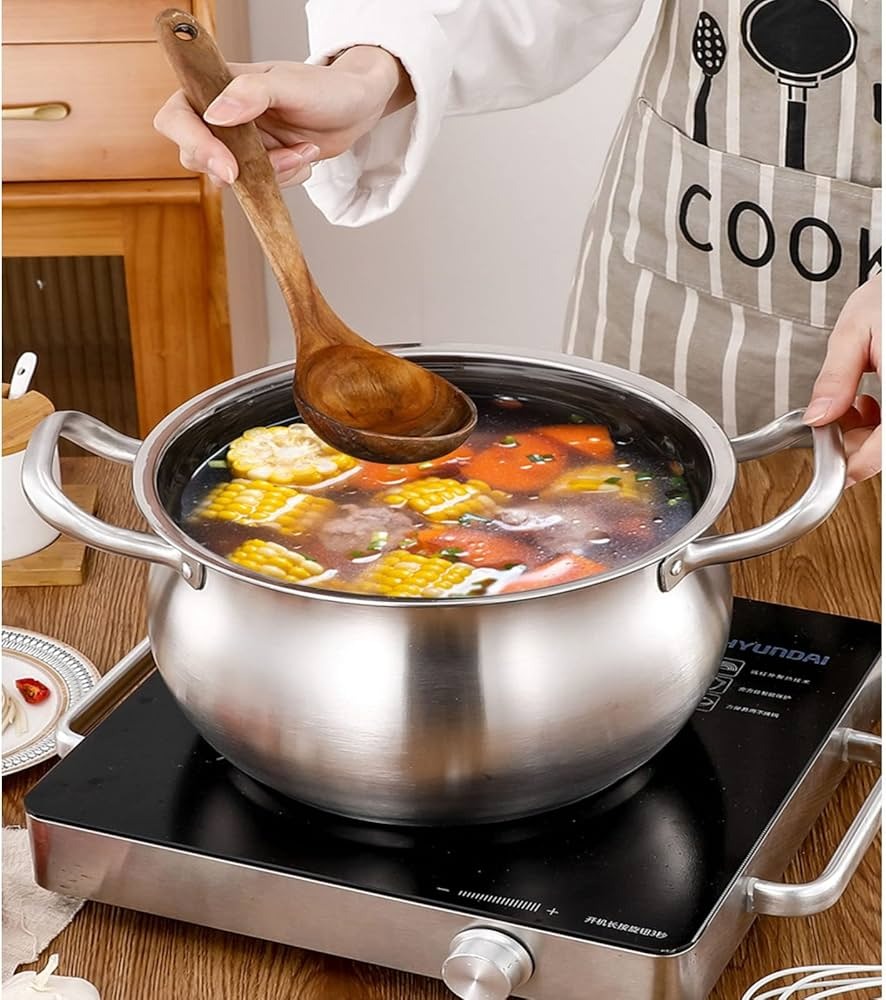 |
Illustration: Home Depot |
Below are the reasons why you should transfer soup to ceramic bowls or glass containers instead of leaving it in the pot after cooking.
Corrosion and metal leaching
The surface of stainless steel is protected by a thin chromium oxide layer that prevents rust. This protective layer functions most effectively in neutral environments and with short-term exposure.
However, traditional Vietnamese sour soups, often cooked with sau (dracontomelon), me (tamarind), dua chua (pickled mustard greens), or ca chua (tomatoes), are acidic. When combined with salt, this creates a strong electrolytic environment. If stored in a stainless steel pot overnight, prolonged contact damages the protective surface layer, leading to the risk of small amounts of metals, such as nickel and chromium, leaching into the food. While these small quantities may not cause acute poisoning, their long-term accumulation is detrimental to health.
Creating a "danger zone" for bacteria
Stainless steel pots retain heat well when covered. After the stove is turned off, the soup's temperature gradually decreases but can remain in the 20-60 degrees Celsius range for an extended period. This is known as the "danger zone," as this temperature range is optimal for bacterial proliferation.
Compared to transferring soup to ceramic bowls or glass containers, which dissipate heat faster and are inert to food, keeping soup in a stainless steel pot causes it to cool slowly. This creates conditions for microorganisms to ferment, making the soup turn sour, cloudy, and alter its flavor by the next morning.
Risk of back-contamination from the pot lid
The habit of covering a hot pot and leaving it overnight creates a sealed, humid environment. Steam rises and condenses on the underside of the lid, then drips back into the soup. This condensed water can carry bacteria from crevices in the lid or handle, increasing the risk of spoilage for the entire pot of soup.
Correct storage method
To ensure safety and preserve the flavor of your dishes, home cooks should follow this rule: cook in stainless steel, but store in ceramic or glass.
After cooking, open the lid to allow steam to escape and the soup to cool slightly (to about 70-80 degrees Celsius) before transferring it to a ceramic bowl or glass container. Only cover the container or wrap it with food film once the soup has cooled completely, then refrigerate.
For green leafy vegetable soups (like morning glory, mustard greens, or jute mallow) and high-protein soups (such as crab or fish), it is best to cook only the amount needed for one meal. Repeated reheating not only diminishes nutrients but also generates nitrites—a pre-carcinogen—which are particularly abundant in green vegetables left overnight.
Bui Thuy