In late December, the Christmas atmosphere in China was subdued, as it is not a national holiday. Public attention typically focuses on the Lunar New Year. However, this year, in Inner Mongolia, Zhang Li's family experienced a pleasant disruption. Her middle school daughter unexpectedly received a winter holiday. Soon after, her department head suggested she also take time off.
"My boss said that if there's no urgent work, anyone can take time off, regardless of whether they have children," recounted the civil servant in Hulunbuir city.
From 24/12 to 26/12, with the addition of two weekend days, students below grade 9 received a full 5-day holiday. The directive's purpose is clear: to encourage teenagers and families to participate in ice and snow tourism festivals.
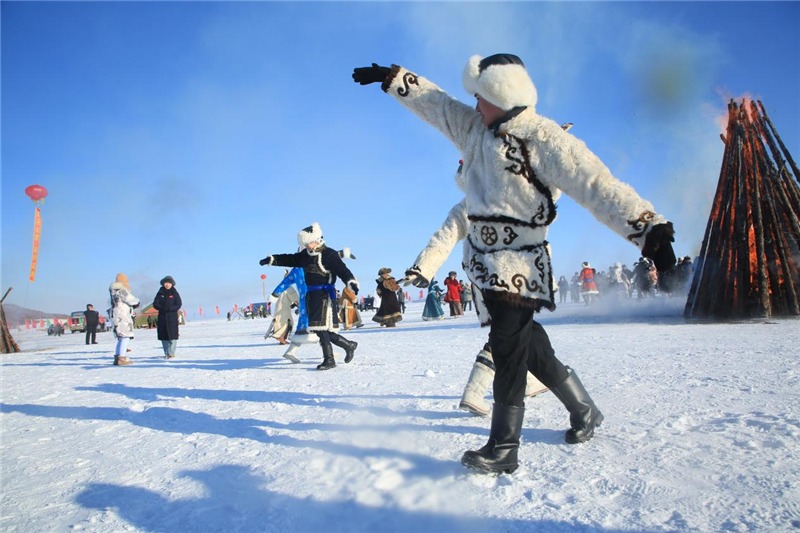 |
Residents participating in an ice and snow festival in Hulunbuir city, China, 1/2025. Photo: China Daily |
While many countries consider reducing holidays due to productivity concerns, China, with one of the world's longest working weeks, is going against the grain. Hulunbuir is not alone. Sichuan and Zhejiang have granted students extra holidays in spring and autumn. Jilin and Xinjiang have also implemented similar winter breaks. All these initiatives aim to address a critical issue: people are reluctant to spend.
Zhang Li views this unexpected holiday as a reward. In addition to her 7 annual leave days, she and her daughter plan to spend time at a newly built ice and snow amusement park and travel to a nearby city. "The green grasslands attract visitors in summer but are deserted in winter. The government wants us to travel locally to boost revenue," she explained.
According to the National Bureau of Statistics of China (NBS), retail sales in November increased by only 1,3% year-on-year, the lowest level in nearly three years. At the central economic work conference earlier this month, Beijing officials identified boosting domestic demand as a vital priority for 2026.
Luo Zhiheng, an economist at Yuekai Securities, noted that excessively long working hours are stifling demand for services. On average, a worker in the country works 48,5 hours per week, approximately 2.400 hours per year – a staggering figure compared to Western countries.
"Increasing holidays may temporarily reduce production output, but it will encourage people to spend, helping to balance supply and demand," Luo analyzed, suggesting the government should add more public holidays in the second half of the year.
However, a significant gap exists between policy and reality, known as the "996 culture" (working from 9h am to 9h pm, 6 days a week). Many workers say they would rather hold onto their jobs than take advantage of holidays. In an uncertain economic climate, job stability is prioritized over the need for rest. Many employees even hesitate to request leave, despite it being a legal right.
Liu Simin, a member of the Beijing Tourism Association, acknowledged that extending holidays through work schedule rearrangements remains controversial. However, this is seen as the most practical current solution to allow people time to "breathe" and spend, without causing major disruption to businesses.
By Ngoc Ngan (Source: SCMP)