Many individuals habitually close the toilet lid after use, driven by politeness and a concern for germ dispersal. However, a 2024 study by the University of Arizona in the US revealed that this action does not effectively prevent infection, contrary to popular belief.
Microbiologist Charles Gerba and his team discovered that during flushing, significant pressure within the toilet bowl still propels air streams containing bacteria outwards through gaps in the lid. The quantity of pathogens released into the surrounding environment is equivalent to when the lid is open.
This finding contradicts a previous perspective based on a 2022 study from the University of Colorado Boulder in the US. Utilizing green lasers for imaging, the 2022 research team observed that thousands of tiny, pathogen-carrying water droplets could spray up to 1,5 m when flushing with an open lid. At that time, Professor John Crimaldi suggested that closing the lid was essential to prevent bacteria from adhering to towels or toothbrushes.
From a manufacturer's perspective, a Japanese sanitary equipment company confirmed that closing the lid before flushing helps reduce localized water splashing, but it does not act as a "germ shield". The original design purpose of toilet lids was primarily to prevent items from falling into the water, enhance aesthetics, and retain heat for heated seats to conserve electricity.
Furthermore, the company noted that modern toilets feature upgraded flow control designs. Even when flushing with an open lid, water does not spray out forcefully.
Regarding social conduct, the practice of closing or leaving the lid open still depends on regional culture. In public restrooms, many people prefer an open lid to implicitly signal safety and cleanliness to subsequent users and to prevent odors from accumulating. Conversely, in private settings like homes, hotels, or in countries that emphasize subtlety, such as Japan, closing the lid is a basic courtesy standard aimed at concealing the toilet bowl.
Experts conclude that closing the toilet lid offers more aesthetic benefits than medical ones. To address the risk of cross-contamination in restrooms, users should regularly scrub the toilet with disinfectant chemicals, clean surfaces, wash hands with soap, and maintain a well-ventilated space.
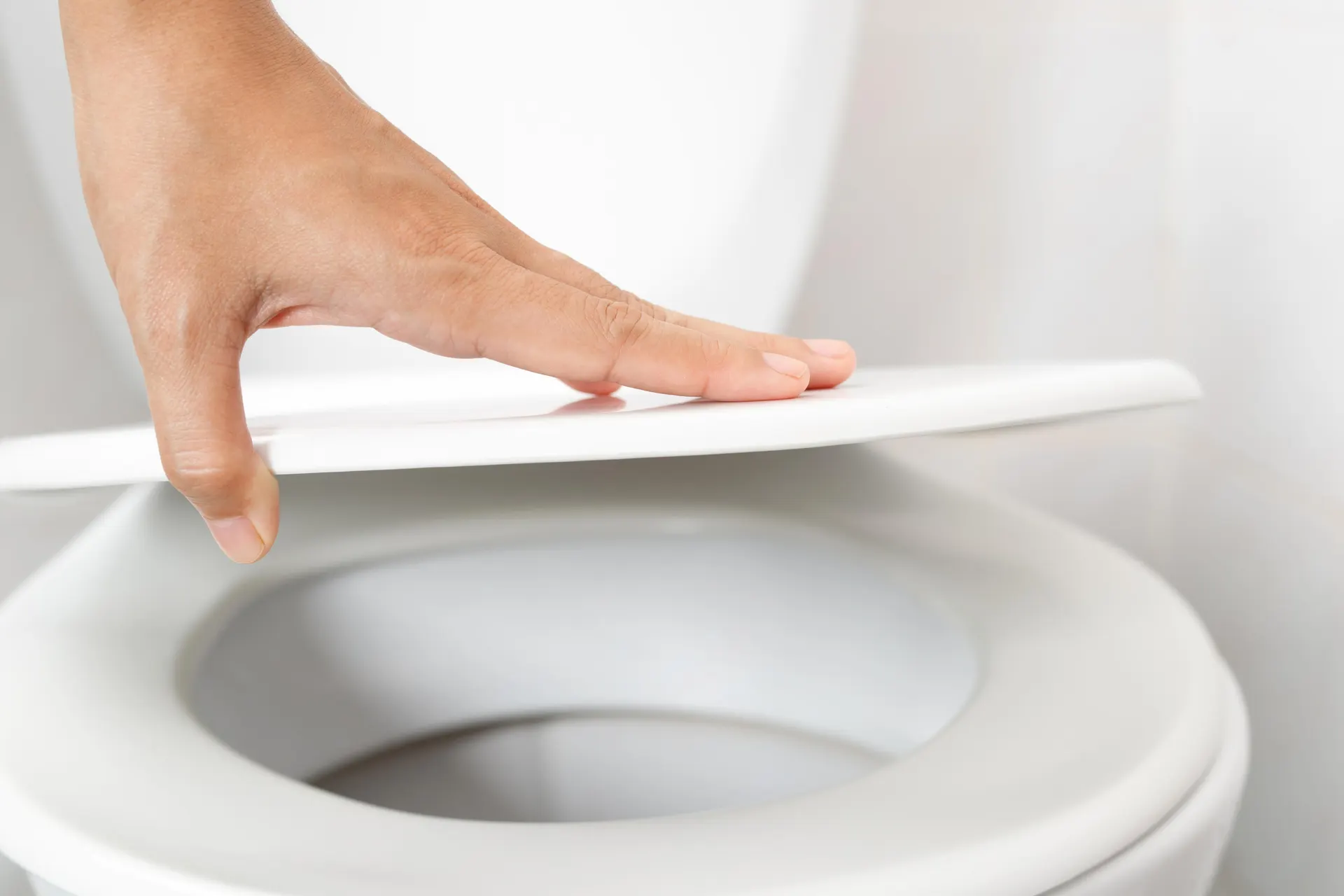 |
Closing or leaving the toilet lid open remains a debated topic. *Photo: Rd*
By Bao Nhien (According to HK01/Rd)