Many people often find squid tough, rubbery, or dry after cooking. According to chef Vu Nhat Thong of the Eric Vu cooking class center, the issue isn't the quality of ingredients or cooking tools. Instead, it stems from cooks not understanding the chemical changes in squid meat when exposed to heat and time.
Squid meat has two main components that react oppositely to heat: muscle protein and connective tissue (collagen). Muscle protein is sensitive to heat, cooking quickly, firming up, and reaching its most tender state within the first one to three minutes. Conversely, collagen, which binds muscle fibers, requires over 30 minutes of low, stable heat to melt into a smooth gelatin.
Chef Thong notes that the most common mistake cooks make is maintaining cooking times between four and 29 minutes. During this period, muscle protein fibers overcook, contract, and expel moisture, resulting in dry meat. Simultaneously, the collagen network hasn't had enough time to melt, leaving the squid tough and chewy.
To avoid this problem, the chef recommends two specific cooking methods, based on the 'under three minutes' or 'over 30 minutes' principle.
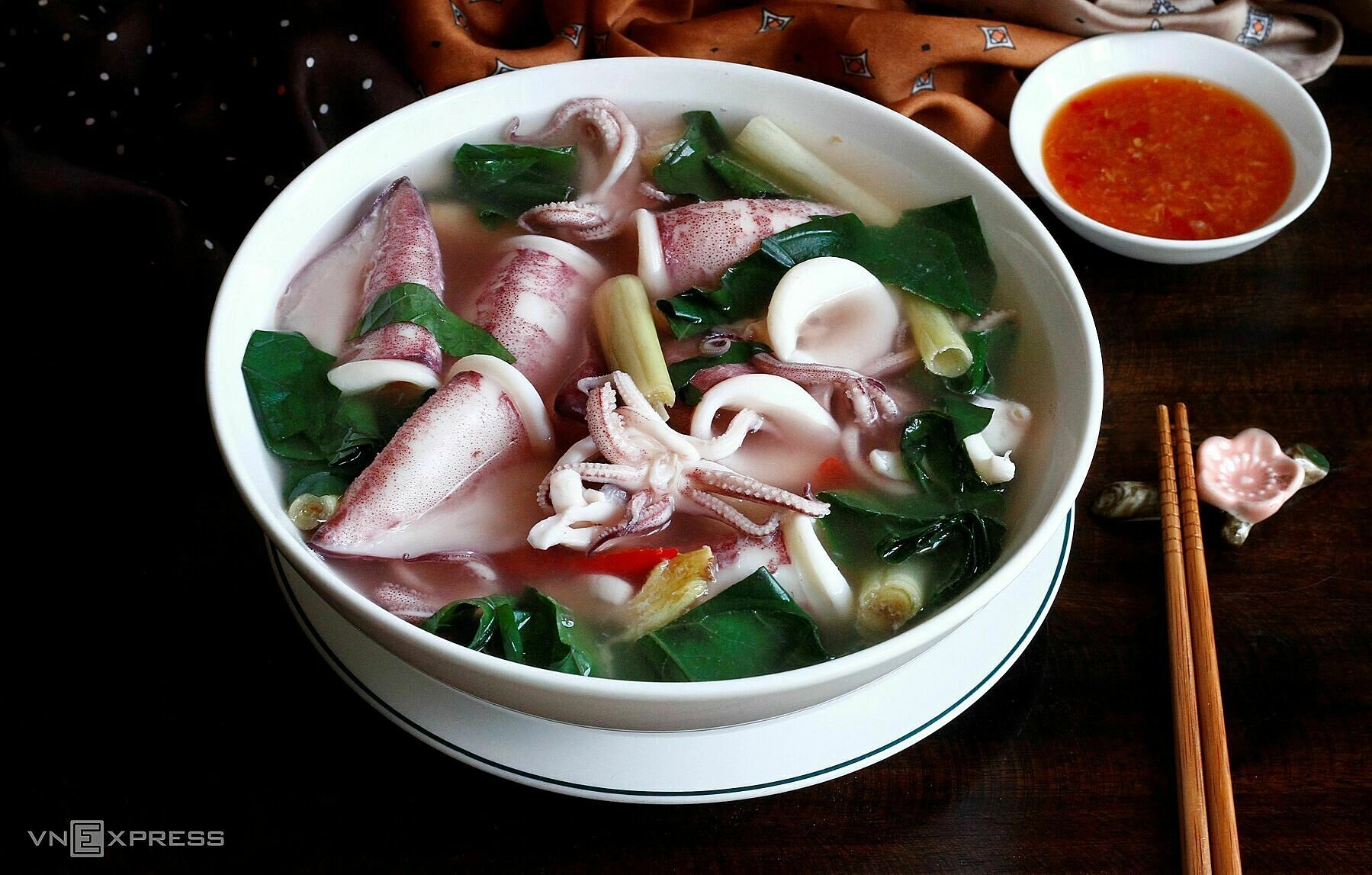 |
Quang Ninh-style boiled squid with betel leaves. Photo: Bui Thuy |
The first method applies to dishes like stir-fries, grills, deep-fries, or hotpot, requiring very high heat and a cooking time under three minutes.
Cooks should pre-cook accompanying ingredients beforehand. Once the pan is smoking hot, add the squid last and stir-fry quickly. When the pieces turn opaque white and curl slightly (around one to two minutes), turn off the heat immediately to preserve their crispness and sweetness.
The second method is for braised, simmered, stewed, or stuffed dishes, involving a cooking time exceeding 30 minutes.
After a quick sear to firm them up, the squid should be cooked covered over low heat for 30 to 60 minutes, depending on size. This process allows the tough collagen network to melt into gelatin, re-enveloping the dehydrated muscle fibers, making the squid incredibly tender and flavorful.
Beyond timing, cooks can also score the squid's surface (like dragon scales) to increase heat exposure and cut through connective tissues, promoting faster cooking.
Additionally, blanching squid in boiling water for around 15 to 20 seconds, then immediately plunging it into ice water before cooking, helps firm the meat and prevents it from releasing too much water. Ingredient selection also impacts the dish's texture: thick-bodied leaf squid, rich in collagen, is suitable for longer cooking, while thin-fleshed tube squid is better for quick preparations.
Bao Nhien