Chen, who married in 2018, grew up with a single mother who divorced when Chen was just over one year old. Similarly, her father-in-law had been living alone since his son was 5 months old, following the tragic death of his first wife in a traffic accident.
Witnessing her father-in-law's kind nature, Chen and her husband conceived the idea of setting him up with her biological mother. Their hope was to provide both parents with companionship and support in their later years.
Initially, Zheng, Chen's mother, hesitated due to concerns about public perception. However, after repeated persuasion from their children, both individuals gradually opened up and found a connection. They officially registered their marriage in 2021.
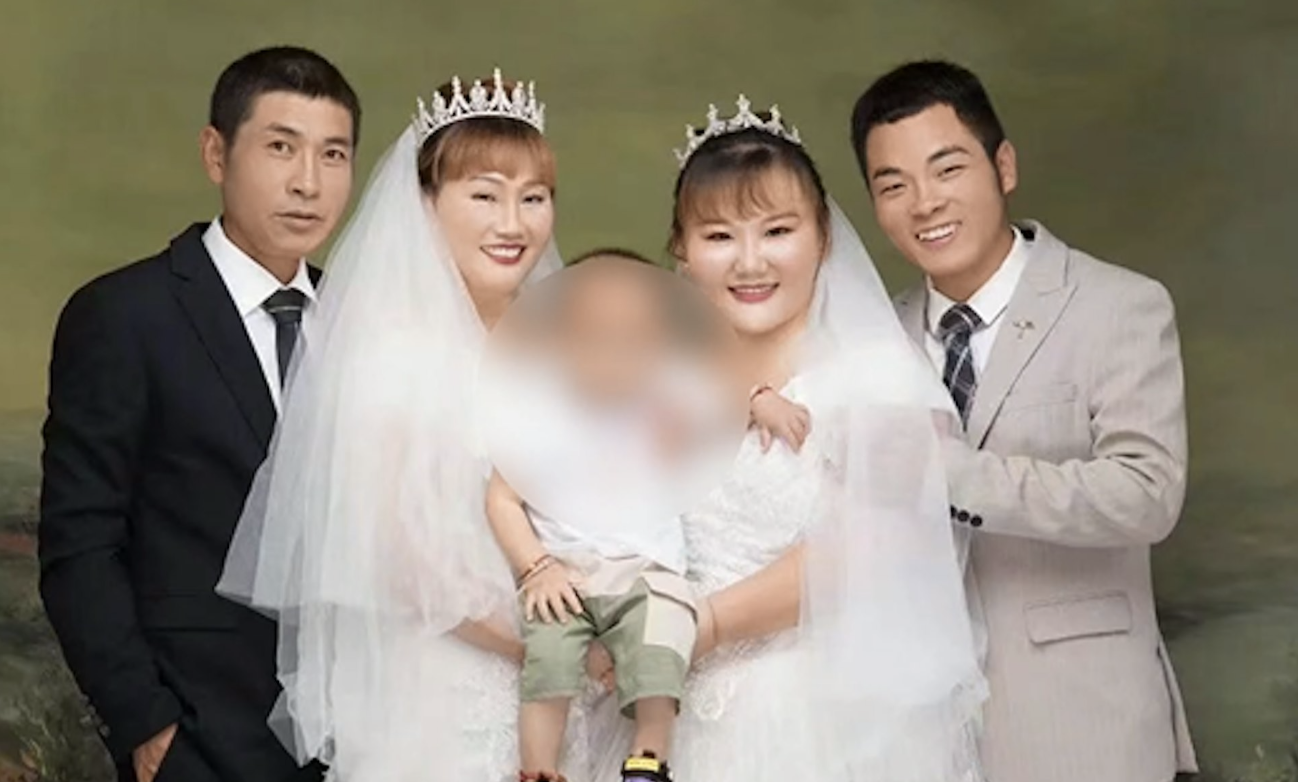 |
Chen and her husband (right) pictured with her parents at their wedding in 2021. Photo: Douyin @XiaoliBangmang |
The marriage has now spanned nearly 5 years. Discussing the family's transformation, Chen noted a complete absence of traditional mother-in-law and daughter-in-law conflicts. "My biological mother becoming my mother-in-law allows me to confide comfortably," she stated. Her father-in-law described their union as a bond where "kinship becomes even closer."
Chinese law prohibits marriage between direct or collateral relatives within three generations. Chen's mother and father-in-law established an in-law relationship through their children's marriage, with no blood ties. Both were single and entered the marriage voluntarily, ensuring its legality.
On social media, the story has garnered mixed reactions. One group commended Chen and her husband for prioritizing their parents' happiness in their golden years. Others, however, expressed concern that this family structure could disrupt traditional ethics and complicate kinship terms for future generations of grandchildren.
Minh Phuong (According to Sina, Worldjournal, HK01)