 |
The Citroen Duong Van Duc D'Indochine Garage in Hoa Hung ward launched the "Old Southern Vietnamese Weddings" exhibition on 3/8, featuring over 200 artifacts from the 1930s to 2000.
This event is part of the "Ket Duyen To Hong" (Tying the Red Thread) series, organized by the Sai Gon - Gia Dinh Commando Museum. Tran Trong Nghia, the museum's director, stated that the program aims to recreate traditional southern Vietnamese wedding ceremonies, preserving and promoting the nation's cultural values.
Built in 1947, the garage served as a secret base for the Sai Gon Commando during the anti-American resistance war. Today, it houses numerous artifacts, vintage vehicles, and documents detailing the Sai Gon Commando's history.
 |
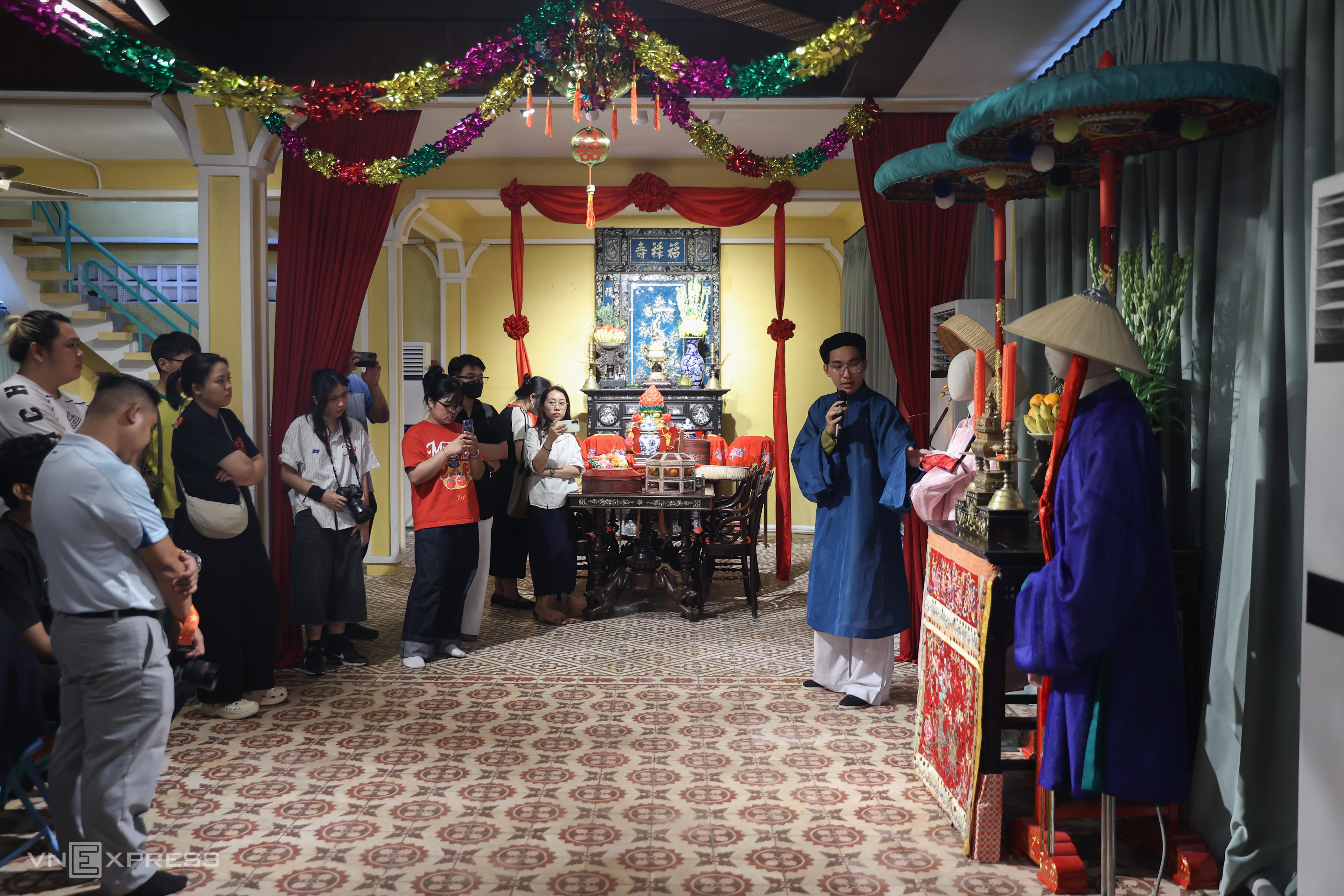
Wearing a traditional "ngu than tay thung" (five-panel loose-sleeved) outfit, Nguyen Khoa Nam, 23, presented the wedding ceremony at the bride's home, depicting the groom's family bringing gifts in the 1940s.
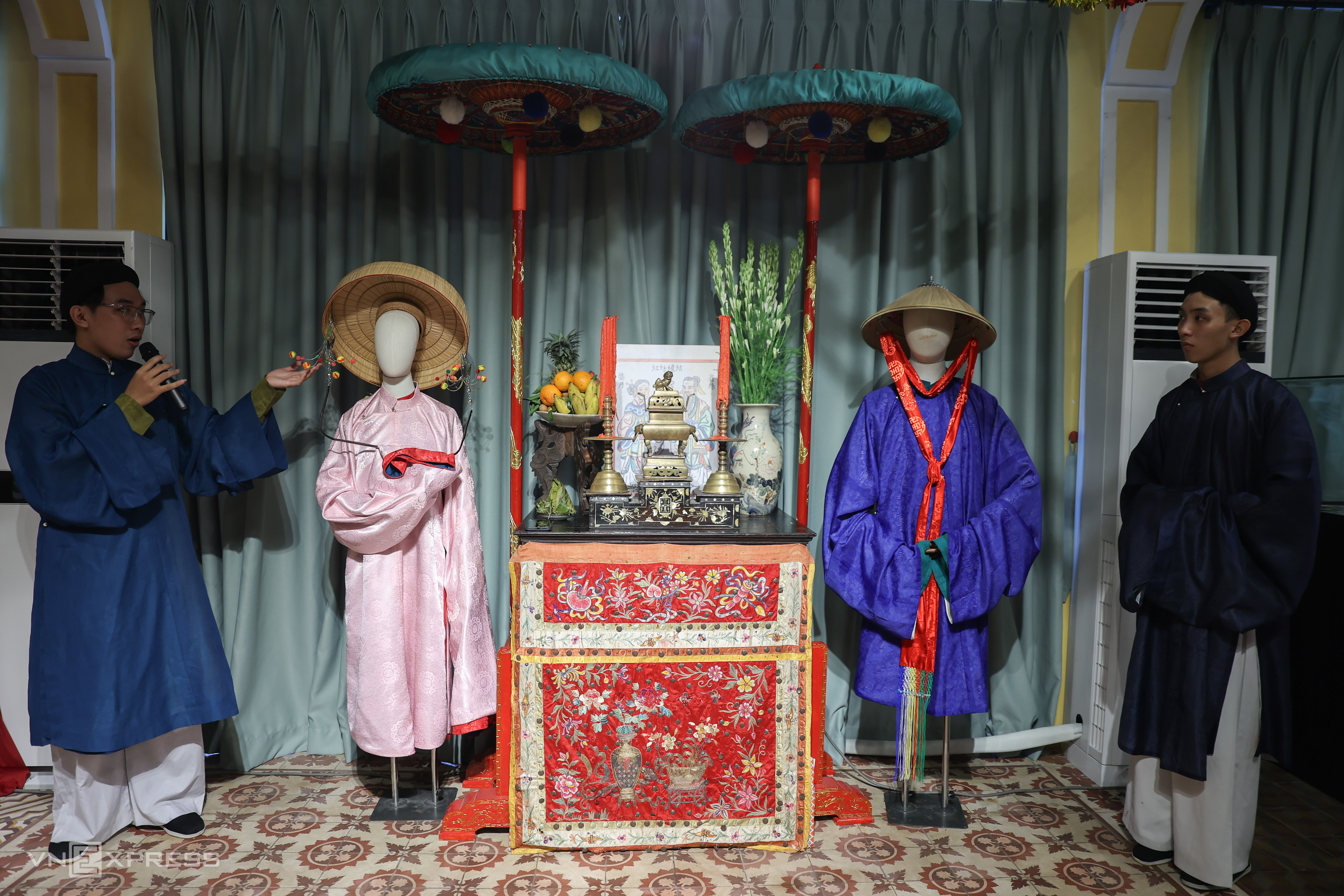
The bride and groom, dressed in wedding attire, stood beside the "dien nhan" altar, dedicated to "Ong To" and "Ba Nguyet" (matchmaker deities) who unite couples. This outdoor altar, typically draped in red cloth, displayed fruit trays, a bronze incense burner, flowers, and a ceremonial umbrella. The museum meticulously collected and restored these artifacts using historical records.
 |
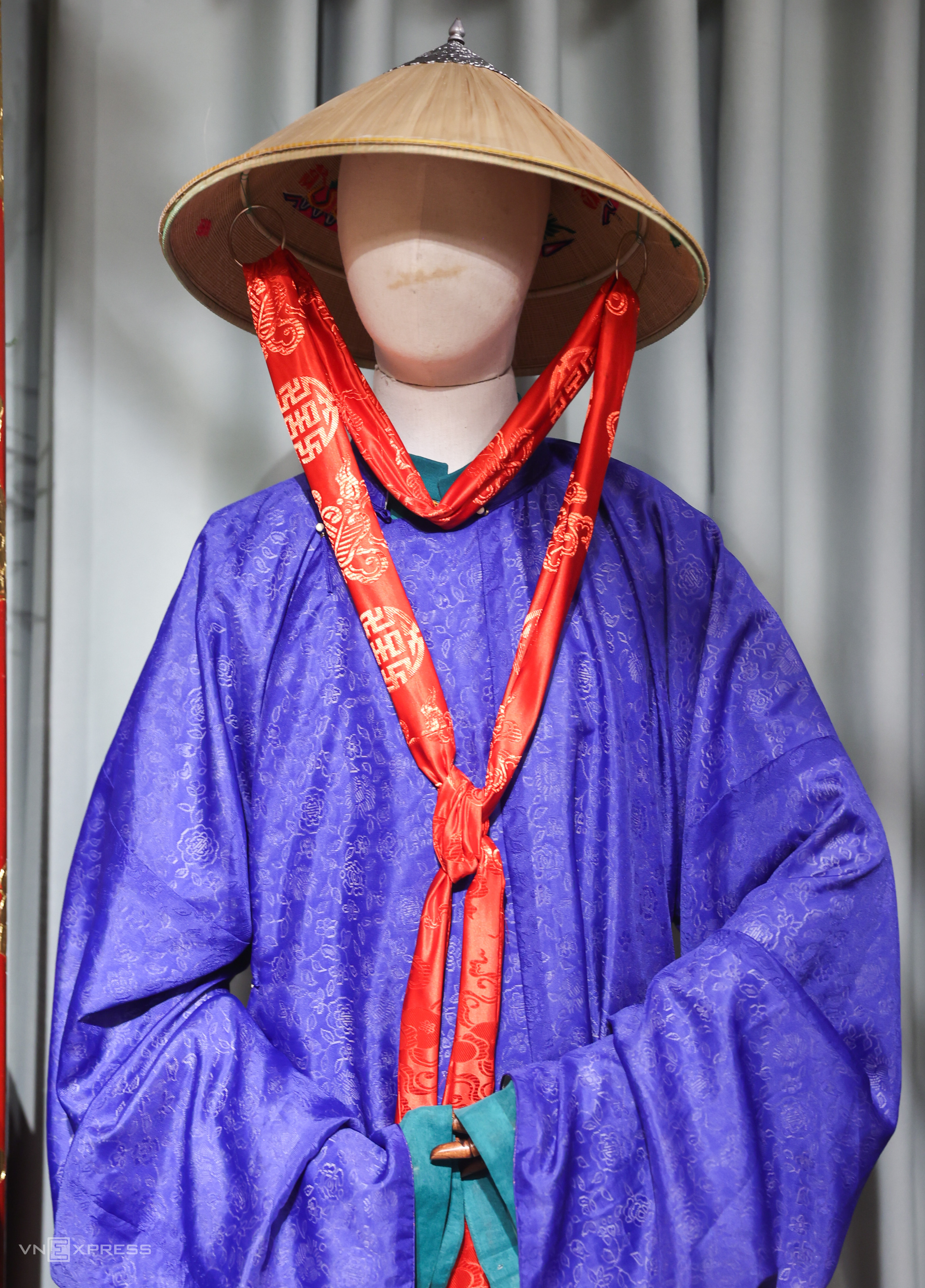 |
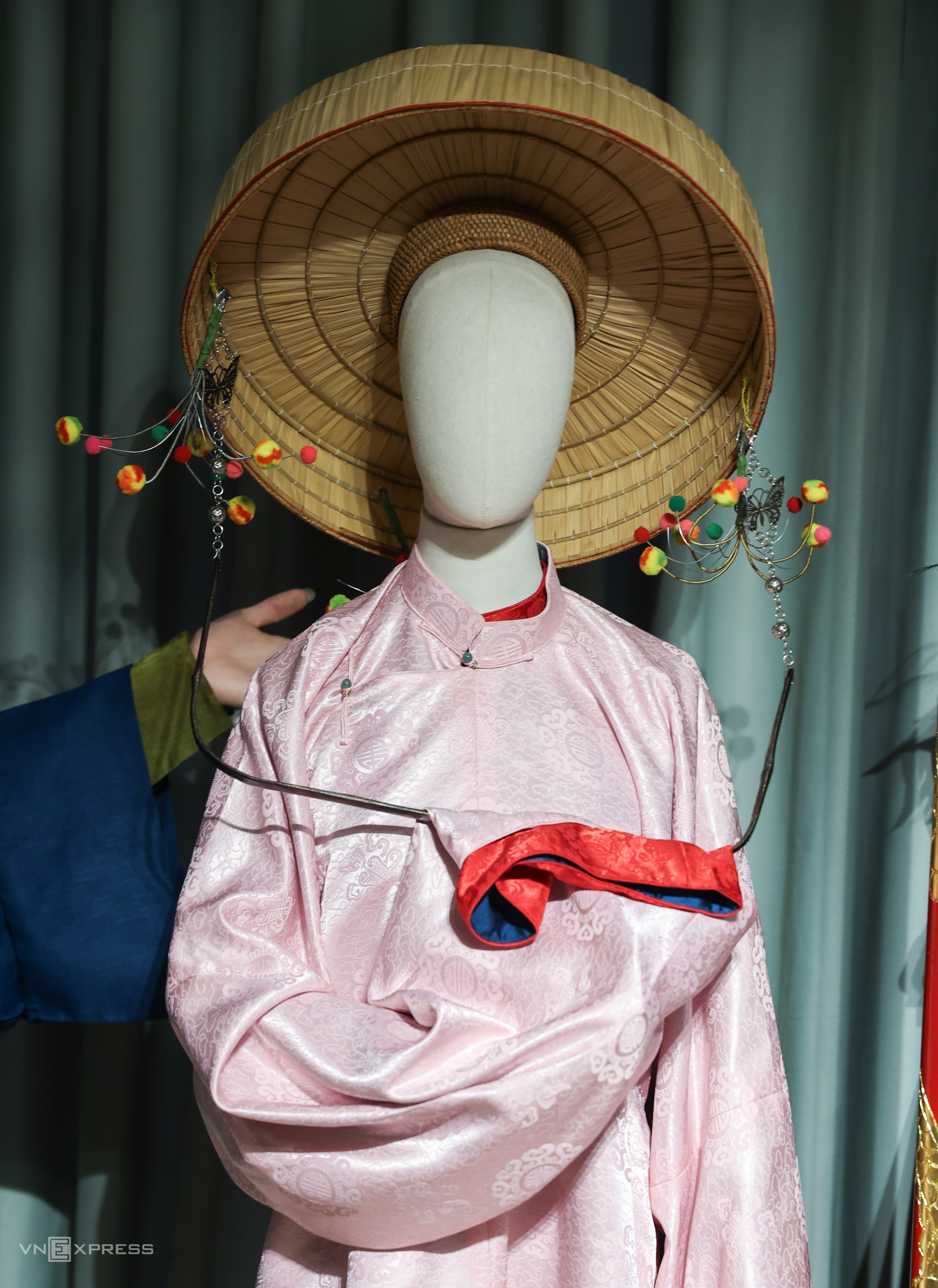
Historically, southern Vietnamese brides wore an "ao tac", also known as "ao thung". This attire was paired with a "non cu" (conical hat) featuring silk or bow straps, embellished with pom-poms on the sides and back, creating a graceful appearance.
Grooms likewise donned an "ao thung" and a traditional conical hat. Unlike modern red attire, historical southern Vietnamese wedding outfits predominantly featured shades of green and blue, reflecting the elegance of past wedding traditions.
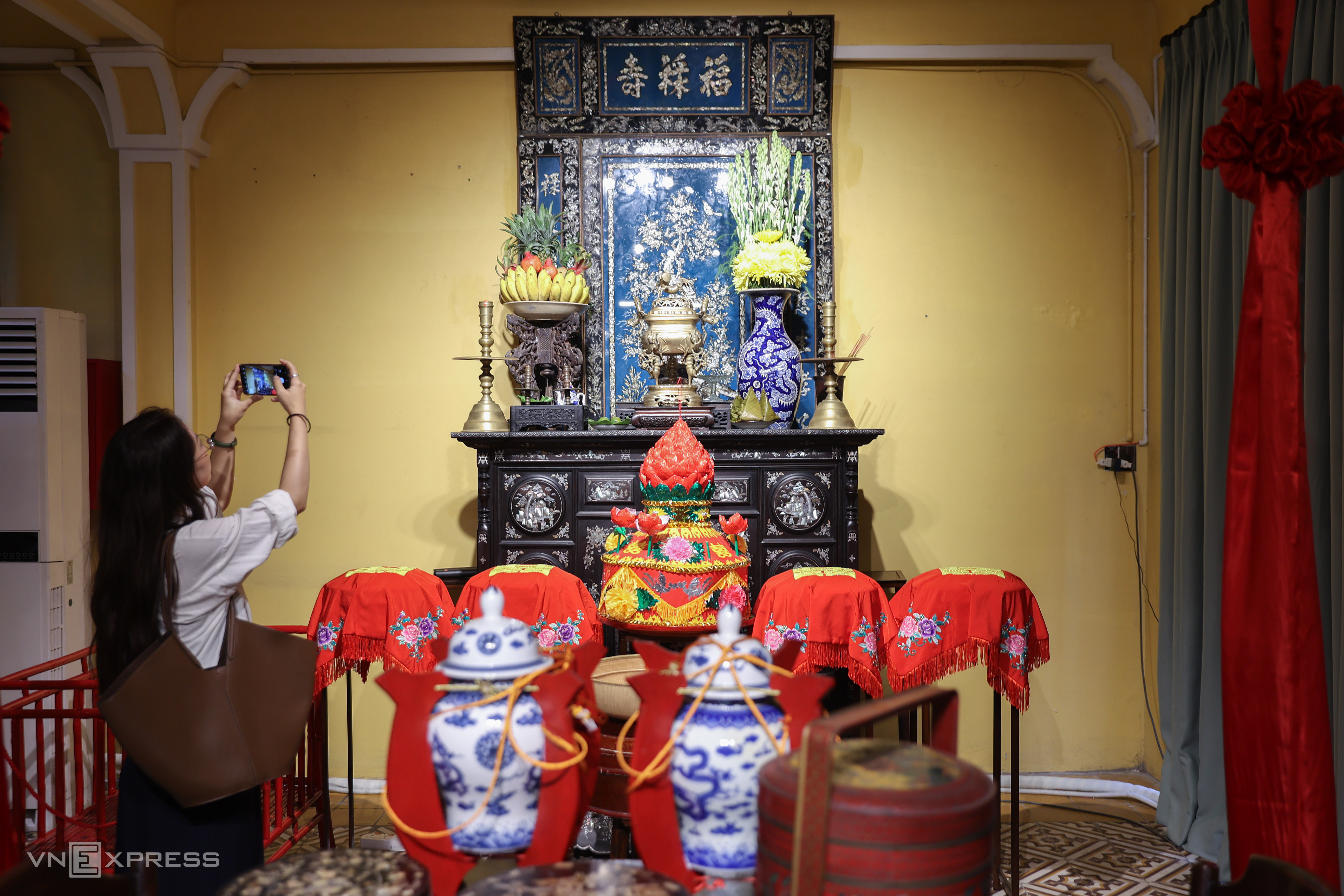 |
The ancestral altar is where the bride and groom light incense to announce their marriage to their ancestors, seeking blessings for a harmonious life together.
Items such as incense burners, candle holders, flower vases, five-fruit trays, and other wedding offerings, all over 50 years old, are meticulously arranged to recreate the traditional wedding setting.
Wedding gifts, covered in red cloth, include betel and areca nuts, wine, tea, cakes, fruits, and a wedding dress. During the procession, these trays are carefully lidded and covered to ensure cleanliness before being placed on the ancestral altar for the ceremony.
A betel and areca nut tray, centrally placed, is a prominent part of the wedding gifts. Its lotus-shaped lid symbolizes happiness and completeness in southern Vietnamese folk belief. Locals once believed that if the betel and areca nuts remained fresh after the procession, it indicated ancestral approval and blessings for a harmonious marriage.
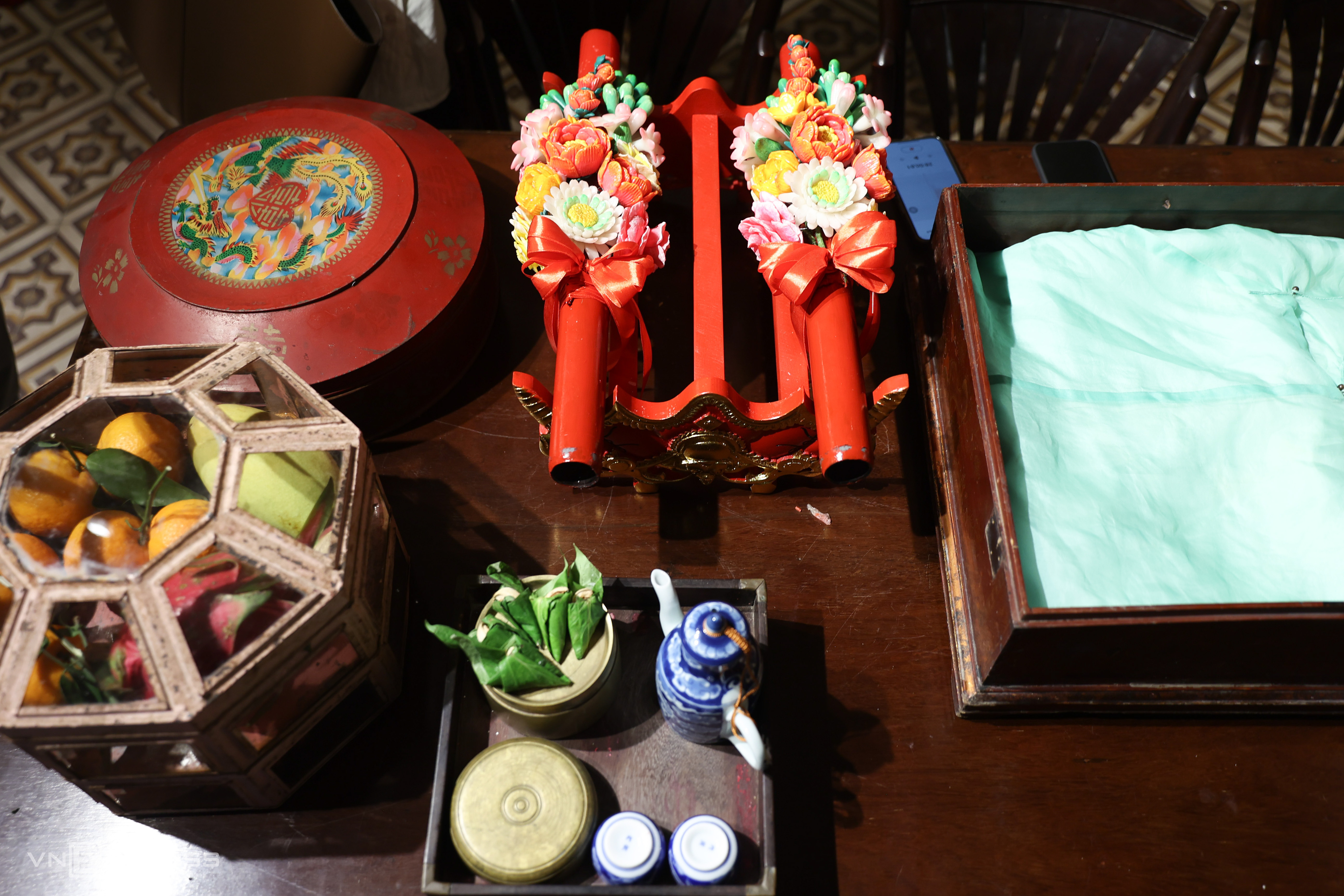 |
The groom's family traditionally brings a pair of large candles, known as "den hoa chuc" (flowered congratulatory lanterns), for the "thuong dang" ritual (lighting candles for ancestors). This was an essential offering in traditional southern Vietnamese weddings.
These candles must fit the candle holders on the bride's ancestral altar. The "thuong dang" ritual is a sacred moment, symbolizing the couple's union as husband and wife under the watchful eyes of their ancestors.
Wedding gifts also included a jewelry set: a neck torque (or necklace), bracelet, and earrings. Earrings, in particular, held sacred meaning. The presenter noted that these earrings were often shaped like blooming flowers, symbolizing fertility and fulfillment. The mother-in-law would personally adorn the bride with the earrings, a ritual signifying acceptance into the family and expressing love as if she were her own daughter.
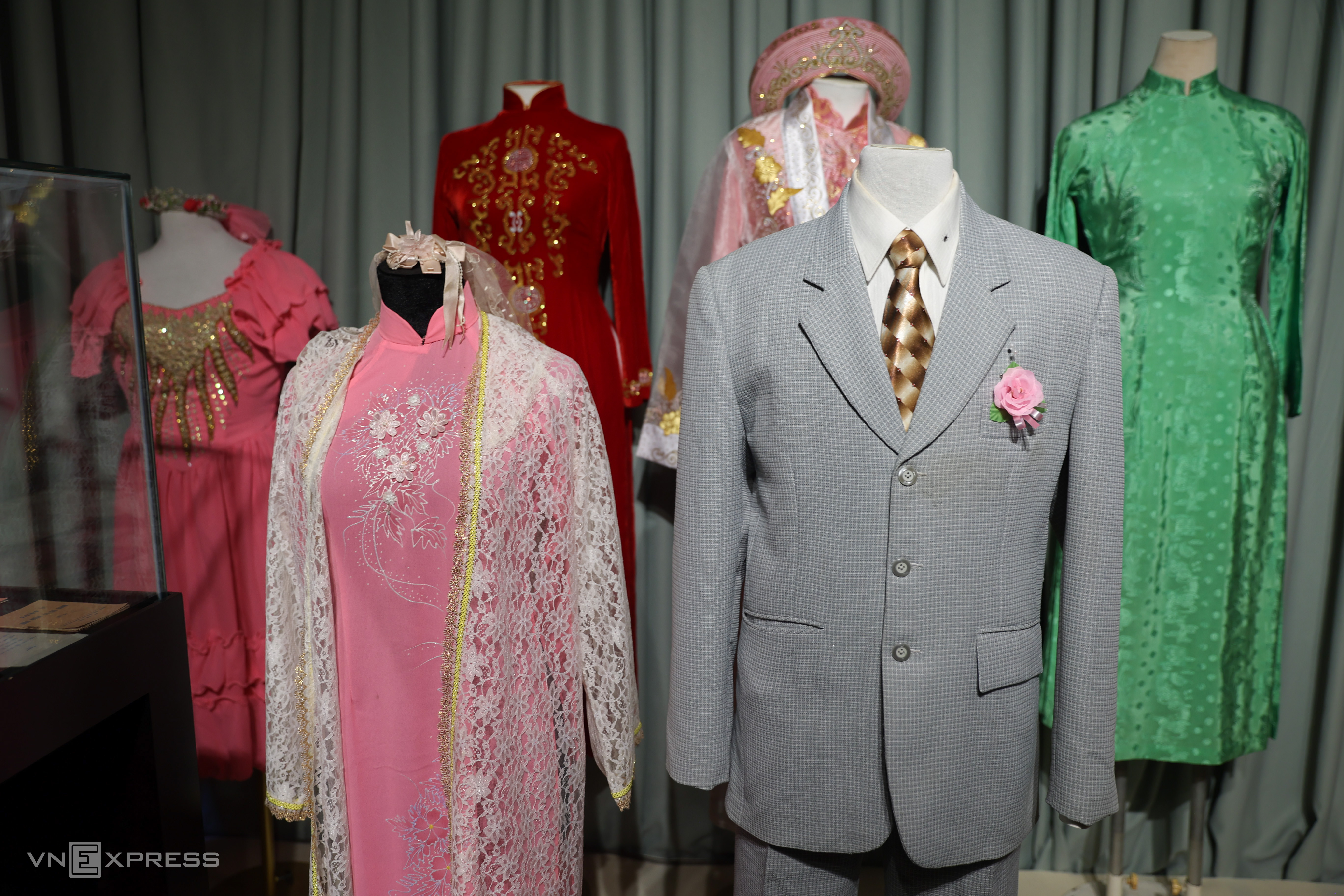 |
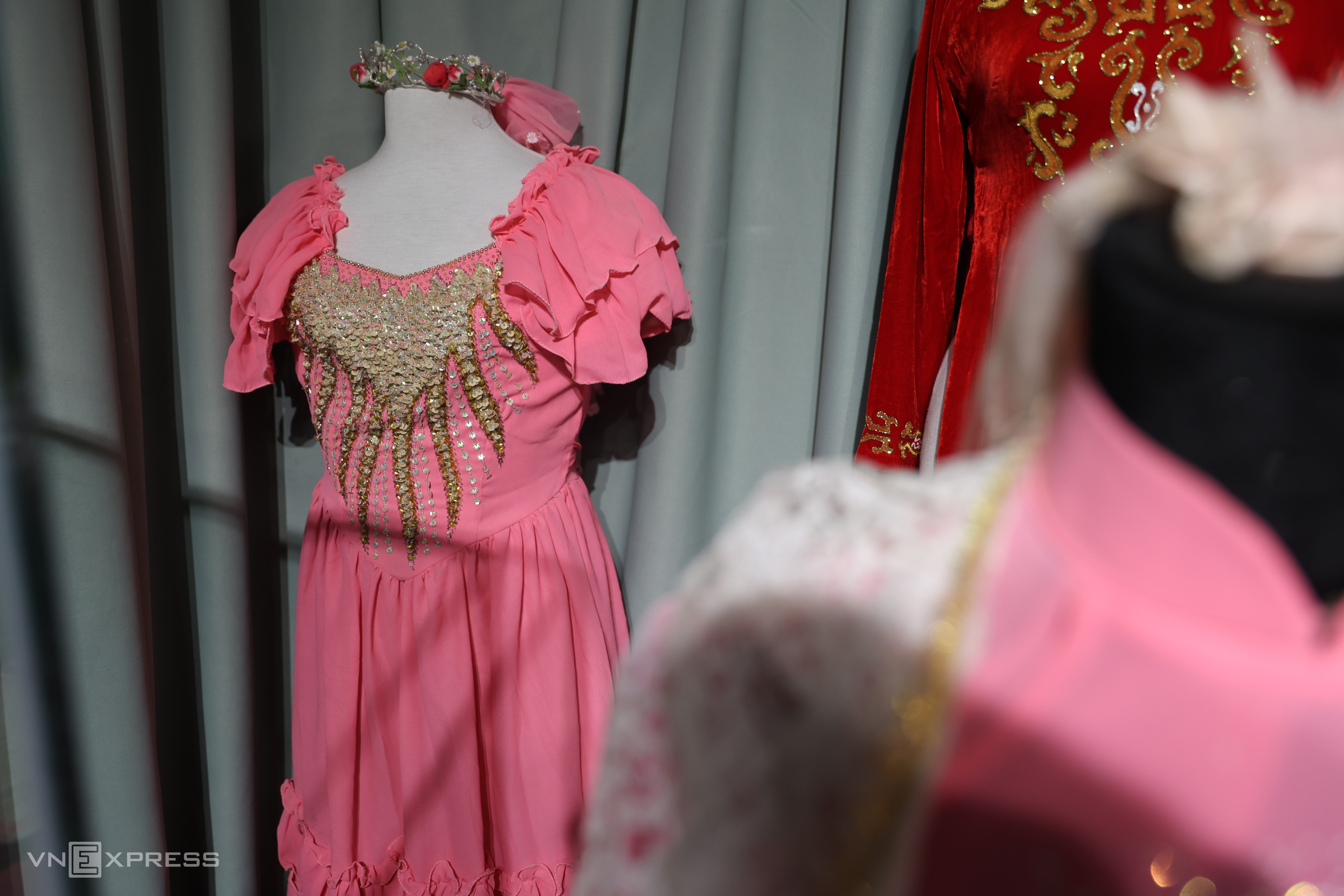
Another section showcases wedding attire spanning from 1940 to 2000. A notable piece is a bride's gown (pictured behind), still intact, used for greeting guests at wedding receptions in the 2000s and sourced from a bridal shop.
 |
A glass display case features numerous images of southern Vietnamese weddings from the 1940s to the present. Adjacent to these are wedding invitations and marriage certificates dating back to the French colonial period.
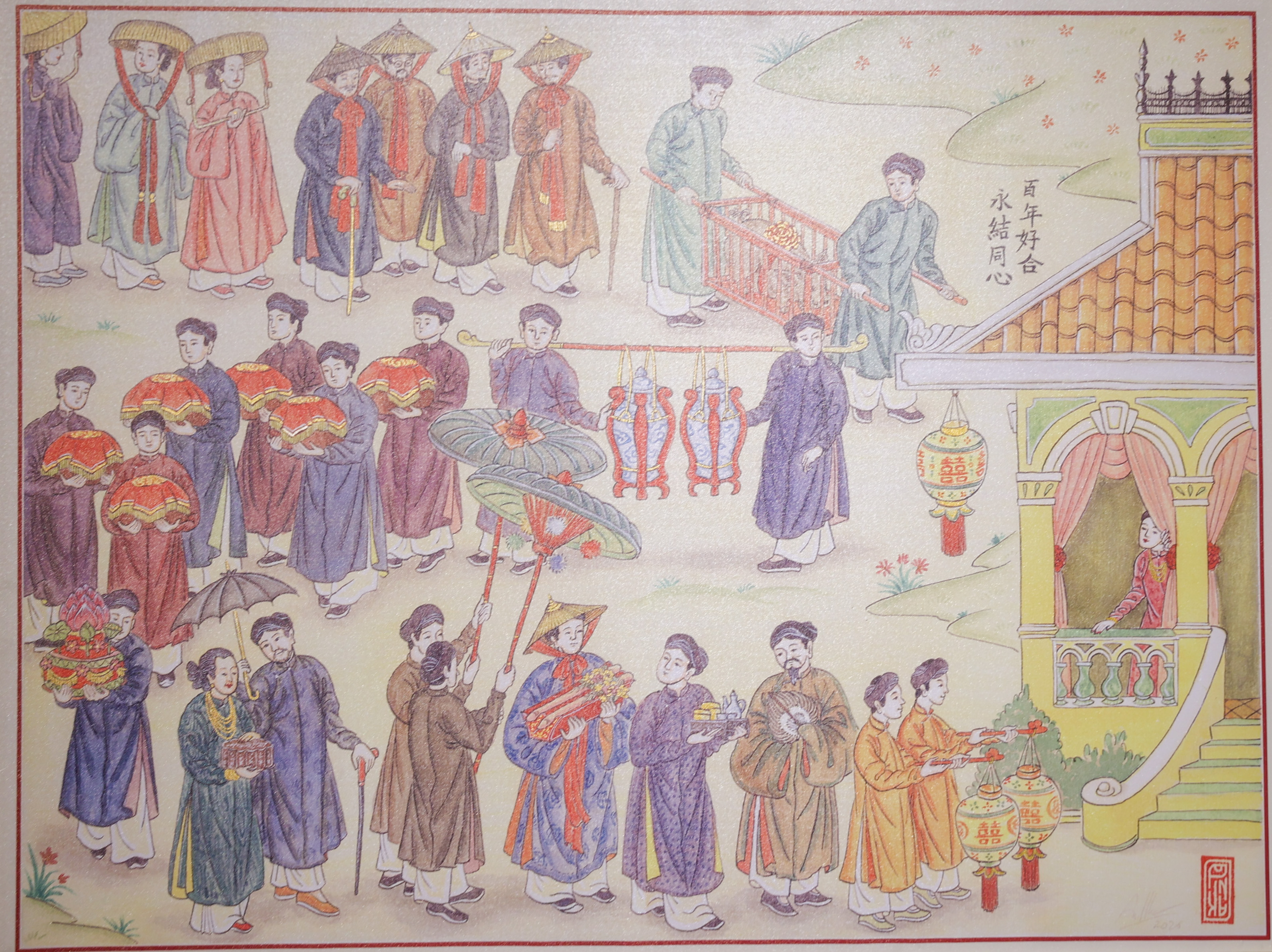
A painting by Khoa Phung's Art Corner depicts a bride's procession in southern Vietnam around the early 20th century.
 |
Ngo Hoai Thu, 33, noted the diverse artifacts help visitors better understand traditional southern Vietnamese wedding rituals. "Many unique customs are gradually disappearing from modern weddings", Thu commented, "I hope this event helps preserve and disseminate these cultural values to the younger generation".
The exhibition runs until 8/8, open daily from 10:00 to 18:00.
Quynh Tran