In the afternoon, Rid Mondejar, 37, from Cebu, Philippines, fishes for salmon with her children on Sallinnguit island, which connects to Sisimiut, Greenland's second-largest city.
Mondejar and her husband moved to Greenland 11 years ago. Their decision was unexpected, with some family members unaware of Greenland's location. Initially, she struggled to adapt to a landscape with almost no trees. Winters brought many sunless days, while summers offered no night.
Now working at a local hotel, the Mondejar couple has a stable income. "Greenland is not just a workplace; it's where we built our family," she said.
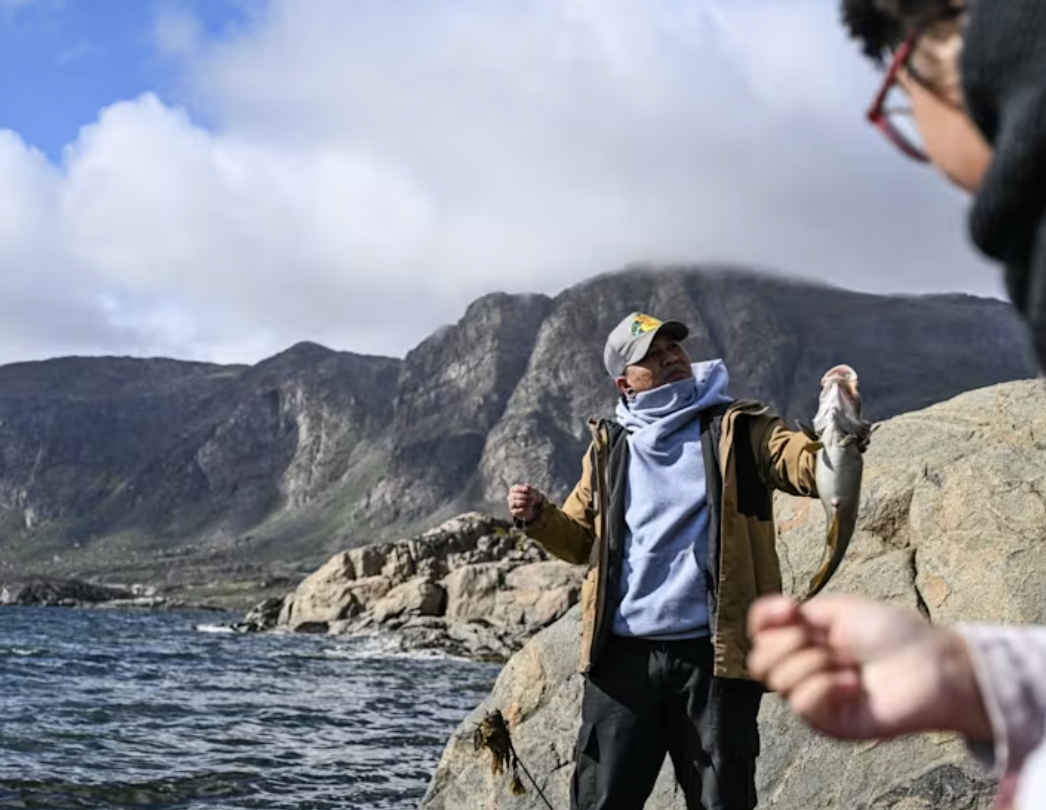 |
A Filipino person fishing for salmon in Greenland. *Photo: CNA*
Greenland has a sparse population. Young people leaving their homeland and a developing economy have increased labor demand.
Around 1,300 Filipinos and 460 Thais currently live on the island, forming the two largest foreign worker communities within the total population of 57,000. Compared to 5 years ago, the number of Filipinos has increased nearly 5 times, and Thais have doubled. Foreign workers now constitute 12-13% of Greenland's total workforce, employed in supermarkets, hotels, restaurants, cleaning companies, and seafood processing businesses.
Christian Keldsen, director of the Greenland Business Association, stated that the tourism, service, mining, and energy sectors are expanding, but the local labor supply is insufficient. He noted that even if every resident worked two to three jobs, Greenland would still need immigrant labor.
Most Filipinos come to Greenland through family referrals. In the capital, Nuuk, 31 members of Annabelle Cruz's extended family work there. Cruz, 39, arrived in Nuuk two years ago, drawn by higher wages and the desire to experience Arctic life. She is now a sales manager at a local supermarket chain.
Professor Steven Arnfjord, director of the Arctic Welfare Center at the University of Greenland, said that those with work permits receive healthcare, education, and pension benefits funded by taxes.
In 2026, Nuuk has 770 Filipinos, more than 6 times the 118 a decade prior. This large community helped Merlyn Mejala open an Asian food store selling instant noodles and snacks. From a small shop, she has expanded her business, delivering goods across Greenland. However, Mejala mentioned hearing complaints from some locals who believe foreign workers are taking their jobs.
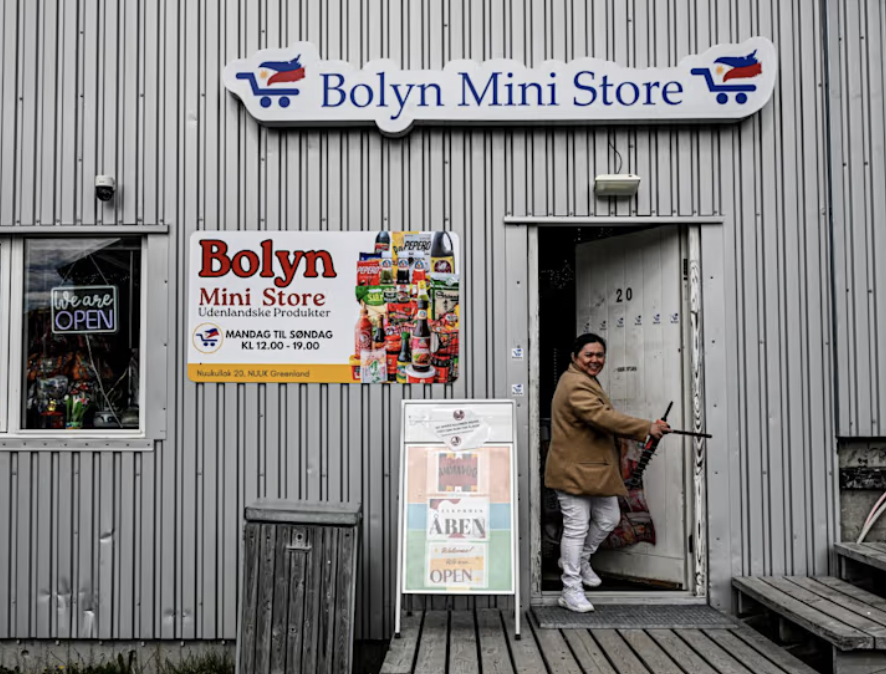 |
Merlyn Mejala, a Filipino, opens a store selling imported Asian goods in Nuuk, Greenland. *Photo: CNA*
To integrate, many immigrants actively learn about local culture. GP Dupitas, 42, a former nurse in his homeland, is now an assistant at Nuuk city hospital. After learning the language and receiving a promotion, he began assisting fellow workers in entering the healthcare sector.
He also learned hunting, a long-standing tradition among the island's inhabitants. Ice and snow cover most of Greenland, making agriculture impossible. For thousands of years, the Inuit people have survived by hunting seals, whales, birds, reindeer, musk oxen, and fishing. Dupitas often cooks reindeer meat adobo, a traditional Filipino dish, for his children.
Ngoc Ngan (According to CNA)