To ensure your pickled shallots remain crisp and free from mold, especially for the Tet holiday, paying attention to key factors such as salt concentration, fermentation temperature, and proper storage is crucial. These elements directly influence the texture, flavor, and shelf life of this traditional dish.
Salt concentration is a primary determinant of crispness and safety in pickling. If the brine is too weak, harmful bacteria can easily grow, leading to mold and sliminess. Conversely, if it is too salty, the fermentation process slows down, making it difficult for the shallots to become properly sour.
Research on vegetable fermentation indicates that a salt concentration of 2.2-2.8% creates an optimal environment for lactic acid bacteria to thrive, ensuring stable fermentation. For harder vegetables like shallots, a salt concentration of 3.5-4% (35-40 grams of coarse salt per 1 liter of water), combined with an appropriate temperature, allows for a slow and even fermentation process. After 10-15 days, the pickled shallots achieve a firmly crisp texture, a translucent white appearance, and a balanced flavor.
Always boil the brine and allow it to cool completely before adding it to the shallots. This step eliminates undesirable bacteria and creates a more stable fermentation environment. For faster pickling, you can add a small amount of sugar to balance the sour-salty taste, but avoid adding too much, as it can cause the brine to become slimy.
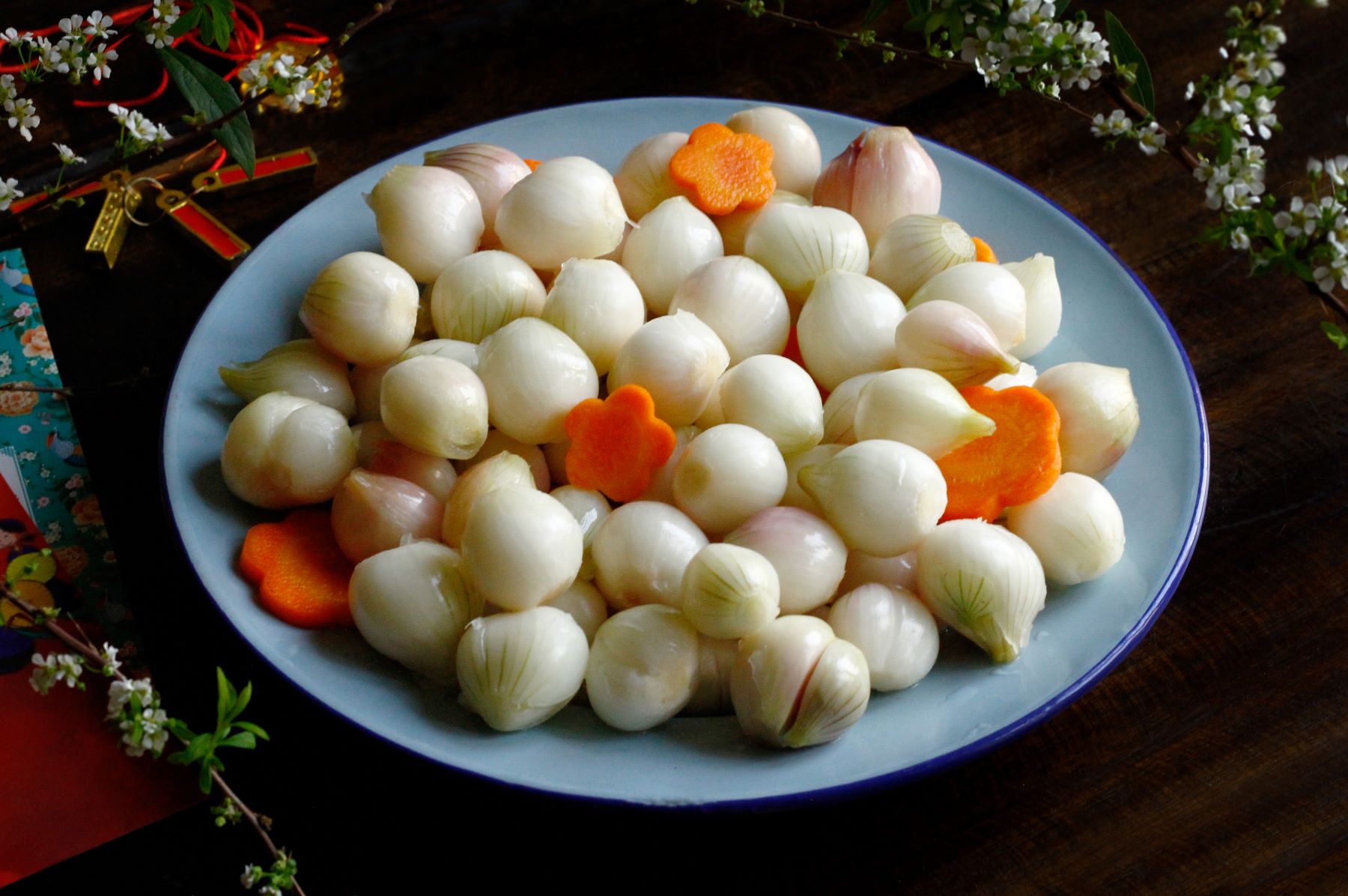 |
Pickled shallots are indispensable for the Tet feast. Photo: Bui Thuy |
Temperature plays a significant role in successful fermentation. Pickled shallots ferment most stably at temperatures around 20-25°C. Temperatures that are too high cause the shallots to sour quickly but result in a soft texture and a higher likelihood of mold. Conversely, temperatures that are too low slow down fermentation, making it difficult for the shallots to sour evenly and potentially leading to an unpleasant odor.
Once the shallots reach the desired level of sourness, transfer the jar to the refrigerator's cool compartment. This action slows down the fermentation process, helping the pickled shallots maintain their crispness and stable flavor throughout the Tet holiday.
The choice and preparation of storage containers are also vital. Jars used for pickling must be absolutely clean, sterilized, and dry. Even a small amount of dirty water or grease residue can spoil an entire batch of pickled shallots.
Prioritize using glass jars or ceramic crocks over poor-quality plastic containers, which can absorb odors and are difficult to clean. When arranging the shallots in the jar, ensure they are completely submerged in the brine. Limiting exposure to air is essential, as it is the main cause of mold formation. Use a clean pressing plate or weight to keep the shallots submerged beneath the surface of the liquid.
For optimal results, choose shallots that are firm, intact, and not bruised. Traditional wisdom suggests soaking shallots in wood ash water for one to two days to remove their pungency and make them whiter and crisper. If wood ash water is unavailable, rice water can be used with a similar effect. After soaking, rinse the shallots thoroughly, drain them completely, trim the roots closely (but not completely off), and peel off any old outer layers. Then, soak them in a light brine for about 30 minutes.
When pickling, use cooled boiled water and mix it with salt at the correct 3.5-4% ratio. Place the prepared shallots into a clean, dry jar, then use a bamboo pressing plate to keep them submerged, ensuring the brine level is about 5 cm above the plate. To accelerate lactic fermentation, you can add a small amount of sugar or some old pickled shallot brine as a starter culture.
Once the shallots achieve the desired sourness, move the jar to the refrigerator's cool compartment to slow down fermentation. This method helps the pickled shallots retain their crispness and stable flavor throughout the Tet celebrations.
Bui Thuy