According to the Daikin World Air Survey 2024, conducted in 12 cities globally, preferred air conditioner temperatures range from 21.9 to 26.2 degrees Celsius, varying by region and climate. This indicates that no single temperature setting can provide universal comfort for all users.
With over 100 years of air research, Daikin recognizes that temperature alone does not define an ideal indoor environment. Guided by its "Perfecting the Air" philosophy, the brand focuses on four elements—temperature, humidity, air quality, and airflow—that collectively shape how people perceive their surrounding air.
Temperature directly influences sensations of heat or cold. Humidity affects the body's ability to sweat and feel dry. High humidity often causes stuffiness and stickiness, while excessively low humidity can lead to dry skin, nose, or throat. Air quality relates to the cleanliness of the air people breathe, and airflow determines how air distributes within a room. Even with an appropriate temperature, strong or direct airflow can still cause discomfort.
"Therefore, a room at 26 degrees Celsius does not necessarily offer the same experience under all conditions. An appropriate temperature combined with high humidity can still feel stifling, and adequate coolness with direct airflow remains uncomfortable," a company representative explained.
According to Daikin, "comfort" lacks a universal formula. Thermal comfort assessment models, such as PMV (Predicted Mean Vote) and PPD (Predicted Percentage of Dissatisfied), suggest the goal is not to find a perfect temperature for everyone, but to create conditions suitable for the majority of users. This perception of comfort also varies with an individual's physical condition, age, activity level, and time of day.
In Vietnam, microclimate studies show that comfort does not always require extremely low temperatures. Vietnamese individuals typically feel comfortable within a range of 25-27 degrees Celsius, combined with 45-60% humidity and gentle airflow. In hot and humid climates, this combination helps maintain a dry, cool environment without needing to set the air conditioner to a very low level.
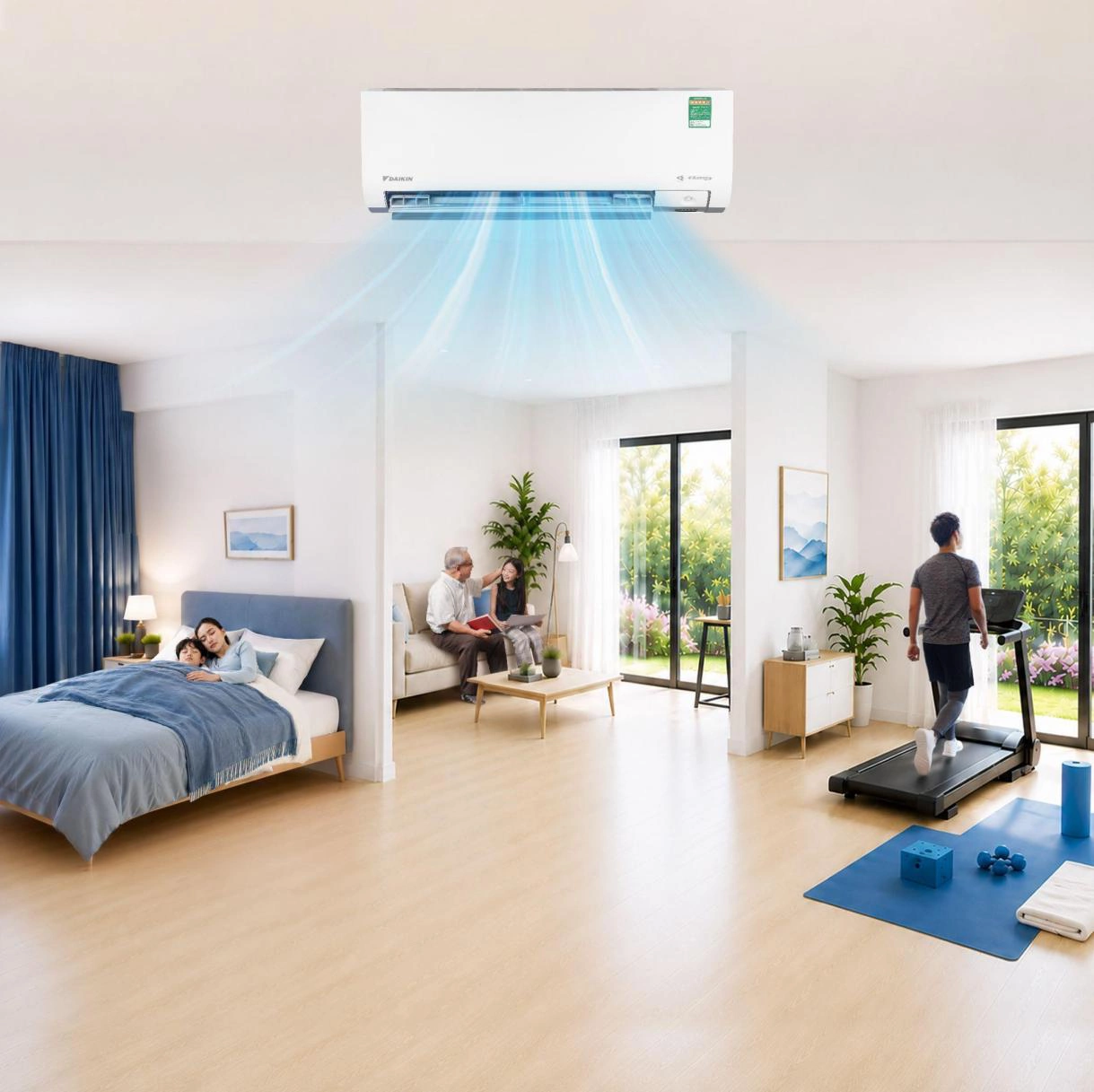 |
Daikin air conditioners create comfort by simultaneously controlling multiple indicators. Photo: Daikin |
The body's needs also change over 24 hours. The morning transitions from rest to alertness; daytime requires sustained comfort for work and daily activities; and the evening is when the body gradually relaxes for sleep.
With the FTKM series, users can actively select humidity levels of 45%, 55%, or 65% and fine-tune settings via the Daikin Air Select application, personalizing the air according to their needs at different times of the day.
In the morning, a dry, lightly cool environment can provide a pleasant feeling to start the day. Users can combine an appropriate temperature with 45% humidity and adjust the airflow direction flexibly on the FTKM, aiming for a drier air state.
During work, meals, or family activities, the need shifts to maintaining long-term balance. A 55% humidity level allows users to achieve a feeling that is dry enough yet comfortable for extended periods indoors.
 |
Families enjoy cool air from Daikin air conditioners. Photo: Daikin |
At night, as physical activity decreases and the body enters a resting state, needs change again. The FTKM integrates a comfort sleep mode combined with a 65% humidity option, aiming to maintain a gentler environment during sleep and reduce dryness caused by prolonged air conditioner use.
"No single air state can perfectly meet needs from morning to night. Comfort in a living space requires flexible management in tune with the body's biological rhythms," a brand representative stated.
Through the FTKM, Daikin continues to realize its "ideal air" philosophy, transforming the air conditioning experience from "what temperature to choose" to "what feeling you desire." From invigorating upon waking, comfortable during activities, to gentle during rest, the air can be refined to better suit each moment of the day, according to the company.
Hoai Phuong