On the afternoon of 27/7, Ha Thi Theu drove her two daughters, 9 and 18 years old, to Le Thi Rieng Park. Although her family has no fallen soldiers, they have maintained the tradition of visiting martyrs on 27/7 for many years.
In previous years, Theu and her daughters would visit a martyrs' cemetery in Tay Ninh province. This year, after following the "500 Days and Nights Campaign" and the search for remains at Le Thi Rieng Park, she chose this location as their destination.
"I want my children to understand that today's peaceful life was exchanged for the sacrifices of many generations. This is also how they learn gratitude and remember history," said Theu, who is from Tuyen Quang province.
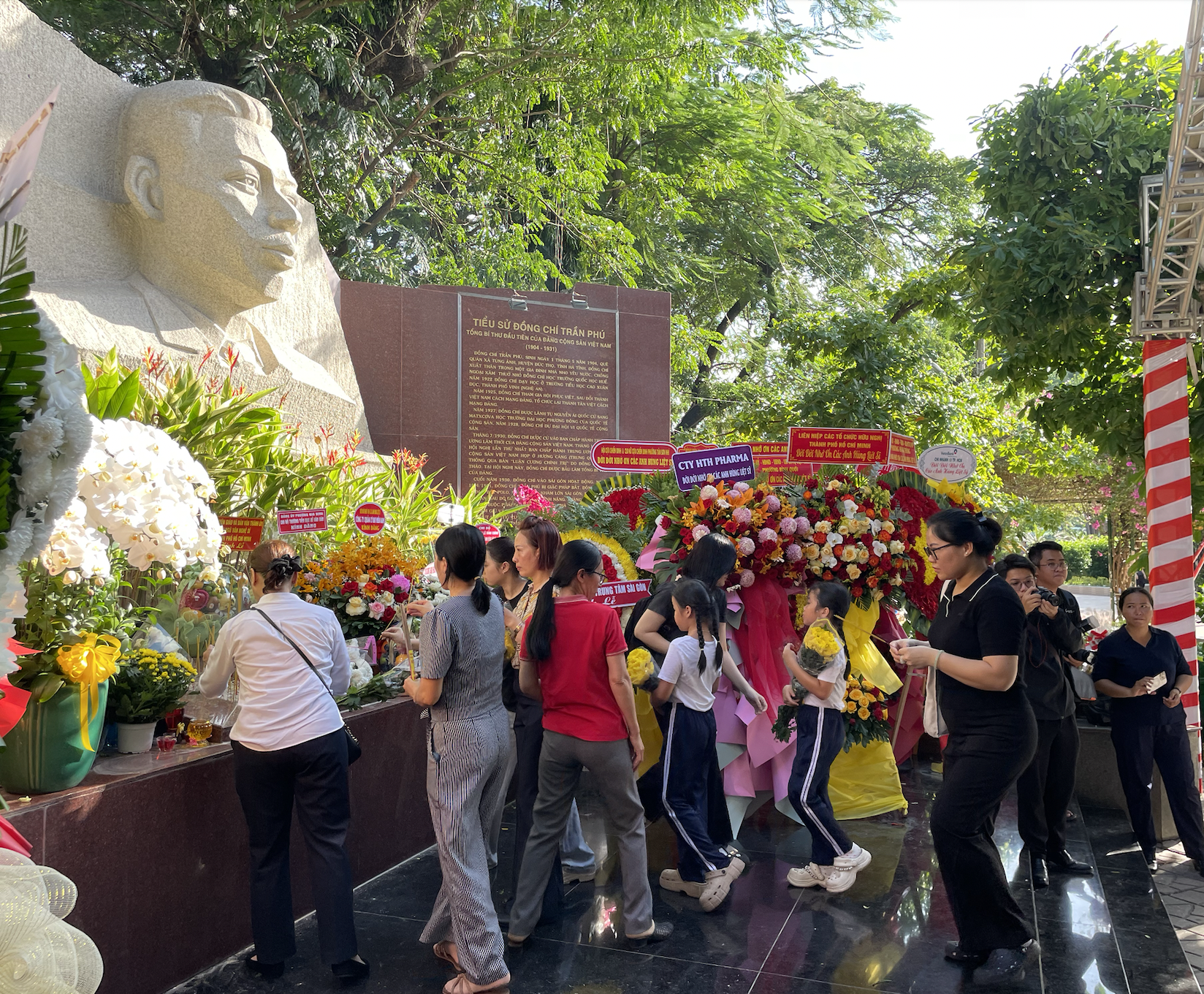 |
Ha Thi Theu (holding incense, in a black shirt) and her two daughters lit incense at Le Thi Rieng Park, Hoa Hung ward, Ho Chi Minh City, on the afternoon of 27/7. Photo: Ngoc Ngan |
Theu's family joined hundreds of residents from Ho Chi Minh City and other provinces, waiting in line to light incense and remember the recently repatriated martyrs. Visitors offered incense at five locations: the General Secretary Tran Phu Monument, the stele house honoring fallen soldiers from the former District 10, the martyrs' remains collection house, the memorial stele for two martyrs Le Thi Rieng and Tran Van Kieu, and the search and repatriation area. Organizers provided incense and staff to guide visitors, preventing congestion.
Phan Thi Sanh, a staff member in charge of offerings, noted that in previous years, the park typically welcomed a few dozen groups for incense offerings on 27/7, mainly from the local area. This year, visitor numbers surged after many martyrs' remains were found. In addition to Ho Chi Minh City residents, groups from Nghe An, Ha Noi, and northern provinces also came to pay their respects.
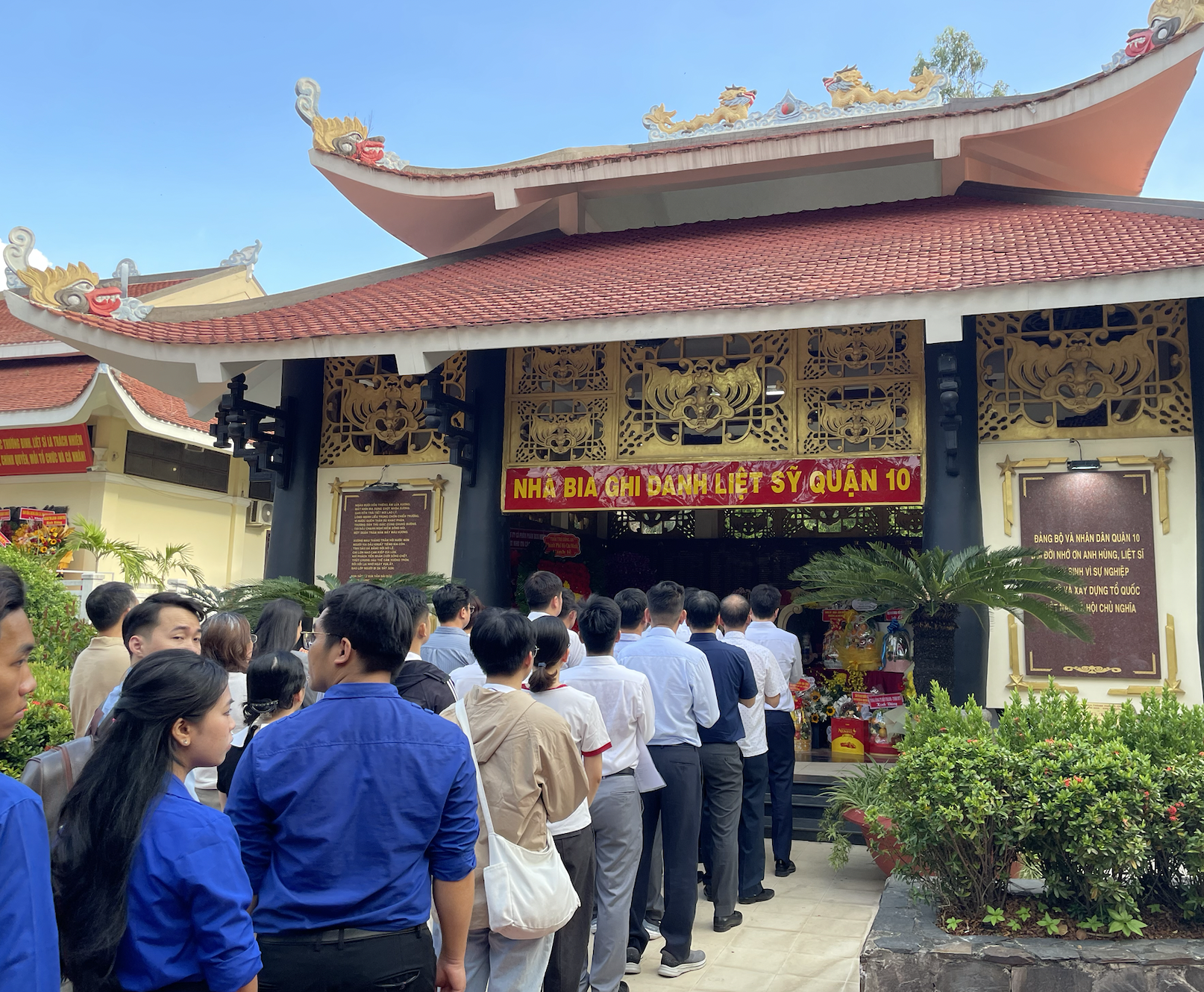 |
A line of people waited to pay their respects at Le Thi Rieng Park, Hoa Hung ward, Ho Chi Minh City, on the afternoon of 27/7. Photo: Ngoc Ngan |
On 27/7 alone, the park welcomed nearly 200 groups, not including individual visitors. On each of the two preceding days, over 100 groups visited. Due to many visitors arriving without prior registration, the actual number of guests may be higher than recorded.
Bich Tram, 25 years old, from Ha Noi, was one of the out-of-town visitors. She was touring Ho Chi Minh City but, upon hearing that many new martyrs' remains had been found and repatriated here, dedicated an afternoon to offering incense.
Tram's grandfather was a martyr, and his remains had been returned to their hometown for burial. Witnessing many people with no familial ties queuing to light incense, she expressed her deep emotion. "My grandfather returned to his family, but many martyrs remain unidentified. I hope these uncles and aunts will also soon return to their hometowns," Tram said.
Le Thi Rieng Park was formerly the Chi Hoa cemetery. On 6/7, authorities began searching for and repatriating martyrs' remains. By 27/7, the Ho Chi Minh City Command's Martyrs' Remains Repatriation Team had found 117 sets of remains, including three mass graves, along with 66 sets of artifacts.
The martyrs are believed to be cadres and soldiers who sacrificed their lives during the General Offensive and Uprising of Mau Than in 1968. Authorities are expanding the search area, collecting samples, and cross-referencing information to identify the remains and return the martyrs to their families.
This activity is part of the "500 Days and Nights Campaign," which runs from 15/3/2026 to 27/7/2027. The campaign aims to find and repatriate approximately 7,000 sets of martyrs' remains nationwide, collect samples from 230,000 unidentified graves, and conduct DNA testing on about 18,000 samples of remains.
Ngoc Ngan