Tran Van Duc, 41, from Hanoi, has three children aged 6, 12, and 14. Every summer, his biggest concern is controlling his children's social media usage. While he and his wife are at work, his eldest daughter spends most of the day on her phone, creating TikTok videos and obsessively tracking likes and comments.
"I've tried everything, from reminders to confiscating her phone, but it only makes my teenage daughter react more strongly," he said.
Duc supports the draft amendment to Decree 147, which proposes to ban individuals under 16 from posting, sharing, or commenting on social media. He believes that if children can only view content without interacting, they will gradually lose interest. "Children may not listen to their parents, but a ban could instill a greater sense of caution," the father of three said.
However, Thu Huyen, 45, from TP HCM, considers this proposal "insufficient." "My 13-year-old daughter never posts or comments but can spend hours scrolling through social media using her parents' accounts," she stated.
Huyen suggests that regulatory agencies should issue a comprehensive ban to effectively protect children from the negative impacts of the online environment.
Many countries are implementing policies similar to Huyen's suggestion. From 11/2024, Australia will prohibit individuals under 16 from using social media nationwide. France bans children under 15, while Austria, Denmark, Germany, Greece, Canada, Malaysia, and several other countries are proposing or considering similar regulations.
Other nations, including Trung Quoc, opt to limit screen time and features based on age rather than imposing a complete ban.
A VnExpress survey of over 2,300 readers showed that 55% support the proposal, 24% believe children should be allowed to interact but with limited features, and 16% have other opinions.
Tran Quang Vinh, a former engineer at Meta and Google, shares a similar view with Thu Huyen. He argues that the greatest risk lies in the content children access on social media. According to the expert, platform algorithms constantly suggest curious and emotionally stimulating content to retain users, making it easy for children to watch continuously and encounter unwanted content. This increases the risk of addiction and affects their concentration and cognitive development.
"If we truly want to protect children, we need to look at what they view on social media, not just what they post," he said.
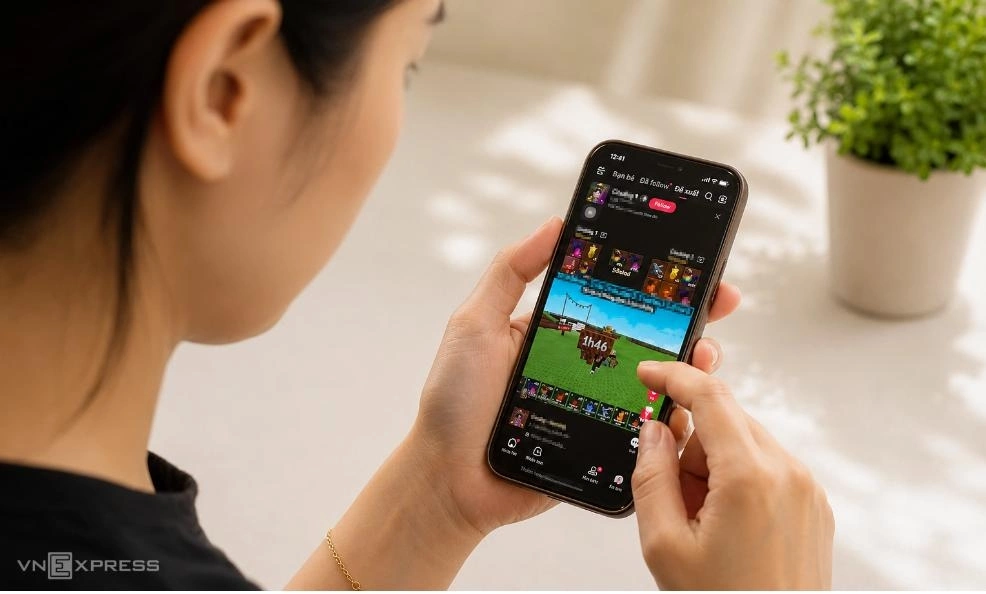 |
A young user interacts with content on a social media platform. Photo: Trong Dat |
Vietnam has over 72 million social media users, with about 7% aged 13-17. A 2022 UNICEF survey revealed that 82% of children aged 12-13 and 93% of those aged 14-15 use the Internet daily. According to the Ministry of Labor, Invalids and Social Affairs, Vietnamese children spend an average of 5-7 hours per day on social media.
Numerous international studies warn that excessive social media use can negatively impact mental health. A 2023 report by the US Surgeon General indicated that teenagers who use social media for over 3 hours daily are twice as likely to experience symptoms of depression and anxiety. Beyond usage duration, children also face risks such as online bullying, exposure to harmful content, and exploitative behaviors in the digital environment.
Conversely, some studies note that social media offers benefits, such as helping children maintain friendships, connect with relatives, and foster a sense of belonging, especially for those with limited opportunities for direct interaction.
Doctor Tran Thi Hong Thu, Deputy Director of Mai Huong Day Psychiatric Hospital in Hanoi, believes that if effectively implemented, restricting children from publicly posting, commenting, or sharing could reduce impulsive behaviors, limit personal information disclosure, ease the pressure of chasing likes, and prevent the spread of harmful content created by children. This regulation could also provide parents with more time to guide their children before they fully engage with the digital environment.
However, Thu argues that "banning interaction" does not automatically ensure children's safety. It is not feasible to manage a 7-year-old child and a 15-year-old teenager with the same mechanism, as their cognitive abilities, developmental needs, and levels of autonomy differ significantly.
Children can still access violent, pornographic, self-harm, or other harmful content suggested by algorithms. A ban might also lead children to misrepresent their age, borrow adult accounts, or migrate to platforms that are harder to control.
Additionally, a complete ban on interaction could cause children to lose positive connections. For those who are isolated or bullied, the ability to ask questions, share, and seek support online can sometimes be an important channel for help.
Nguyen Thi Le Thuy, an expert from the Center for Skill Development and School Psychological Support, suggests reconsidering the proposal to ban social media interaction for children under 16, as it may not align with the spirit of the United Nations Convention on the Rights of the Child and the Children's Law 2016.
"Both the Convention and the Children's Law guarantee the right to access information, express opinions, and participate in social life. In a context where online communication has become an integral part of learning and daily activities, completely restricting the right to interact will be difficult to implement," she said.
Instead of prohibition, the important thing is to help children use technology safely through digital literacy education, risk identification skills, and strategies for coping with online bullying.
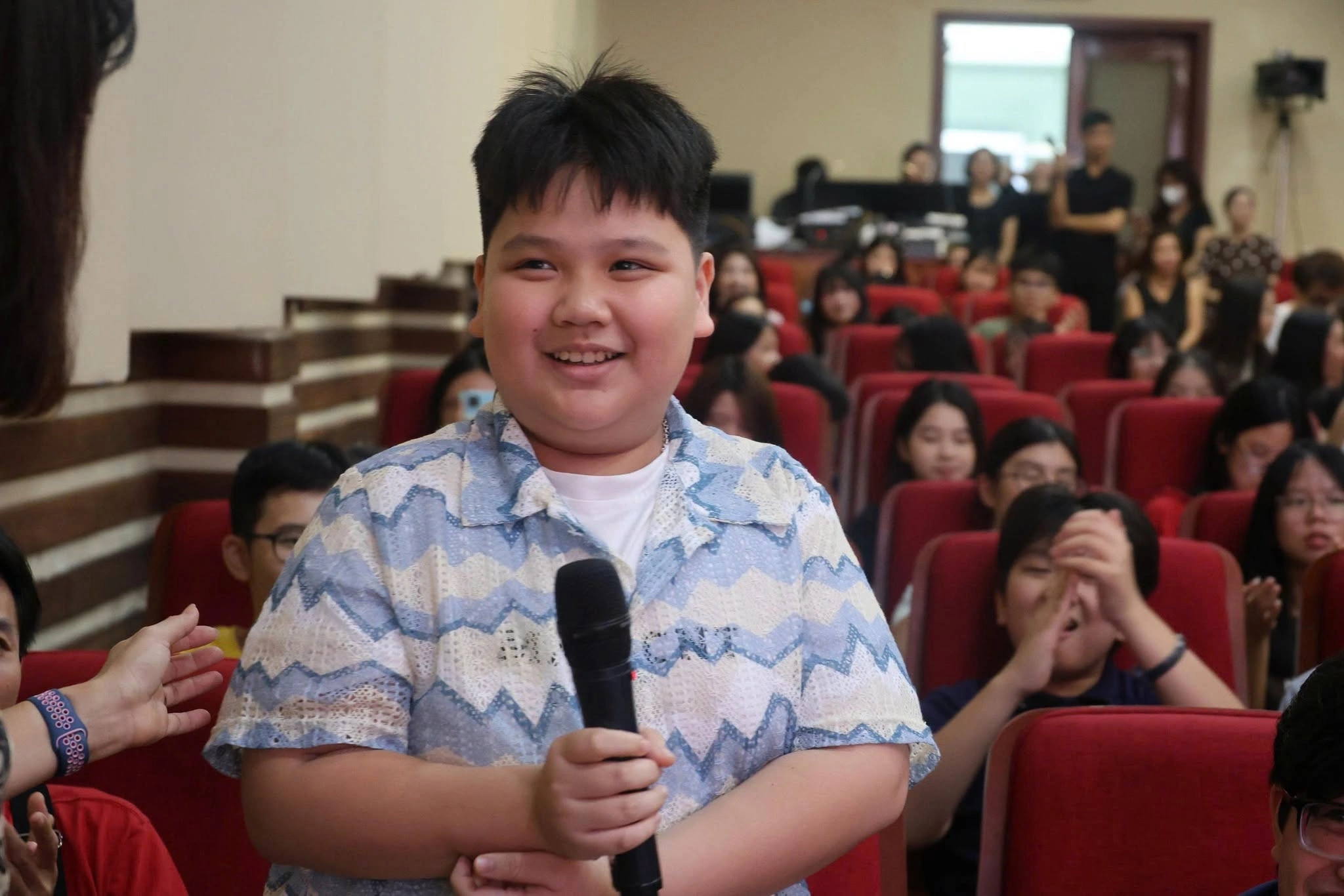 |
Bui Nguyen Gia Bao during a program at the Hanoi College of Art, on 25/7. Photo provided by family |
Bui Nguyen Gia Bao, 13, a 6th-grade student in Hanoi, regularly posts on his Facebook account. As a child actor with outstanding academic achievements, he wants to use social media to connect with fans and spread a spirit of learning. "My mother and I review every step before I click post," Bao said.
Gia Bao is a team leader and participates in activities at the Le Duan Young Pioneer Cadre School, giving him many relationships his parents cannot fully monitor. When information appears on social media, his parents either ask him about it or let him handle it himself.
Gia Bao believes that social media today is like a second world, helping children learn and connect effectively. If interaction is restricted, it could easily lead to actions that circumvent the rules, such as misrepresenting age or using fake accounts, making it even harder for parents and schools to control. "That proposal also hinders our right to access information, express opinions, and limits our creativity," Gia Bao said.
He proposes more engaging lessons and programs where children can learn, play, and understand how to protect themselves online, rather than being strictly managed through bans.
Pham Nga