This habit stems from the belief that kumquats are medicinal. Physician Pho Huu Duc of the Hanoi Traditional Medicine Association confirms that kumquats help reduce phlegm, alleviate coughs, cool the body, and contain many vitamins C, B1, and minerals. However, these properties are only present in naturally grown kumquats that follow clean cultivation practices. Using ornamental kumquats displayed during Tet as medicine or food is a dangerous mistake.
The danger arises from the cultivation process designed for Tet celebrations. Bui Thang, a garden owner in Van Giang ornamental kumquat village, Hung Yen, revealed that Tet kumquats contain large amounts of chemicals. To maintain the tree's shape, force large, shiny fruit, and keep them attached to the stems for months, gardeners must spray flower stimulants, fruit-setting agents, and fruit-preserving chemicals weekly. Unlike food-grade kumquats, which require a 15-20 day chemical withdrawal period before harvest, ornamental kumquats are continuously sprayed with chemicals until they are delivered to customers.
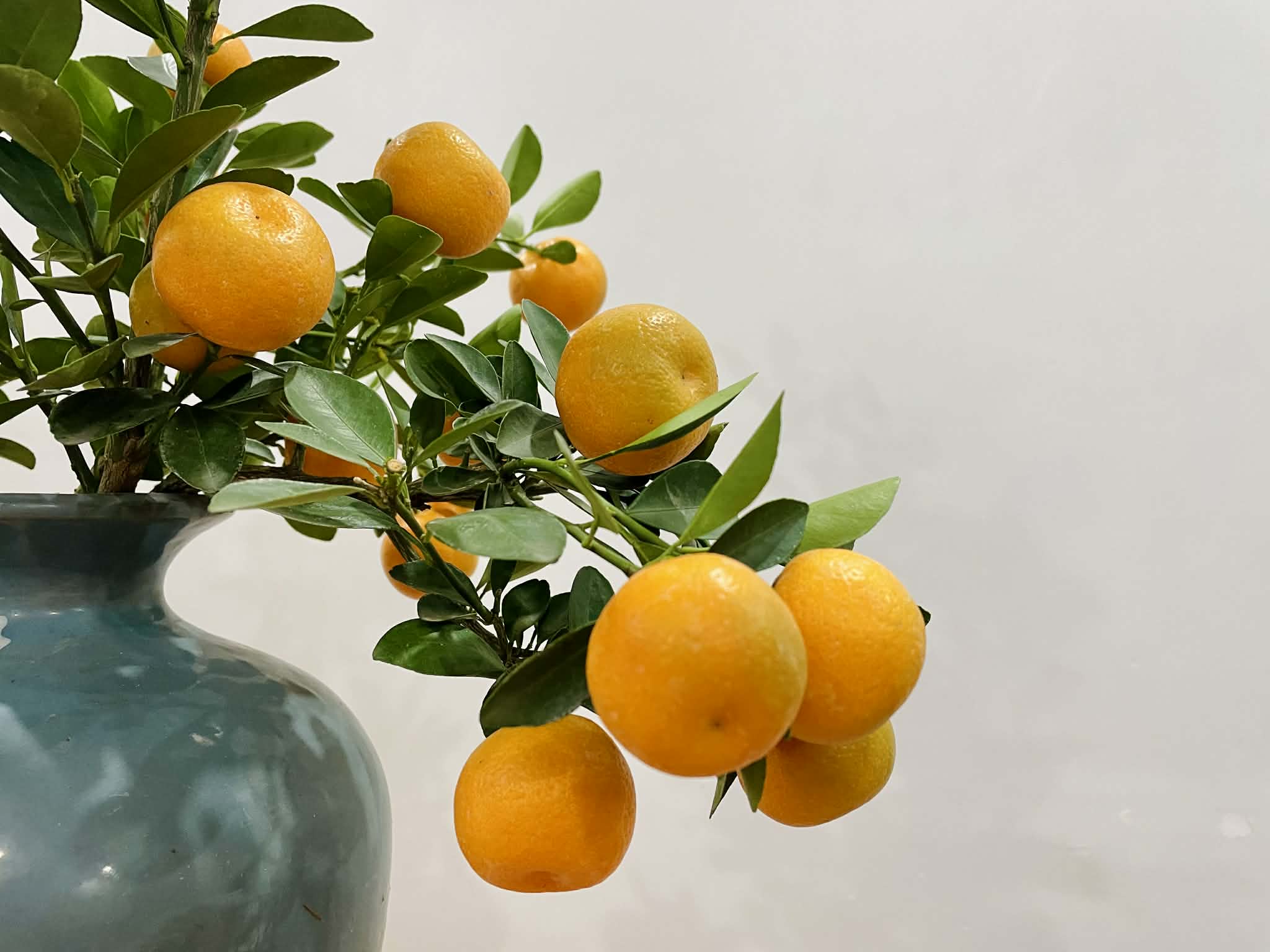 |
Ornamental kumquat tree displayed during Tet. *Photo: Phan Duong*
From a chemical perspective, Doctor Vu Thi Tan, a lecturer at Hanoi University of Science and Technology, stated that growers primarily use flower and fruit-setting stimulants and agents to prolong fruit ripening. Essentially, these are nutrient systems, comprising trace elements beneficial to plants, amino acids, and various vitamins, similar to flower food. While not strictly pesticides or herbicides, the composition of these substances is complex and not absolutely safe.
"Because the trees absorb too many foliar micronutrients to force large, plump fruit, direct human consumption will lead to an excessive intake of these plant micronutrients. Therefore, absolutely do not eat them," Doctor Tan advised.
Agreeing with the analysis, Associate Professor Doctor Nguyen Duy Thinh, former lecturer at the Institute of Biotechnology and Food Technology (Hanoi University of Science and Technology), emphasized that ornamental kumquats are not subject to food safety regulations. Growth stimulants and complex nutrient systems have deeply penetrated the fruit's cells. Washing with salt water, soaking in baking soda, or boiling are ineffective. Consumers juicing them for fish sauce, or steeping them in sugar, are directly introducing these chemicals into their stomachs.
In mild cases, consumers may experience acute poisoning with symptoms such as nausea, abdominal pain, and digestive disorders. More dangerously, prolonged consumption of even small amounts can lead to chemical accumulation, causing liver and kidney damage, and increasing the risk of chronic diseases and cancer.
Visually, ornamental kumquats often appear pale and lack the aromatic essential oil scent. Notably, due to preservatives and nutrient systems that maintain the fruit, even when ripe yellow, the fruit will only shrivel on the branch over time rather than rot naturally.
"After Tet, the kumquat tree has fulfilled its aesthetic purpose. Admiring it is enough; trying to salvage a few kumquats out of regret could cost consumers their health," Mr. Thinh stated.
Experts advise that if desired, these kumquats should only be used for washing hands or feet. After the Tet season, the kumquat tree can be replanted, and its fruit should only be consumed once a new batch grows.
Phan Duong