According to chef Vu Nhat Thong from Eric Cooking Class Center (TP HCM), the techniques of pricking and applying vinegar when making roast pork are not just folk wisdom but are based on scientific principles that alter the skin's structure.
Pork skin contains much collagen, and water makes up 60% to 70% of its content. Water hinders crispiness and must be removed during heating. Chef Thong explains the benefits of these two techniques:
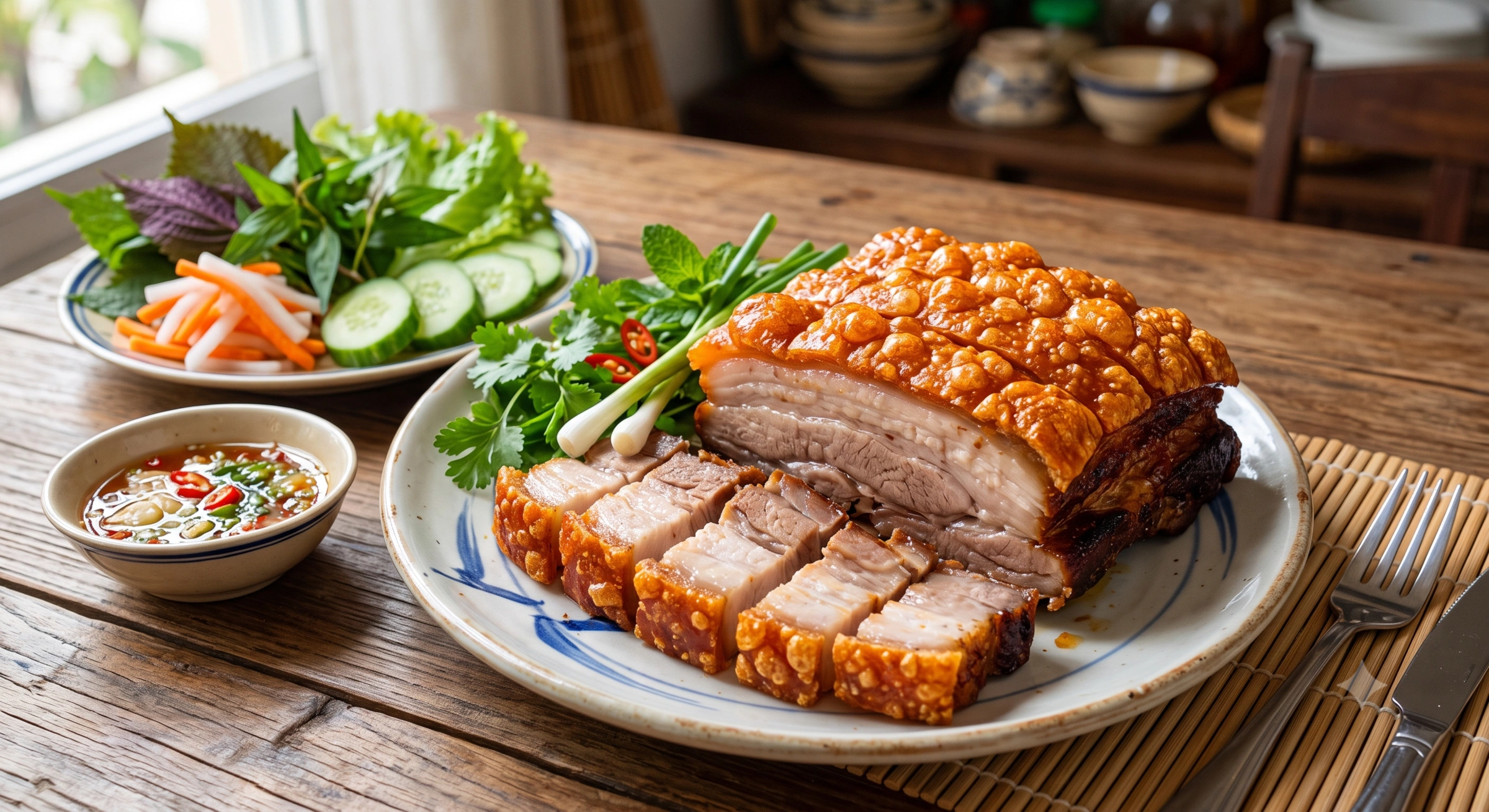 |
To make the skin crispy, two steps are needed: pricking with a needle and applying vinegar. Photo: AI |
**Vinegar application loosens the structure**
When acetic acid in white vinegar contacts the skin, it breaks down collagen fiber bonds, loosening the surface structure. Vinegar also absorbs moisture, helping to dry the skin's surface before roasting. Without this step, the skin's surface retains high moisture, reducing color development and making the skin chewy.
**Pricking creates steam escape routes**
When the oven temperature reaches 220-250 degrees Celsius, water inside the skin boils, generating significant pressure. The needle holes act as steam vents. Rapid steam release expands the collagen layers, previously weakened by vinegar, creating a porous, airy structure. Without pricking, trapped steam makes the skin soft or causes uneven blistering.
**Execution sequence**
The chef states that cooks must prick the skin first, then apply vinegar. The needle holes help the vinegar penetrate deeply into the skin's structure. If done in reverse, the vinegar softens the surface, making pricking difficult and blocking steam vents.
After completing these two steps, the meat should be left uncovered in the refrigerator overnight. The low temperature and low humidity environment helps to draw moisture from the surface, creating favorable conditions for crisping.
The roasting process involves two stages. The first stage is drying at 160-180 degrees Celsius for 30-40 minutes to evaporate water. The second stage is skin "popping" (crisping) at 220-250 degrees Celsius for 20-30 minutes to create crispiness and color.
"Understanding the properties of ingredients helps cooks control the outcome. Patience in surface preparation steps is a decisive factor for the final product," Chef Thong states.
Bao Nhien