On August 6, Bonghwa County, located approximately 210 km from the capital Seoul, was officially designated as South Korea's newest Special Regional Development Zone. This designation paves the way for the 253 million USD "K-Vietnam Valley" project.
The foundation of this project stems from a historical connection dating back 800 years. In 1226, Prince Ly Long Tuong, the seventh son of King Ly Anh Tong, sailed across the sea and landed on the Korean Peninsula during the Goryeo Dynasty. Under the protection of King Gojong, who granted him land, he and his entourage integrated into local life, helping to repel Mongolian forces and establishing the Hwasan Lee clan.
Today, descendants of the Hwasan Lee clan still reside in Bonghwa County. The area preserves Chunghyodang, a historical shrine dedicated to the clan's 13th-generation descendant, who died at age 19 while fighting against Japanese forces during the Imjin War (1592-1598).
Bonghwa is the only place in South Korea that retains physical relics of this royal lineage.
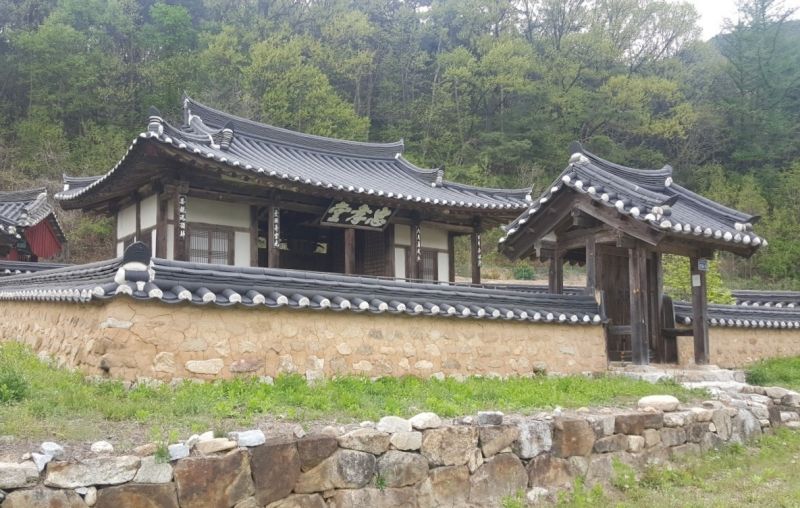 |
Chunghyodang shrine in Bonghwa County, North Gyeongsang Province. *Photo: Korea Times*
Bonghwa officials expect this historical legacy to become a lifeline for the rural economy. Roh Yong-seok, Vice Minister of South Korea's Ministry of SMEs and Startups, called it "a fresh effort to directly connect 800 years of history with cultural tourism and the economic vitality of the region."
A nearly 880,000 square meter site in Bonghwa will be divided into 8 specialized zones, with completion expected by 2030. The heart of the project is a 200 billion won cultural and educational complex honoring the Ly Dynasty's legacy. This complex will not only attract tourists but also serve as a settlement support center for Vietnamese immigrants and multicultural families.
The project also includes a Vietnamese-style resort by Changpyeong Lake, high-tech agricultural zones, and ecotourism infrastructure along the Baekdudaegan mountain range.
To accelerate implementation, Seoul has granted 10 special legal exemptions, eased visa regulations for foreign workers, and removed obstacles related to planning, land acquisition, and housing supply.
For Bonghwa, this project is a vital response to its demographic crisis. Like many other rural areas in South Korea, the county faces severe depopulation as young people move to cities.
By building an economy around its historical ties with Vietnam, Bonghwa aims to attract international tourists, strengthen diplomatic relations, and ensure long-term population stability. This strategy illustrates how remote rural communities are using heritage preservation as a tool against modern economic decline.