The debate over whether to use squat toilets (traditional) or sitting toilets (Western-style) persists, with conflicting opinions from cultural, architectural, and medical perspectives.
According to Liang Ji, Deputy Secretary of the Toilet Committee of the China Urban Environmental Sanitation Association, modern designs in shopping centers and public spaces increasingly favor sitting toilets.
The primary reason stems from economic and construction factors. Installing squat toilets requires a deeper floor design to accommodate the recessed pan, which increases costs and construction time. Aesthetically, sitting toilets are considered more "premium" and easier to clean.
More importantly, there is the issue of safety. "Squatting is not always easy and carries inherent risks, especially for the elderly, pregnant women, and people with disabilities," Liang stated.
Additionally, a 2022 study published in the US-based journal Building and Environment indicated that sitting toilets are more hygienic in shared spaces. They disperse fewer germs into the air after flushing, thereby reducing the risk of disease transmission.
Physiological benefits of squatting
From an anatomical perspective, the squatting posture offers superior benefits for the digestive system.
When squatting, the thighs press against the abdomen, which helps straighten the anorectal angle. This posture reduces resistance, allowing for natural and easy elimination. Conversely, when sitting, the rectum is bent at an angle of approximately 90 degrees, forcing the body to strain more.
Comparative studies show that individuals who squat have shorter bowel movement times and less straining. In the long term, the pressure from straining while sitting can contribute to constipation, hemorrhoids, and pelvic floor disorders.
Potential health risks
Despite being beneficial for the bowels, the squatting posture is a "double-edged sword" for the cardiovascular and musculoskeletal systems.
A study by Chakrabarti and colleagues, published in the National Medical Journal of India in 2018, revealed a concerning statistic: 36% of stroke cases in India occurred while squatting in the toilet.
Scientists observed that systolic blood pressure can increase by 14 mmHg and diastolic blood pressure by 9 mmHg in individuals with a history of hypertension when adopting this posture. The physical strain of maintaining balance and straining in a squatting position places significant stress on the heart.
Furthermore, older adults or those with limited mobility face risks of falls, ankle injuries, and tendon strains when using squat toilets.
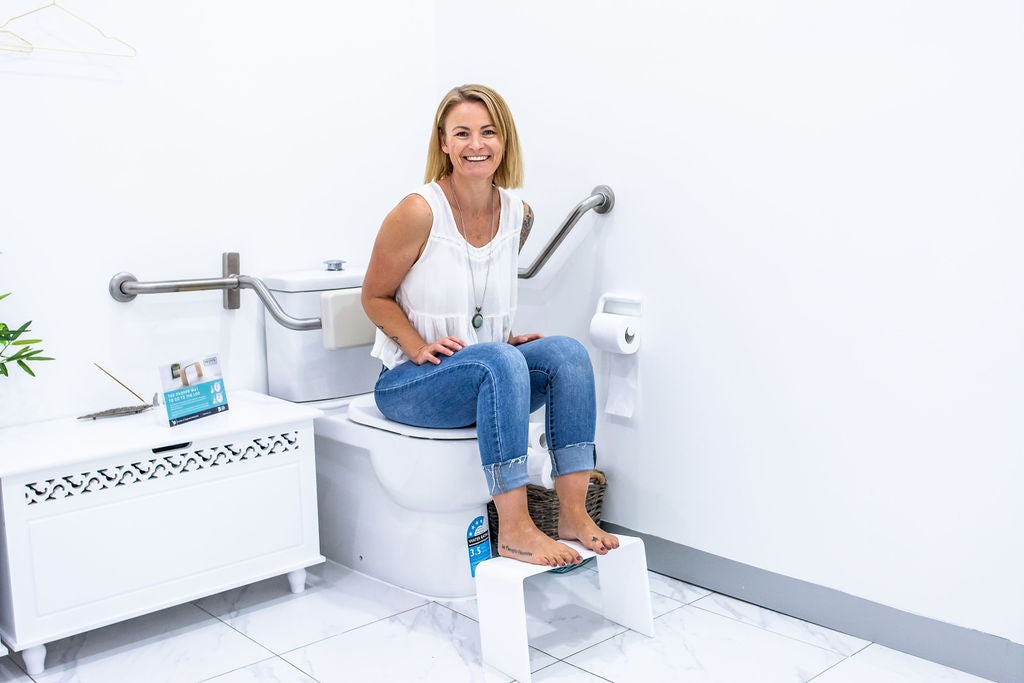 |
A sitting toilet combined with a footstool is considered a compromising solution, beneficial for health while ensuring hygiene. Illustration: Proper |
A compromising solution
In India, the Swachh Bharat Mission has constructed millions of toilets to improve public health. While urban areas prefer sitting toilets due to modern lifestyles, health experts suggest considering pathological factors.
For healthy individuals who wish to leverage the digestive benefits of the squatting posture while still using a sitting toilet, experts recommend a "hybrid" solution: using a small footstool.
Elevating the feet when sitting raises the knees, mimicking the body angle of squatting.
This method helps straighten the rectum for easier bowel movements, while maintaining safety, comfort, and reducing pressure on the cardiovascular and musculoskeletal systems.
Nhat Minh (According to Times of India, Taiwan News, Springer)