Braising fish is more than just cooking food with heat; it is a careful process of regulating three key factors: temperature, humidity, and convection. The technique of opening or covering the pot lid is crucial for controlling these elements at each stage of cooking. For everyday braised fish dishes like clay pot braised fish, pepper braised fish, or pickled vegetable braised fish, the optimal method follows a "two open, one covered" sequence: open, then partially cover, and finally open again. This approach addresses common issues such as lingering fishiness and a mushy texture.
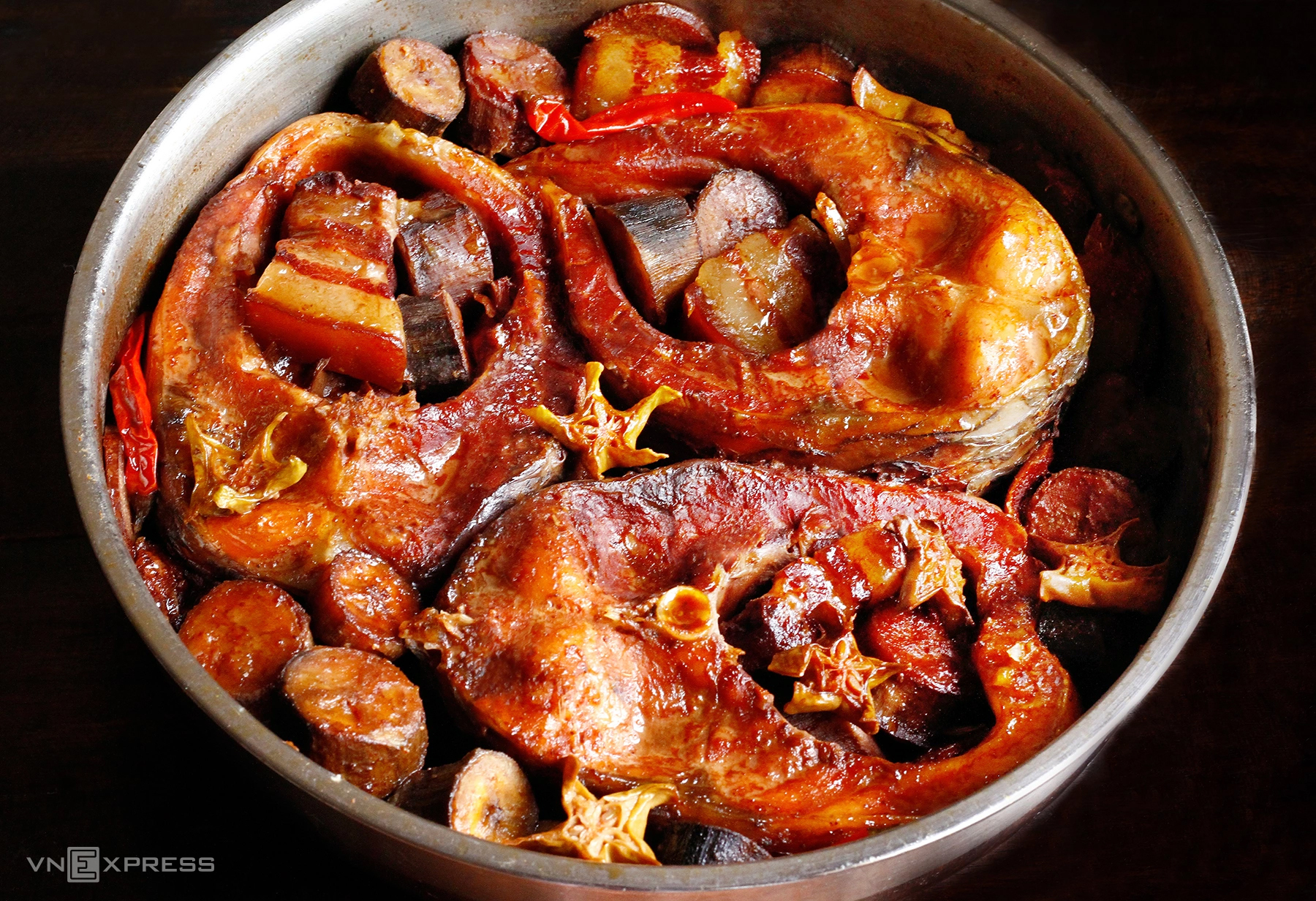 |
Northern-style braised fish with green bananas. Photo: Bui Thuy |
The first crucial step is to open the lid to release odors. When the fish pot begins to boil, the heat releases compounds responsible for the fishy smell, primarily trimethylamine, along with steam from the fish flesh. If the lid is tightly covered at this point, these odor-carrying gases cannot escape. They condense on the lid and drip back into the pot, trapping the fishy smell inside. This explains why many fish dishes may smell pleasant while cooking but develop a strong odor once cooled. Keeping the lid open for the initial 5-10 minutes ensures that steam, carrying the fishy odor, escapes completely, effectively "cleansing" the dish's flavor from the start. This evaporation also prevents heat from building up too quickly, which could otherwise overcook the fish, causing its surface to break apart before the flavors have properly permeated the interior.
The second stage involves partially covering the lid for simmering. After the fishy smell has dissipated and the braising liquid begins to reduce, transition to this middle phase. Reduce the heat to low and either cover or partially cover the pot. A stable thermal environment within a covered or partially covered pot allows the fish proteins to coagulate slowly, enabling flavors to penetrate deeply into the flesh. This simmering stage is vital for achieving the desired tenderness without drying out the fish. However, it is essential to avoid high heat when the lid is covered. The combination of high heat and trapped steam creates a "steaming" environment, which can result in mushy fish and a cloudy braising liquid.
The third and final stage is to open the lid to finish the dish. Once the fish is tender, removing the lid and slightly increasing the heat is a decisive step for the dish's aesthetic appeal. Rapid steam escape helps the braising liquid thicken and coat the fish evenly, a process often called "re-coloring." This sudden reduction in humidity tightens the outer protein layer, helping the fish pieces maintain their shape, become firm, and achieve an attractive, glossy brown finish.
An important exception to this rule applies to husk-braised fish. The "two open, one covered" rule is designed for quick braised dishes. However, for traditional braised dishes cooked for 10-12 hours, such as Vu Dai village braised fish, a completely different technique is used. Cooks apply low heat from rice husks and keep the lid tightly covered to maintain a consistent thermal environment. This method aims to tenderize the fish bones until they are very soft, without causing the flesh to disintegrate. In this specific case, the objective is to soften the bones, which requires a sealed environment, rather than to quickly firm up the fish, which typically requires steam release.
Ultimately, the choice of lid technique depends on the cook's objective. For a flavorful, firm braised fish for dinner, remember the "two open, one covered" rule: open the lid initially to eliminate fishiness, partially cover it in the middle for simmering, and open it at the end to thicken the sauce.
Bui Thuy