Doctor of psychology Mark Travers (US) suggests that the thinking habits of intelligent people often defy common expectations. They are easily labeled as anxious, indecisive, or "overthinking". However, this is actually a manifestation of deep information processing.
Below are three common thinking characteristics found in this group:
Reflecting on the past and anticipating the future
Constantly recalling old conversations or imagining numerous "if-then" scenarios for the future is often seen as a sign of anxiety. But according to a study on human performance, this habit is closely related to fluid intelligence.
Intelligent people can simultaneously process multiple hypotheses, thus predicting risks and planning precisely. This process requires working memory to operate at full capacity to test and compare possibilities. Consequently, they often become deeply immersed in thought, even when alone.
However, it is necessary to distinguish between purposeful "mental simulation" and negative rumination. While negative thinking merely erodes emotions, simulation helps the brain explore new possibilities and understand issues more deeply.
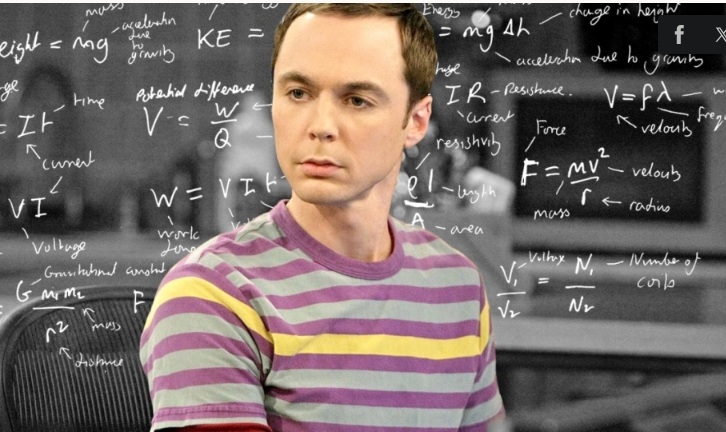 |
Illustration: *Bigthink*. |
Comfort with conflicting viewpoints
Most of us feel uncomfortable with contradictory information and tend to immediately choose a side to simplify issues. Conversely, highly intelligent individuals often tolerate this ambiguity longer.
They can consider multiple perspectives simultaneously, allowing opposing ideas to coexist before drawing conclusions. When someone says, "both sides have a point," it is not indecisiveness but an expression of cognitive flexibility. A 2023 study published in the US National Library of Medicine (NLM) indicated that high IQ individuals often have less need to quickly finalize issues. They view complexity not as a threat but as data requiring analysis for the most accurate judgment.
Slow reactions despite mastering knowledge
Speed is often seen as a measure of acumen. But modern cognitive science asserts that higher intelligence lies in the ability to control thought, not reaction speed.
According to the two-system thinking model, the brain has intuitive (fast) and analytical (slow) parts. Intelligent people tend to restrain automatic intuitive responses when they perceive them as potentially misleading.
A 2022 study in ScienceDirect journal showed that when faced with complex questions, intelligent people often choose to pause for deliberate reasoning instead of answering immediately. This pause is easily misunderstood as a lack of confidence in meetings or interviews. In reality, it is the brain's caution: they prioritize accuracy over speed and are aware that the first answer may not be the optimal solution.
By Nhat Minh (According to *Psychology Today*)