Hu sought medical attention at a clinic in Wuhan, Hubei province, as her abdominal pain grew increasingly severe. She reported that her symptoms began nearly one month ago, worsening as Tet approached. The mere thought of facing a "barrage of incessant questions" from relatives left her feeling chest tightness and physical exhaustion.
Doctors concluded that Hu's stomach was entirely normal. Her pain was diagnosed as a "somatization" symptom, a physical reaction stemming from acute anxiety.
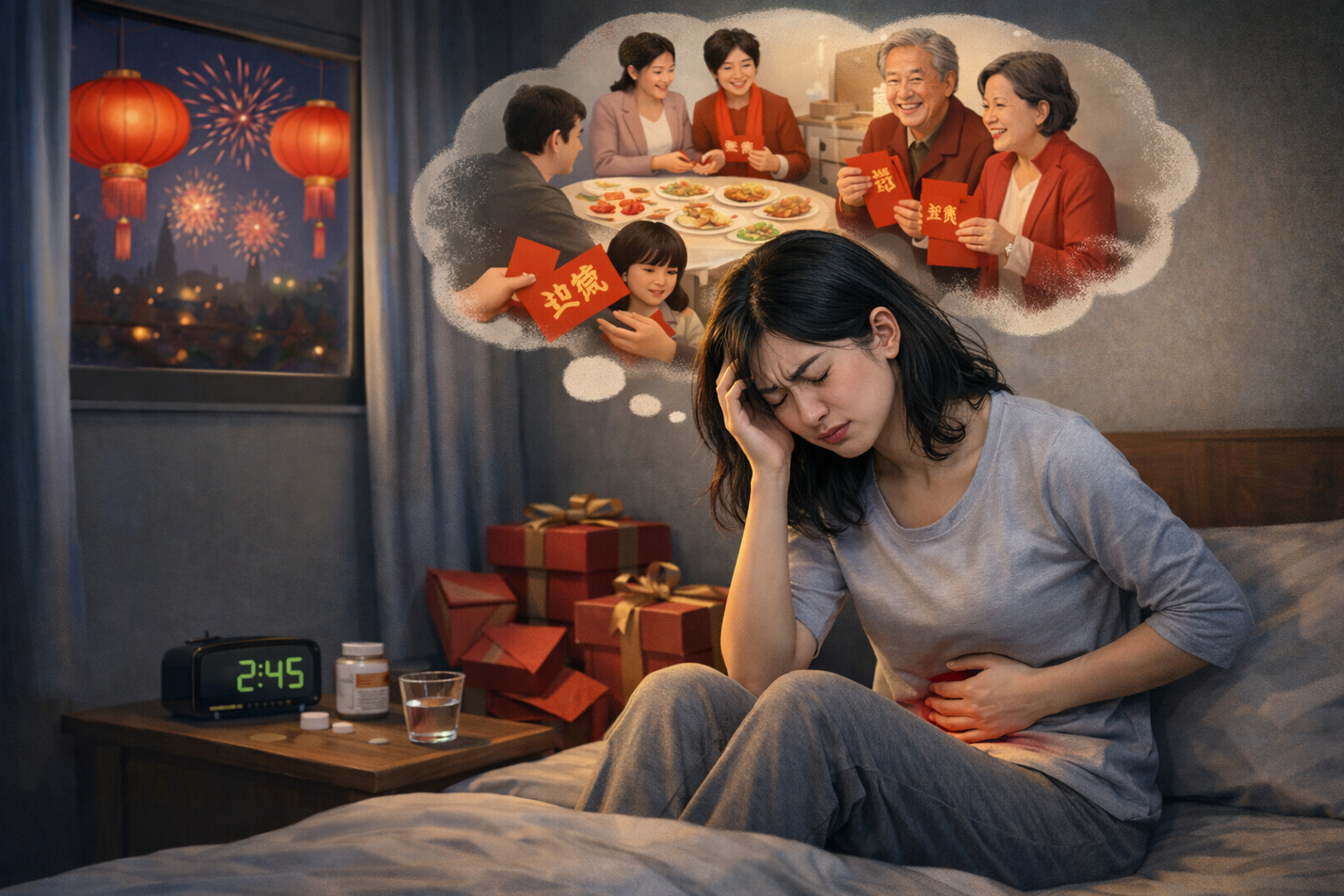 |
Pressure to marry and income comparisons lead many young people in China to experience psychological issues during Tet. *Illustration: AI*
Doctor Ge Linfeng from the Clinical Psychology Department at Wuhan No. 3 Hospital, diagnosed Hu with "year-end syndrome" or "holiday psychological crisis". He noted a 30% increase in patients seeking treatment for similar reasons recently.
"During Tet reunions, worries about self-worth are easily triggered when personal lives become a subject of intense scrutiny", Doctor Ge explained. He identified four main sources of pressure: the urging to marry and have children, income comparison, family conflicts, and exhaustion from a packed social calendar. For many young people, returning home inadvertently becomes a burden rather than a source of joy.
To cope, experts recommend "psychological rehearsal". Preparing polite yet firm responses in advance, such as "I am focusing on my career" or "I believe in destiny", can help alleviate on-the-spot panic.
Doctor Ge advised that if anxiety and sleep disturbances persist for more than two weeks and interfere with daily life, individuals should seek medical intervention. This helps prevent negative emotions from developing into chronic psychological conditions.
By Minh Phuong (Source: Sohu, Jimu News)