According to Statistics Korea, January (which often coincides with the Seollal holiday) accounted for nearly 9% of all divorce cases in 2025. The first three months of the year consistently see a significantly higher rate of couples filing for divorce compared to other periods.
This phenomenon is so prevalent that Koreans have coined a specific term: "Myeong-jeol divorce" (holiday season divorce).
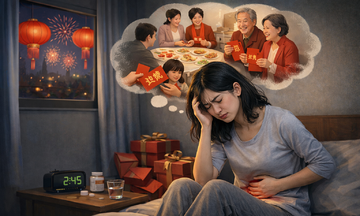
Ji-eun, 35, describes the three days of the lunar new year as the most dreadful period in her seven years of marriage. She recounted waking at 4 am to prepare over 20 ancestral offering dishes and serving her in-laws until late into the night.
"While I was busy in the kitchen, my mother-in-law scrutinized how I chopped vegetables, and my sister-in-law sat watching television. My husband only focused on entertaining guests, leaving me to manage everything alone," Ji-eun shared. The accumulated frustration led to a divorce petition being filed immediately after the holiday, sparked by arguments over money and indifference.
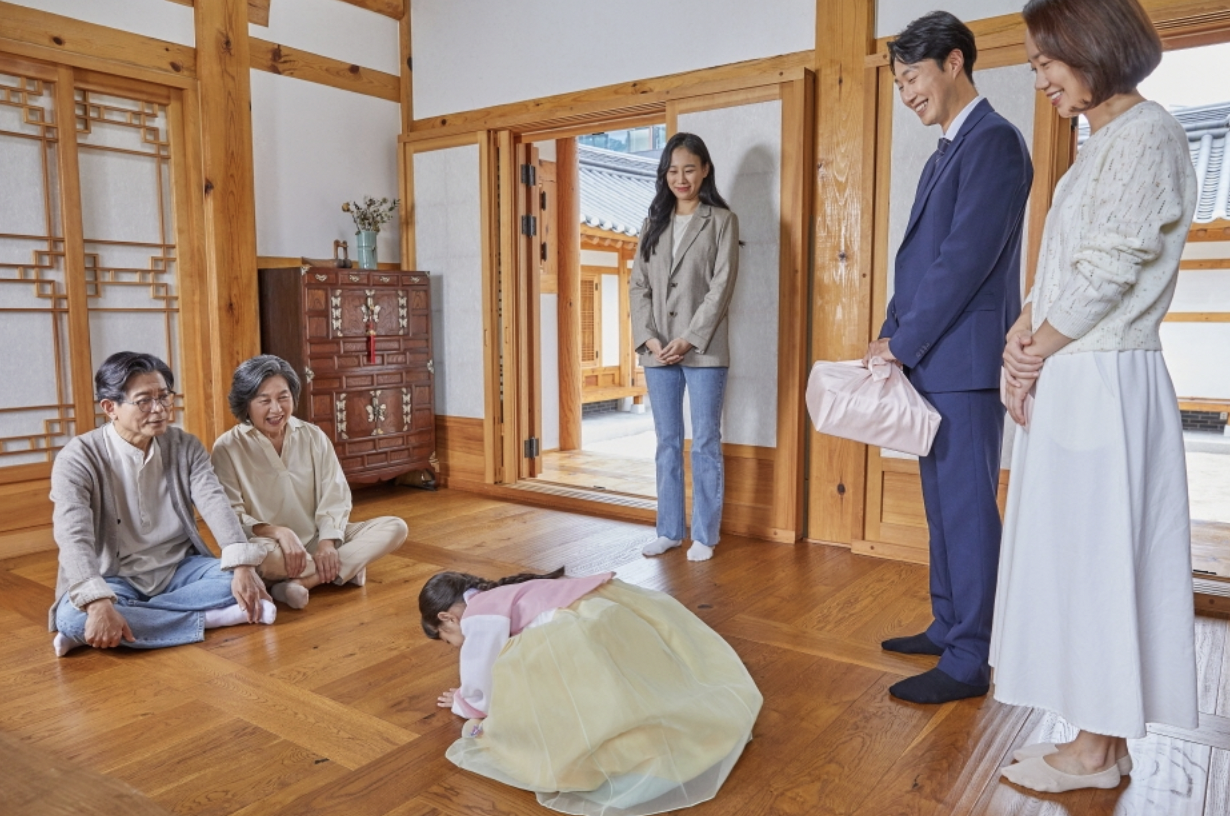 |
A Korean family during Seollal. Illustration: Maeil Kyungjae.
A survey by Duo Life Consulting, which involved over 400 married women, revealed that nearly 60% felt "difficult and suffocated" when visiting their in-laws during the lunar new year. Mothers-in-law were cited as the greatest source of stress (42%), followed by sisters-in-law.
Beyond younger couples, the trend of "twilight divorces" (couples married for over 30 years) also significantly increases after the lunar new year, accounting for over 10% of all cases.
Experts explain that during normal days, couples might overlook minor conflicts due to busy work schedules. However, when forced to be together 24/7 during the holiday, coupled with pressure from relatives, gift comparisons, and unequal labor division, existing cracks often widen into irreparable chasms.
A recent viral social media post in Korea posed the question: "Is marriage worth it?" The author contrasted carefree single individuals traveling with the image of disheveled wives toiling in their in-laws' kitchens. The post garnered significant empathy, reflecting a growing skepticism towards marriage.
Lawyer Yang So-young of Sungin Law Firm stated that refusing to visit the husband's hometown once is not sufficient legal grounds for divorce. However, if such refusal is repeated alongside a prolonged disrespectful attitude, courts may consider it a reason for dissolving the marriage.
To avoid the tragedy of "celebrating the lunar new year then breaking up," Sohn Dong-kyu, CEO of Only-You marriage counseling company, advises couples to have a "strategic contract" before the holiday.
"Agree on a fair schedule for visiting both sides of the family. Husbands must share dishwashing, cleaning, and protect their wives from unreasonable demands from relatives. Don't let your wife feel isolated in the midst of her in-laws' family," Sohn emphasized.
Ngoc Ngan (According to Korea Times, Maeil Kyungjae)