Crispy fried shallots are an essential garnish for dishes like xoi xeo (sticky rice with mung bean paste), banh cuon (steamed rice rolls), or hu tieu (noodle soup). However, many home cooks struggle with fried shallots becoming soggy, bitter, or burnt due to a lack of understanding of moisture and temperature control.
According to culinary expert Vu Nhat Thong (Eric Vu Cooking Class), a primary reason for failure is adding fresh shallots directly to hot oil. The oil must simultaneously evaporate water and cook the shallots, leading to unevenly cooked slices.
The second reason involves the natural sugars in the shallots. When exposed to high temperatures, these sugars undergo the Maillard reaction and caramelization, producing the characteristic golden color and aroma. However, the transition from a beautiful golden hue to burnt happens very quickly.
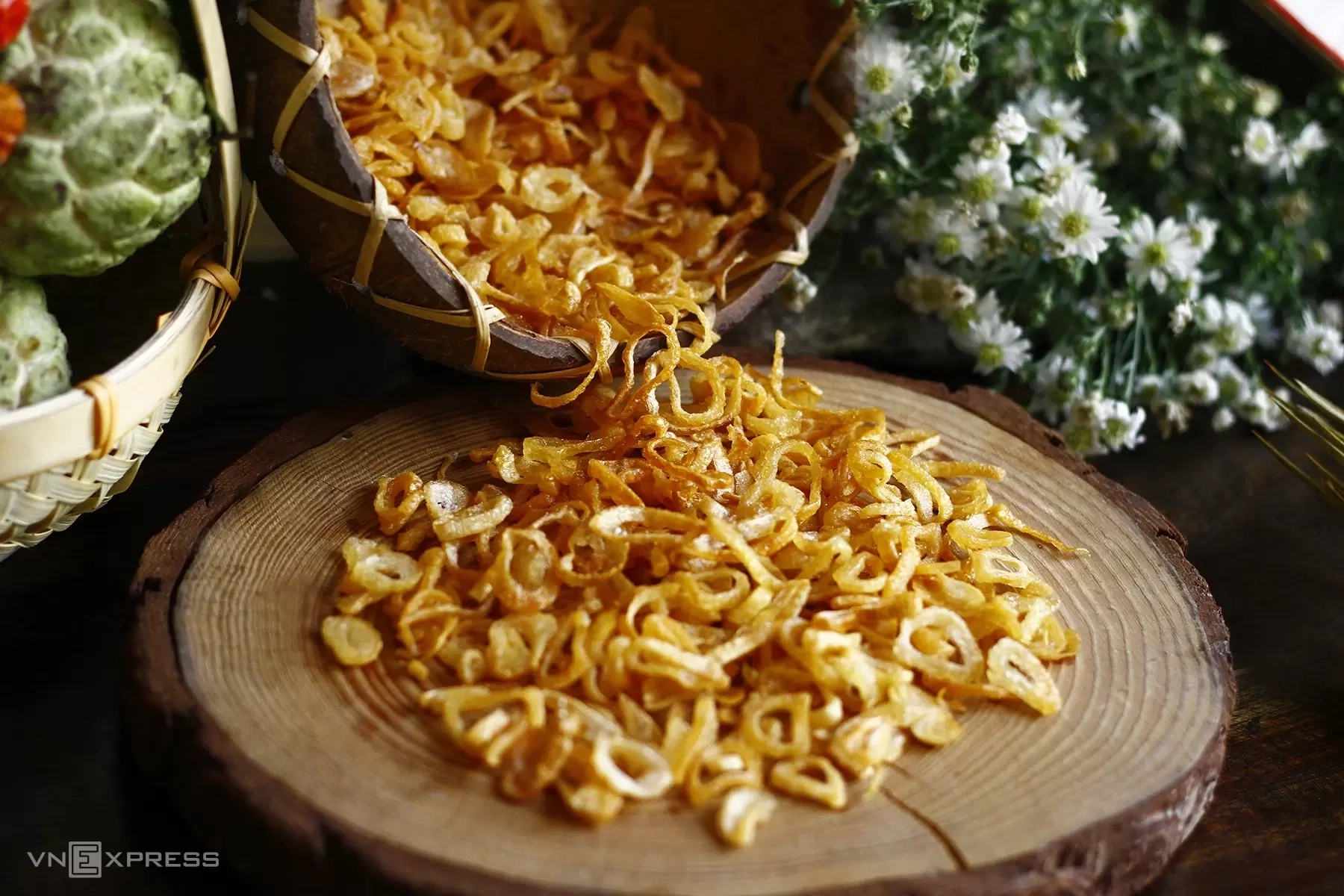 |
Fried shallots. Photo: Bui Thuy
To achieve perfectly crispy golden fried shallots, the expert suggests home cooks follow a professional three-step process:
Moisture control with salt
First, prioritize using local purple shallots – small, firm bulbs sliced evenly (about 1-1,5 mm thick) to ensure consistent cooking. After slicing, mix about 10 grams of salt with 500 grams of shallots. Let stand for 15-20 minutes, then gently squeeze and pat them thoroughly dry. Salt facilitates osmosis, drawing water out from inside the shallot cells. Reducing moisture before frying helps the shallots achieve crispness and prevents them from becoming soggy after cooling.
Cold oil frying technique
Unlike the common practice of waiting for oil to be very hot before adding ingredients, chef Thong recommends placing shallots in the pan first, covering them with oil, and then turning on the stove. This technique allows both the oil and shallots to heat gradually. Any remaining moisture in the shallots has time to evaporate before the temperature becomes high enough to induce browning. During frying, maintain medium heat and stir gently and continuously to ensure even cooking of the shallot slices.
Utilizing residual heat (carry-over cooking)
The most common mistake is waiting until the shallots achieve a beautiful golden-brown color in the pan before removing them. He advises turning off the heat as soon as the shallots turn a straw-yellow color, then continuing to stir and quickly removing them when they reach a light golden hue.
This is due to the phenomenon of carry-over cooking. The oil clinging to the surface continues to transfer heat for approximately one to two minutes, causing the shallots to brown further after being lifted from the pan. If you wait for the shallots to be perfectly golden in the pan before removing them, they will easily turn dark brown and develop a bitter taste once cooled.
After removing, spread the shallots in a thin layer on a tray lined with oil-absorbing paper to cool quickly, avoiding piling them up, which can trap steam and reduce crispness. Once completely cool, home cooks should transfer them to an airtight glass jar, along with a food-grade desiccant packet. By combining an understanding of the ingredient's properties and the principles of heat transfer, you can maintain the crispness of this seasoning for up to a month.
Bao Nhien