Many home cooks encounter situations where their caramelized sugar crystallizes into hard lumps or turns bitter before reaching the desired color. This common error often stems from seemingly harmless habits.
The mistake of stirring
Common white sugar exists naturally as tightly bound crystalline blocks. When heated with water, the sugar crystals dissolve, but as the water evaporates, the solution gradually becomes saturated.
At this stage, continuously stirring with chopsticks inadvertently causes sugar molecules to collide forcefully with each other and the pan's sides, creating countless "crystallization nuclei". Even a small sugar crystal clinging to the pan's edge, if it falls into the mixture, can trigger a chain reaction: the entire pan of liquid sugar will immediately harden and crystallize before it can change color.
To prevent this "re-crystallization," professional chefs often employ a secret weapon: a few drops of lemon juice or white vinegar. The acid, when added to the pan, breaks down the sugar's molecular bonds, acting as a barrier that prevents hardening. This allows the caramelization process to proceed smoothly, resulting in a glossy, smooth caramel sauce without any bitterness.
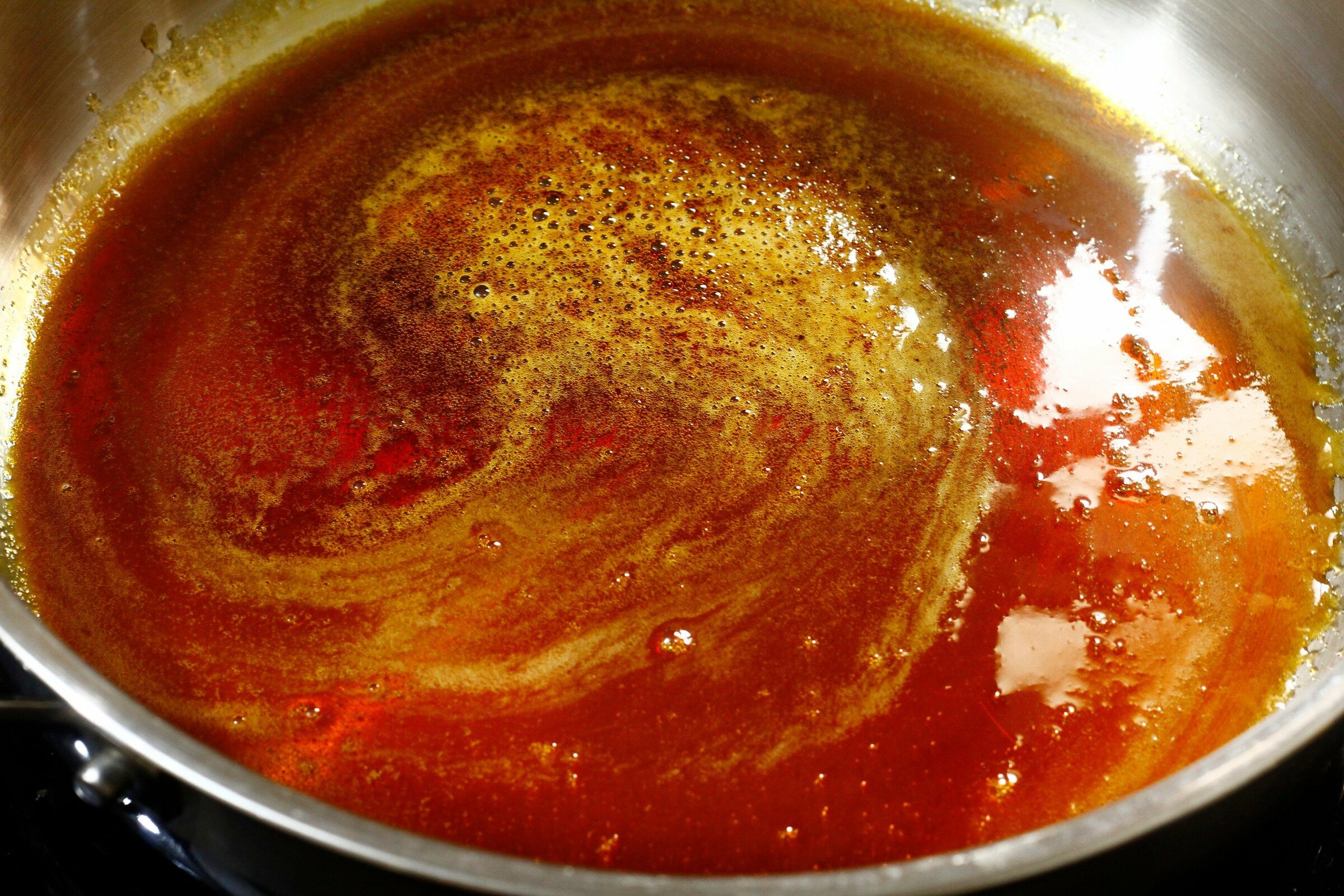 |
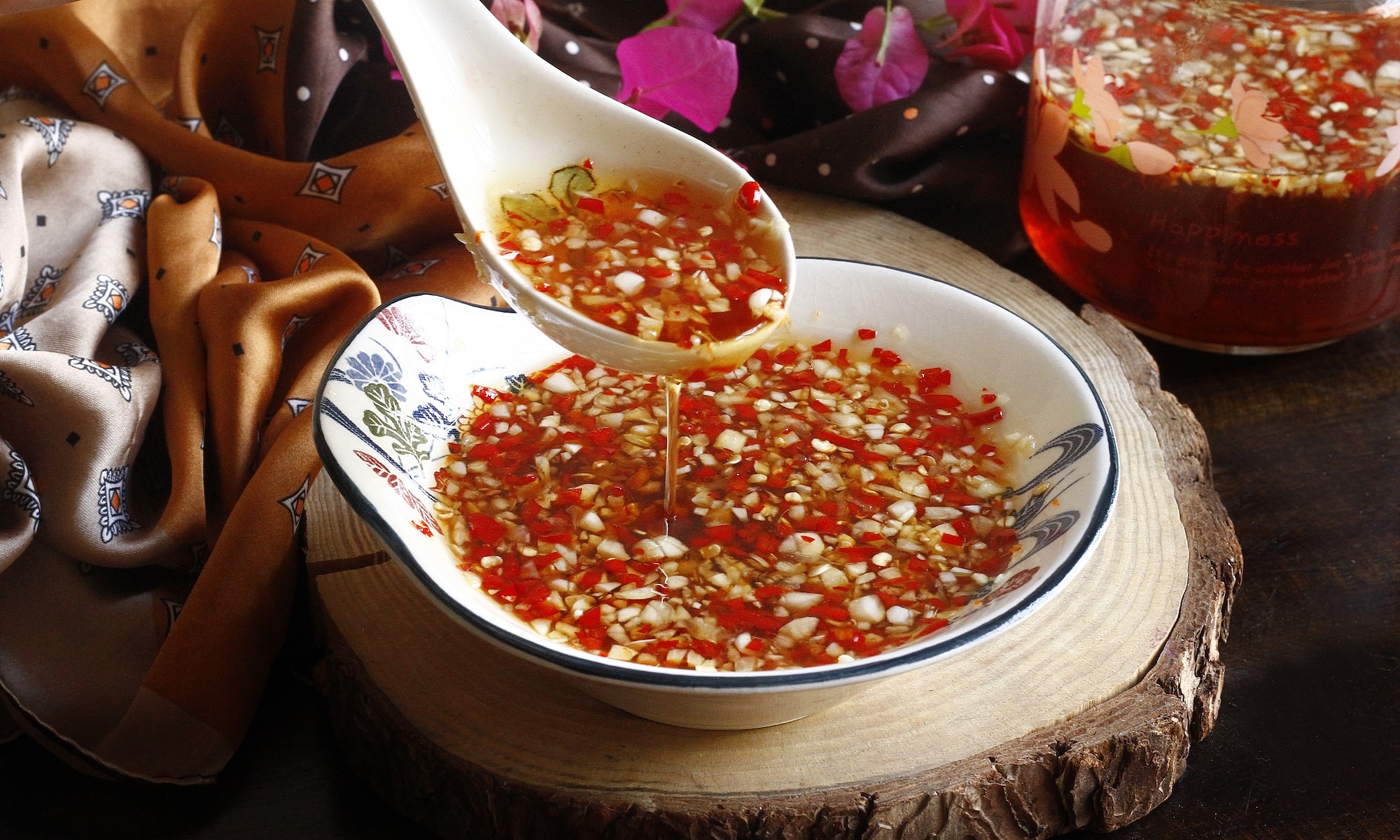
Properly made caramel sauce has an amber-yellow color. *Illustration: Bui Thuy*
The '3 no' rules for making caramel sauce
Based on the principles above, you can master the technique of making caramel sauce by following these rules:
**Do not stir with chopsticks:** Add sugar and a small amount of cold water to a pan, then heat over medium flame. When the sugar solution begins to simmer gently, absolutely do not stir with chopsticks. Instead, simply hold the pan handle and swirl it gently in a circular motion to distribute the heat, helping the sugar dissolve evenly.
**Do not forget the catalyst:** Once the sugar has fully dissolved and turned a light yellow, squeeze in two to three drops of lemon juice. This is the "golden moment" for the acid to take effect without diminishing the caramel's aroma.
**Do not use cold water to stop the heat:** When the sugar reaches the precise amber color (the temperature at this point reaches 160-170 degrees C), immediately turn off the heat and add a small amount of water to halt the heating process and prevent the sugar from burning. You must use hot or boiling water instead of cold water. Cold water will cause thermal shock, making the sugar instantly harden and dangerously splashing boiling water droplets.
Bui Thuy