A clear, light amber broth is the subtle benchmark for traditional pho and vermicelli dishes. However, many home cooks are often frustrated when their bone broth turns cloudy with numerous floating impurities. This phenomenon stems from two basic chemical reactions: protein coagulation and fat emulsification.
Grey foam from protein coagulation
Bone marrow and tissue contain various soluble proteins, enzymes, and residual blood. When heated, the structure of these proteins breaks down. They unravel, bind together, and form porous grey or brown clumps that float to the surface. This process is known as coagulation.
If the cook does not skim this foam promptly, or if the water boils too vigorously, the strong circulation will break down the foam into countless microscopic particles. These fine particles then suspend and mix back into the broth, completely compromising its clarity.
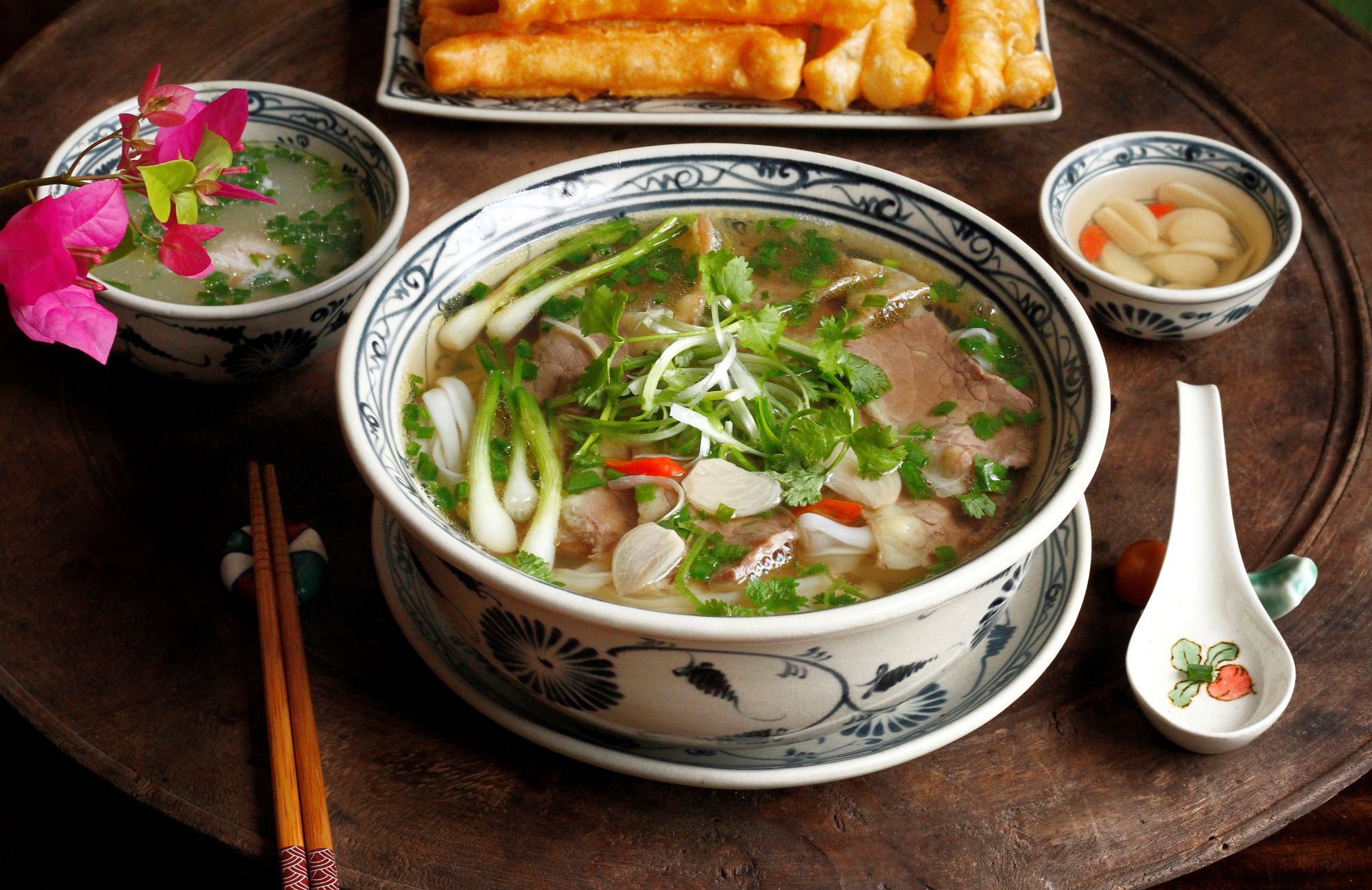 |
A good broth is one of the key elements for delicious pho and vermicelli. Illustration: Bui Thuy
Fat emulsification causes cloudy broth
This is the second cause and also the most common mistake made by home cooks. Marrow bones or joint bones contain a lot of fat (marrow fat). Normally, fat is lighter than water, so it should float to the surface and remain completely separate from the liquid below.
However, if the broth is accidentally boiled vigorously, large, continuously bursting air bubbles create a strong force. This force breaks down the fat layer into millions of tiny droplets, forcing them to disperse evenly throughout the water.
This phenomenon is emulsification, similar to whisking eggs with oil to make mayonnaise. The result is a milky, cloudy broth that tastes overly rich, losing its delicate flavor.
Techniques for crystal-clear broth
Understanding these biochemical principles allows you to easily control the clarity of your broth through simple physical techniques:
Clean from cold water: Place bones in a pot while the water is still cold and heat slowly. This method helps draw blood and impurities from deep within the marrow to the surface. After a preliminary boil, rinse the bones thoroughly under running water before the main simmering process to remove most of the proteins prone to coagulation.
The "gentle simmer" rule: Absolutely avoid vigorous boiling. Maintain a low heat, just enough for tiny bubbles to gently rise to the surface. This calm state allows the savory flavors from the bones to release slowly, fat to float smoothly on the surface, and proteins to bind into large clumps that are easy to skim, completely preventing fat emulsification.
Partially open the lid: Keeping the lid tightly closed increases internal pressure and temperature, which can easily lead to unwanted vigorous boiling. Partially opening the lid helps you better control the temperature and the escape of steam.
Bui Thuy
*What cooking troubles do you often encounter? Leave your questions in the comments section for VnExpress Cooking to answer.