Sweet and sour sauce is a staple in many traditional dishes, featuring a balanced blend of sour, sweet, and savory notes, along with an appealing color. However, home cooks often struggle with lumpy sauces, dull colors, or an overly sharp sourness when preparing it at home.
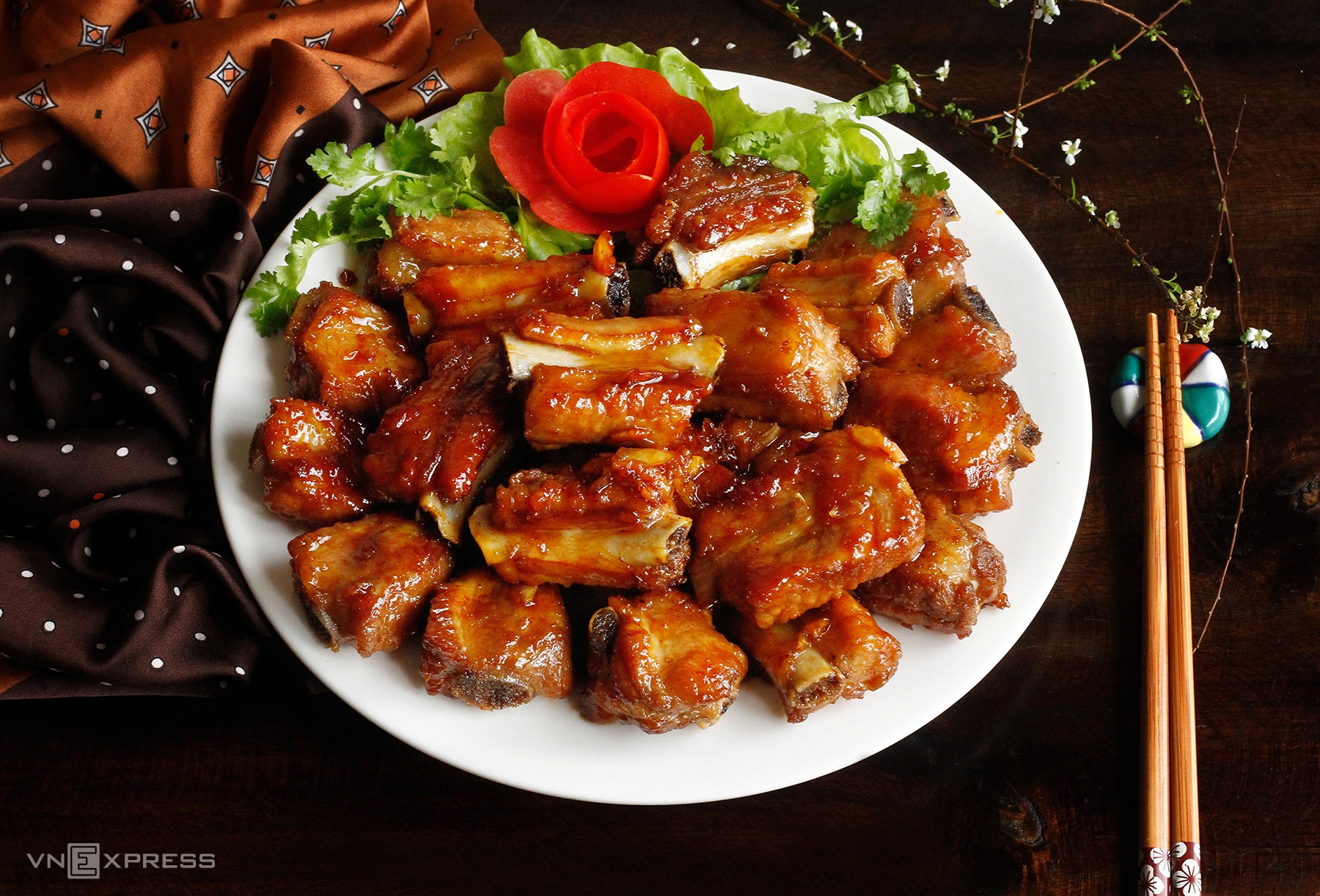 |
Sweet and sour sauce for dishes.
To achieve restaurant-quality results, cooks must adhere to precise ingredient ratios and a strict process, according to chef Vu Nhat Thong from the Eric Vu cooking class center.
The recommended ingredient ratios for 300 ml of sauce are: white sugar: 60 g, rice vinegar: 50 ml, tomato sauce: 60 ml, filtered water: 60 ml, cold water: 75 ml, soy sauce: 7,5 ml, cooking wine: 15 ml, sesame oil: 15 ml, and cornstarch: 9 g.
The preparation process requires careful attention to the order of ingredients, which chef Thong emphasizes as crucial for the sauce's smoothness and flavor.
Begin by dissolving the cornstarch completely in 75 ml of cold water. Next, heat a pan over medium heat, add the sugar, and stir until it melts. Controlling the temperature is important to prevent the sugar from burning and becoming bitter.
Then, add rice vinegar and tomato sauce, stirring for two minutes until the ingredients are well combined and the mixture turns reddish-orange. Pour in the filtered water, soy sauce, and cooking wine, simmering until the surface begins to gently bubble.
Gradually pour in the cornstarch mixture, stirring continuously clockwise until the cornstarch is cooked through and the sauce thickens. Cook for an additional two to three minutes, turn off the heat, and stir in the sesame oil. For an appealing glossy finish, cooks can add one small spoon of unsalted butter at this stage.
Identifying a perfect sauce and storage methods
A perfect sauce is identified by dipping a wooden spoon into it; when lifted, the sauce should flow in a continuous stream, coating the spoon evenly with a thin layer. If the sauce drips in separate drops, it is too thick and needs more water. Conversely, if it flows quickly like plain water, it has not been cooked long enough.
During preparation, four common mistakes should be avoided: adding all ingredients at once, which prevents proper blending; using white vinegar instead of rice vinegar, resulting in an overly sharp sour taste; cooking over high heat, which can burn the sugar and cause the cornstarch to clump; and pouring dry cornstarch directly into the hot pan.
Sweet and sour sauce is highly versatile, pairing well with seafood like shrimp, fried calamari, and roasted crab, various meat dishes such as ribs and chicken, or vegetables including cauliflower and fried tofu. To store the sauce, allow it to cool completely, then transfer it to a glass jar. Cover the surface with a thin layer of cooking oil and refrigerate; it can be used for 7 to 10 days.
Bao Nhien