In Japan, railway operators use a simple technique called Shisa Kanko to maintain absolute focus. Instead of merely observing, they are trained to point at objects such as signals or stop signs and loudly call out their names. A 1994 study by the Japan Railway Technical Research Institute found that practicing Shisa Kanko reduced incidents caused by human error by nearly 85%.
This method can be applied to daily life for individuals prone to forgetting to turn off the stove, lock the door, or unplug electrical appliances.
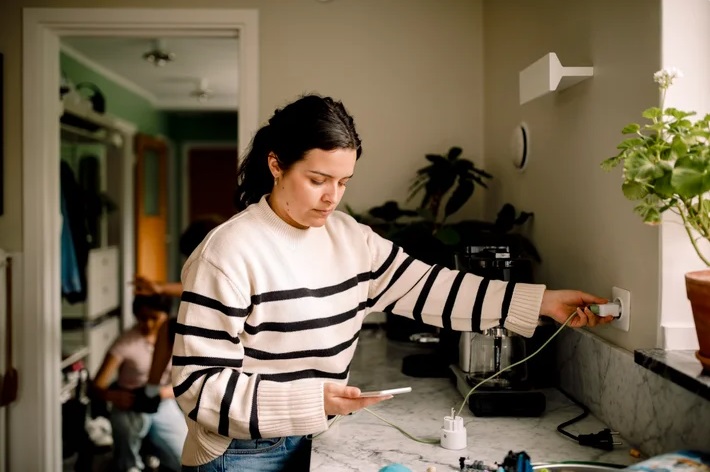 |
Illustrative photo: Huffpost |
Joy Gallon, a therapist at Thriveworks, a US-based healthcare service, explained that this method actively engages multiple senses: sight, touch, speech, and hearing. This engagement increases blood flow to the frontal lobe, the brain region responsible for reasoning and logic.
According to US time management expert Anna Dearmon Kornick, most daily tasks are performed out of habit. In such instances, the brain expends less energy, causing individuals to act automatically without forming clear memories. Incorporating a non-default action, such as pointing, snapping fingers, or speaking aloud, forces the brain to remain alert.
"These physical checks shift your thoughts into the realm of actual action, requiring more effort, which then leaves a deeper imprint on your memory," said productivity expert Rashelle Isip.
The method proves particularly beneficial for individuals with attention deficit hyperactivity disorder (ADHD). Therapist Billy Roberts noted that activating multiple senses helps the brains of those with ADHD engage more actively in behavior. Psychologist Terry Matlen added that instead of just speaking, people can sing a short tune or tap their wrist when performing a task they need to remember. Creating sounds or physical vibrations helps release dopamine, improving concentration.
Applying the method to daily life
You can integrate Shisa Kanko into your daily routine through various applications:
Safety confirmation: Point to a doorknob and say aloud, "Door locked"; point to an electrical outlet and say, "Unplugged."
Remembering items: Point to your wallet and keys on the table, calling out each item's name before leaving.
Task management: Say aloud, "Email sent" or write a small note by hand to anchor the information.
Stress relief: When feeling overwhelmed, point to and name five objects around you to regain calm.
Experts advise users to periodically change commands, switch the hand they point with, or use different sounds to stimulate the brain and prevent the technique from becoming monotonous.
Nhat Minh (According to Huffpost)