In Yanaka Ginza, an old district in Tokyo dubbed "cat town", images of these creatures adorn signboards, shopfronts, and souvenir stalls. Visitors can enjoy cat-shaped sweets, order custom hanko seals, or purchase cat-themed ceramics and black cat postcards.
Katsuhiro Miyamoto, an economics professor at Kansai University in Osaka, estimates that "catnomics" will contribute approximately 3 trillion yen (18.8 billion USD) to Japan's economy in 2026. This substantial sum is generated through spending at cat cafes, sales of photo books, the pet food market, and wages from related businesses.
The economic impact generated by cats is currently only slightly less than the budget allocated for the Osaka World Expo 2025.
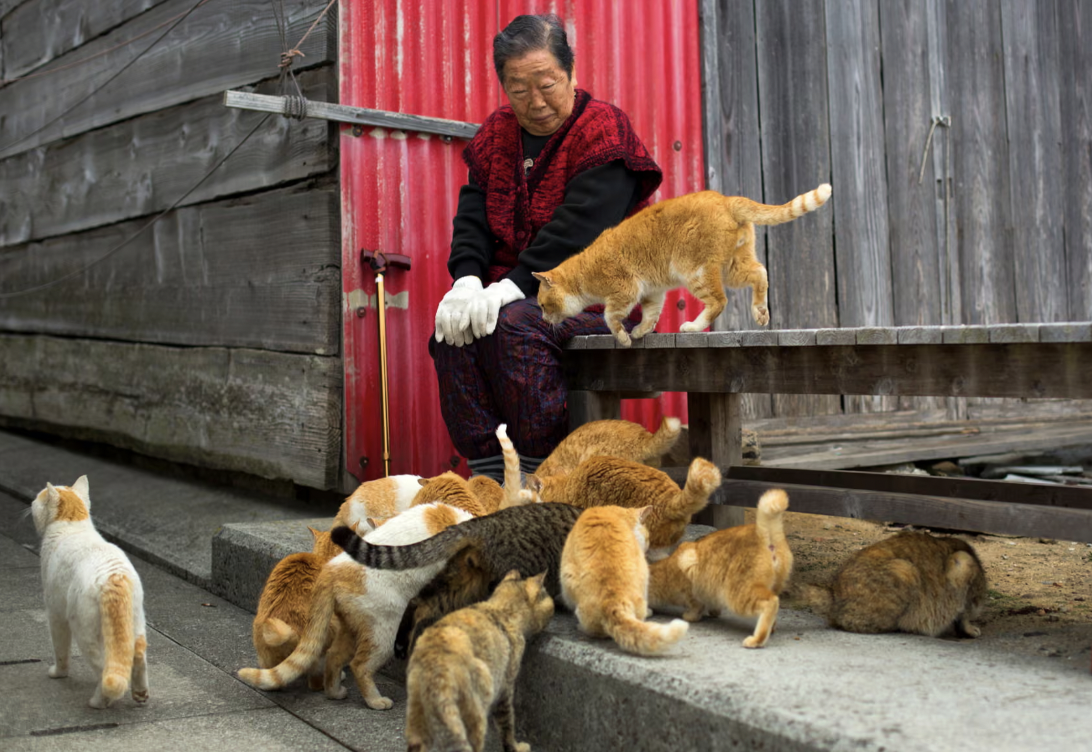 |
A woman feeding cats on Aoshima Island, Ehime province, Japan. *Photo: Guardian*
The rising popularity of pets coincides with a significant demographic shift: the number of household dogs and cats in Japan has now exceeded the total number of children under 15. A survey by the Japan Pet Food Association projects approximately 8.8 million cats in the country in 2025, outnumbering the 6.8 million dogs. On average, a household allocates about 11,300 USD for a cat throughout its lifespan.
Even Japanese politicians show a fondness for cats. The Emperor, Empress, and Prime Minister Sanae Takaichi are all cat owners. Ms. Takaichi has publicly expressed her preference for cats over dogs.
Cats first arrived in Japan during the Nara period (710-794), brought by envoys returning from the Tang Dynasty in China. Temples often kept cats to protect sacred scriptures from rodents, a practice that helped the animals gradually secure a significant place in Japanese culture. Today, on Aoshima Island in Ehime province, cats are known to gather around tourists, seeking food.
Stephen Mansfield, a writer residing in Japan, observes that cats are among the most meditative creatures in the natural world. He notes, "Cats focus only on the present, seemingly unburdened by past events or future concerns like humans."
In Japanese folklore, cats symbolize good fortune, a belief widely illustrated by the ubiquitous maneki neko (beckoning cat) statues found in restaurants and various businesses.
While cats generate substantial revenue, the future of Japan's cat economy is intrinsically linked to demographic changes. The nation's ongoing aging and declining population poses a risk of reducing the number of pets kept in households in the coming years.
*Ngoc Ngan (According to Guardian)*