In mid-april, a video showing a young girl lying in front of a grave in Liupanshui city, Guizhou province, went viral on social media. The video shows the girl occasionally sitting up to eat a snack before lying back down beside the grave. Despite her parents' urging to return home, she refused.
Chen, the girl's father, explained that due to his wife's poor health and his demanding work schedule, his daughter had been raised by her grandparents since she was small. Her grandmother passed away in 9/2023, and her grandfather died from heart disease in late march. The girl had not yet adjusted to their absence.
"She constantly asked to visit their graves. When we arrived, she refused to leave and said she wanted to sleep with her grandparents," Chen recounted.
The video garnered millions of views on social media. Many expressed sympathy for the image of the girl curled up beside the grave. "The girl is doing what many adults wish they could do for their deceased loved ones," one user commented.
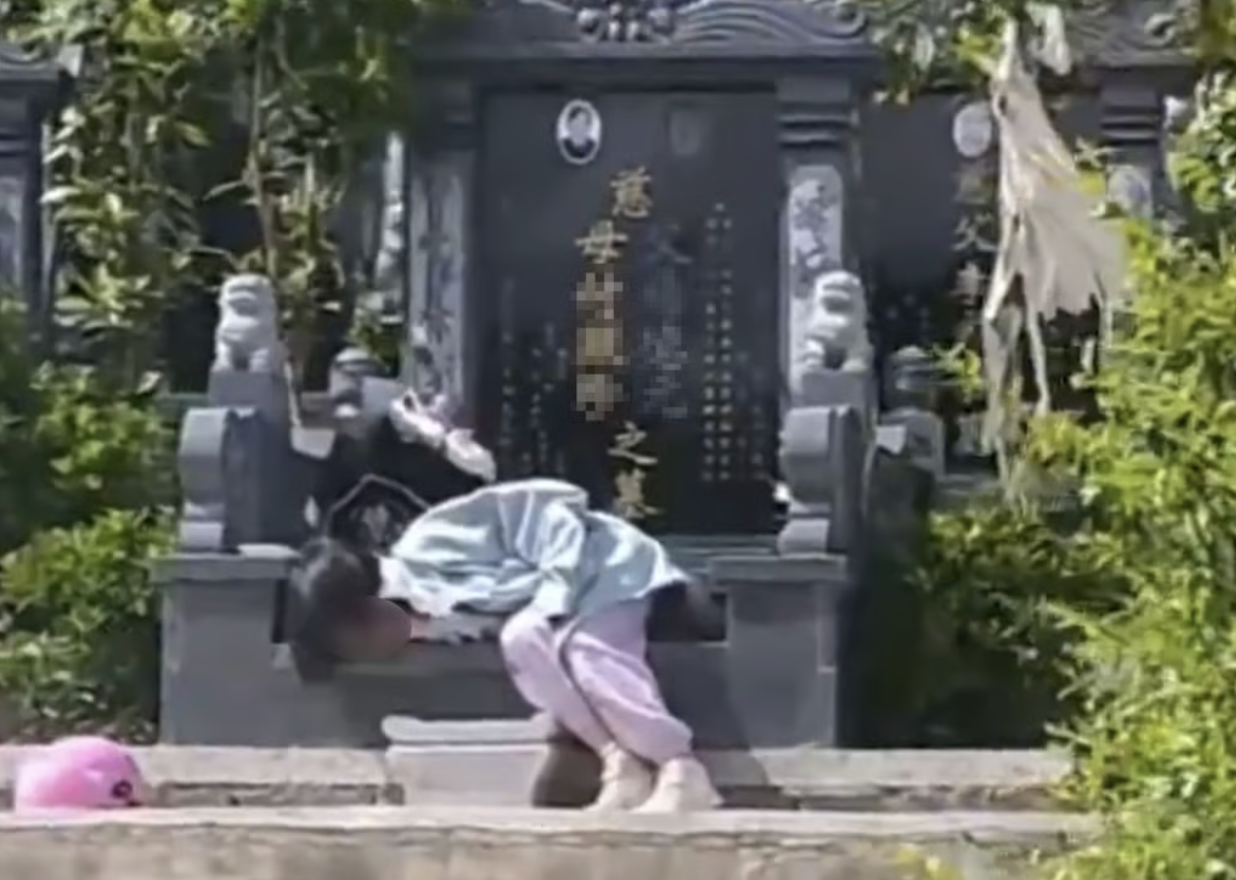 |
The image of the young girl sleeping beside her grandparents' graves in Liupanshui city, Guizhou province, in mid-april, attracted significant attention from the online community. Weibo |
The image of the young girl sleeping beside her grandparents' graves in Liupanshui city, Guizhou province, in mid-april, attracted significant attention from the online community. Weibo
In China, "geographical intergenerational parenting" (cach boi than), where grandparents raise grandchildren in place of their children, is a common social phenomenon, creating a special emotional bond between the two generations. Stories of children deeply attached to their grandparents frequently appear in the nation's media.
In 2024, a toddler in Shandong province cried incessantly and demanded his maternal grandmother return after she had gone back to her hometown for two days. A video of the boy attracted 220,000 views and 23,000 comments from internet users.
Earlier this year, an 11-year-old girl in Sichuan province revealed that she often uses her smartwatch to text "I miss grandpa" to her deceased grandfather. She shared details about her daily life since his passing two years ago.
"Geographical intergenerational parenting" and "left-behind children" (luu thu nhi dong) stem from the wave of labor migration in China. For many years, young people from rural areas have continuously moved to large cities in search of employment. However, due to barriers in the household registration (hukou) system, which makes accessing free education and healthcare in urban areas difficult, coupled with high living costs, most migrant workers cannot bring their children with them. Families are forced to leave their children in their hometowns and entrust them to their grandparents' care.
A report by the Ministry of Civil Affairs of China indicates that 89,3% of "left-behind children" live with their grandparents. Because parents work far away, their contact time is very limited (many only visit home once each year). Grandparents become the primary caregivers and the only source of support throughout the children's early years. This social context explains why many children develop an exceptionally strong emotional connection and consider their grandparents more important than their biological parents.
Minh Phuong (According to Worldjournal, The Paper)